About this artwork
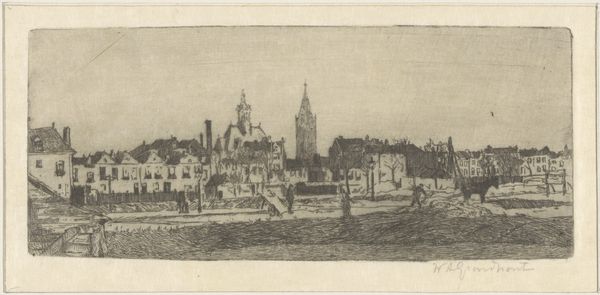
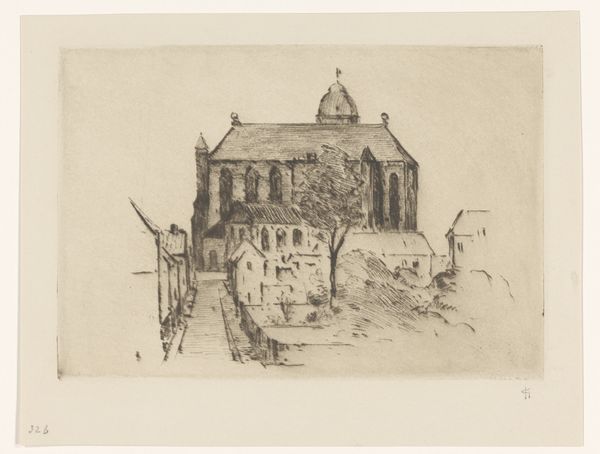
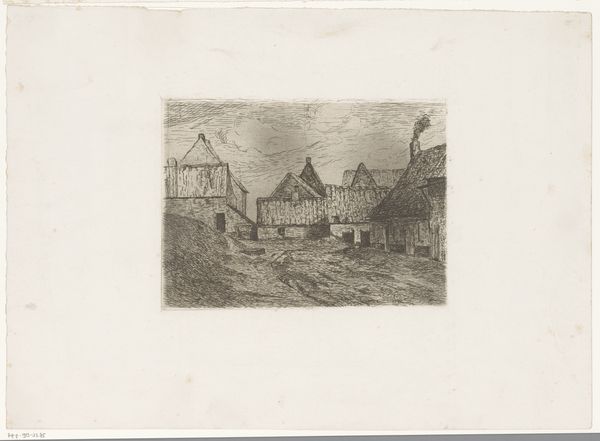
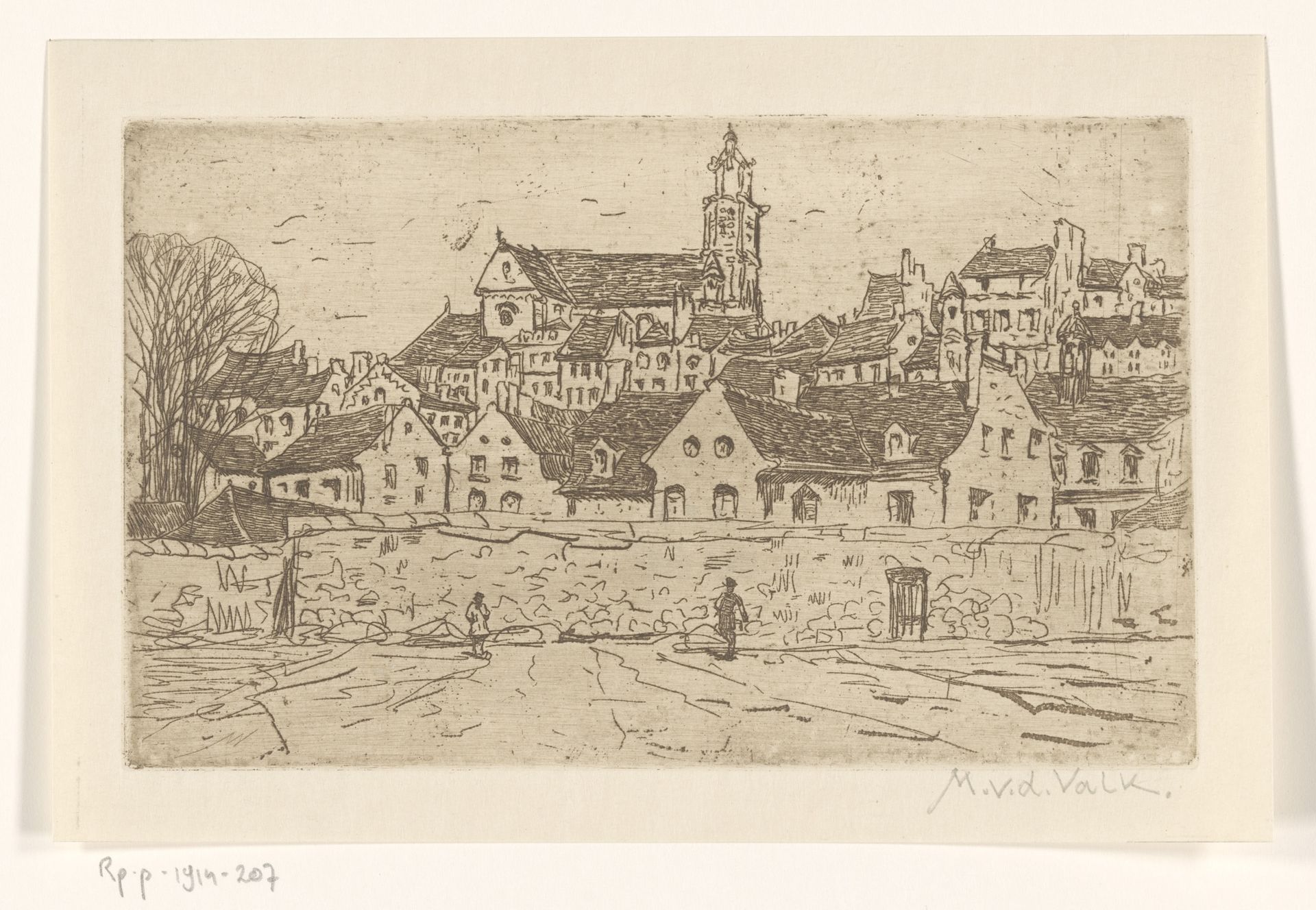
Maurits van der Valk created this print of Pontoise, with its cathedral, using etching, sometime between 1870 and 1935. Etching involves coating a metal plate with a waxy, acid-resistant substance called a ground. The artist then scratches an image into the ground, exposing the metal. When the plate is immersed in acid, the exposed lines are eaten away, creating recessed marks. Ink is then applied to the plate, filling these lines. Finally, the surface is wiped clean, and the image is transferred to paper under high pressure. Van der Valk's expressive, scratchy lines capture the architectural details, and the daily life of Pontoise. The deliberate manipulation of the etching process—controlling the depth and texture of the lines—imparts a handmade quality to the print. The finished artwork has a direct connection to the artist's hand and eye, and is a reminder that even reproducible media like printmaking rely on skillful labor. By understanding the processes behind this image, we can appreciate the artist's craft, and the rich layers of meaning it conveys.
Gezicht op Pontoise, met centraal de Cathédrale Saint-Maclou 1867 - 1914

Maurits van der Valk
1857 - 1935Location
RijksmuseumArtwork details
- Medium
- print, etching
- Dimensions
- height 120 mm, width 198 mm
- Location
- Rijksmuseum
- Copyright
- Rijks Museum: Open Domain
Tags
impressionism
etching
landscape
etching
cityscape
Comments
No comments
About this artwork
Maurits van der Valk created this print of Pontoise, with its cathedral, using etching, sometime between 1870 and 1935. Etching involves coating a metal plate with a waxy, acid-resistant substance called a ground. The artist then scratches an image into the ground, exposing the metal. When the plate is immersed in acid, the exposed lines are eaten away, creating recessed marks. Ink is then applied to the plate, filling these lines. Finally, the surface is wiped clean, and the image is transferred to paper under high pressure. Van der Valk's expressive, scratchy lines capture the architectural details, and the daily life of Pontoise. The deliberate manipulation of the etching process—controlling the depth and texture of the lines—imparts a handmade quality to the print. The finished artwork has a direct connection to the artist's hand and eye, and is a reminder that even reproducible media like printmaking rely on skillful labor. By understanding the processes behind this image, we can appreciate the artist's craft, and the rich layers of meaning it conveys.
Comments
No comments