About this artwork
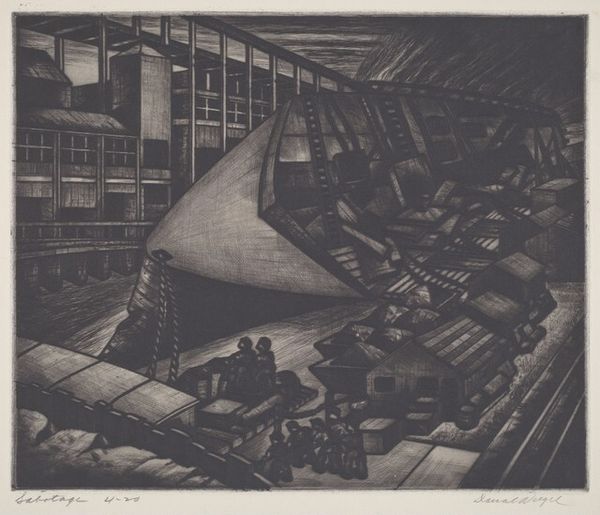
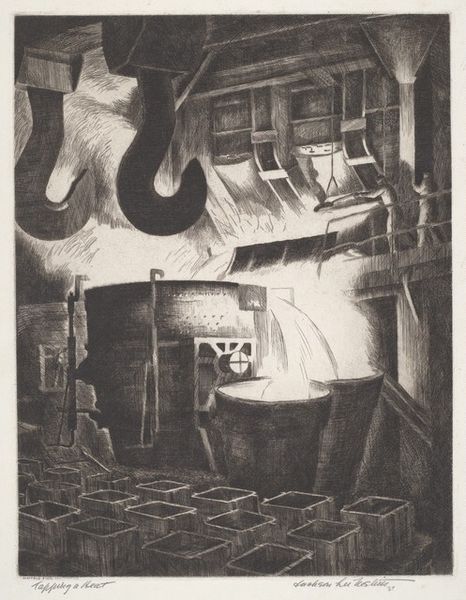
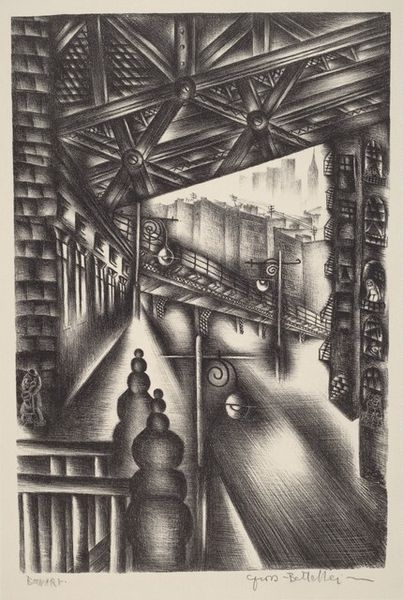
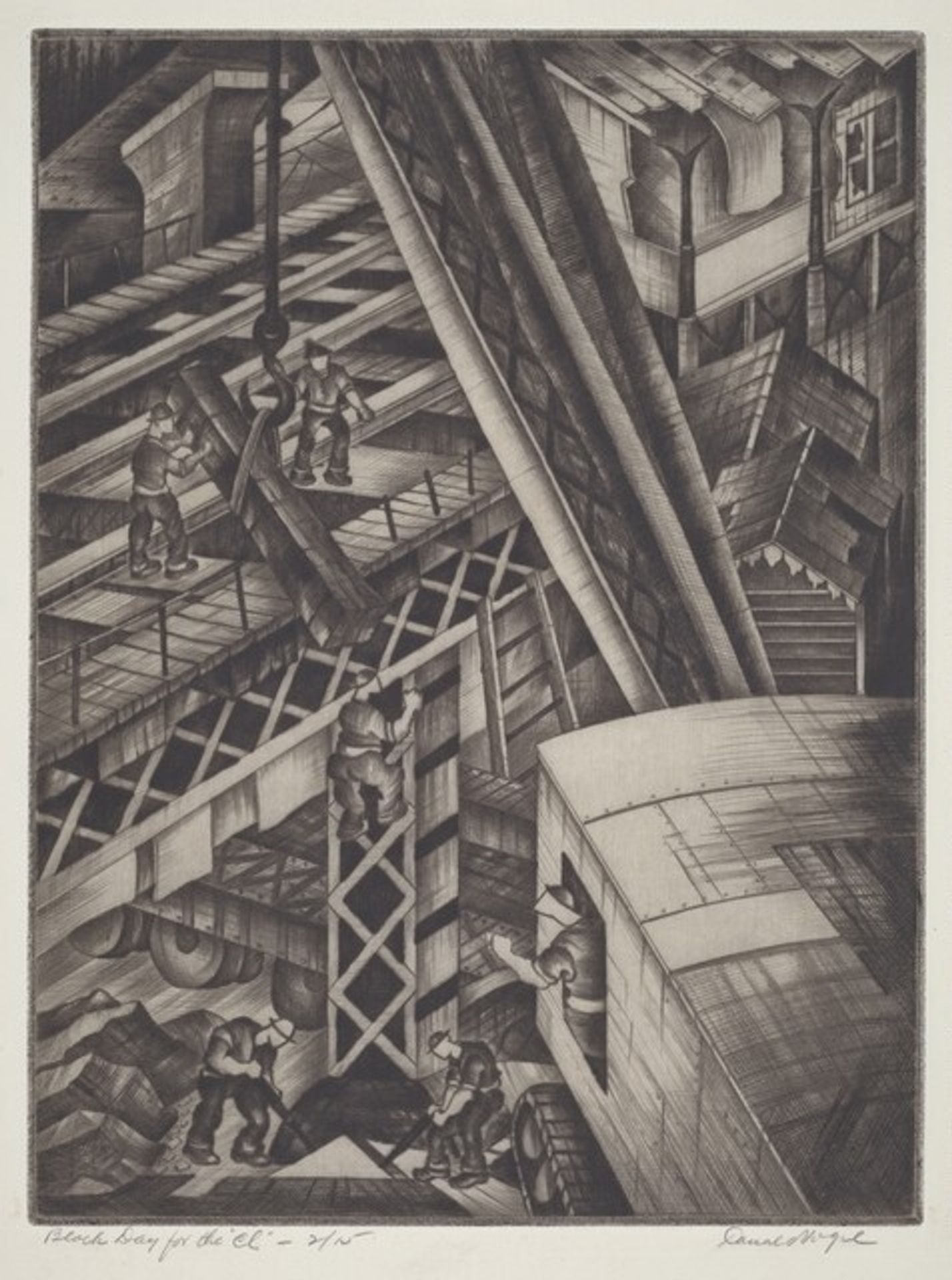
Donald Vogel made this image, Black Day for the “EL”, using etching, which is a printmaking process involving acid. The marks are so incredibly precise, crossing lines criss-cross to build up shadow and volume. It’s a real testament to the artist’s process. There’s a fascinating tension between the flat surface of the print and the illusion of depth created by these intricate lines. They give a tactile quality to the image, like you could run your fingers over the rough metal girders and the sturdy figures of the workers. Take a look at the top right hand corner where the buildings seem to tumble in to the composition. The hatching is so detailed here, it gives a real sense of grit and texture. You can almost hear the clanging of metal and the shouts of the workers. This work reminds me a little of the precision you see in some of the German Expressionist woodcuts, or the American Precisionists, although with a more human touch. Art is always about conversation, isn't it? It’s about how we see, how we interpret, and how we keep the dialogue going.
Artwork details
- Medium
- drawing, print, graphite
- Dimensions
- Image: 298 x 222 mm Sheet: 363 x 279 mm
- Copyright
- National Gallery of Art: CC0 1.0
Tags
Comments
Share your thoughts
About this artwork
Donald Vogel made this image, Black Day for the “EL”, using etching, which is a printmaking process involving acid. The marks are so incredibly precise, crossing lines criss-cross to build up shadow and volume. It’s a real testament to the artist’s process. There’s a fascinating tension between the flat surface of the print and the illusion of depth created by these intricate lines. They give a tactile quality to the image, like you could run your fingers over the rough metal girders and the sturdy figures of the workers. Take a look at the top right hand corner where the buildings seem to tumble in to the composition. The hatching is so detailed here, it gives a real sense of grit and texture. You can almost hear the clanging of metal and the shouts of the workers. This work reminds me a little of the precision you see in some of the German Expressionist woodcuts, or the American Precisionists, although with a more human touch. Art is always about conversation, isn't it? It’s about how we see, how we interpret, and how we keep the dialogue going.
Comments
Share your thoughts