About this artwork
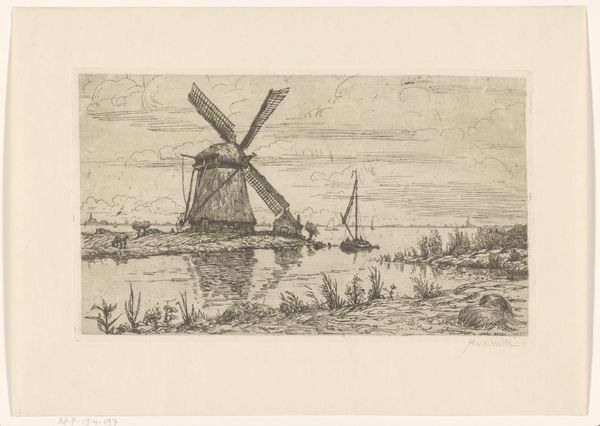
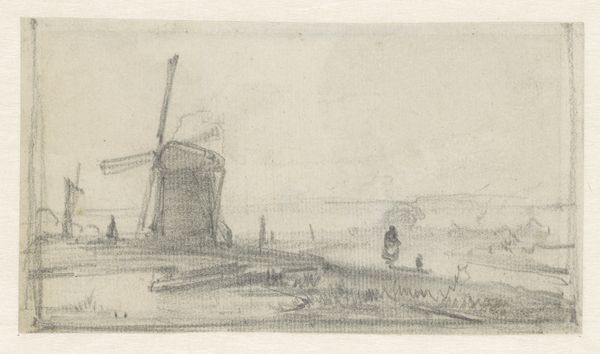
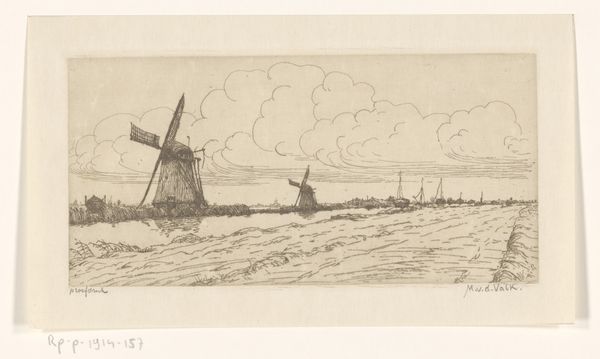
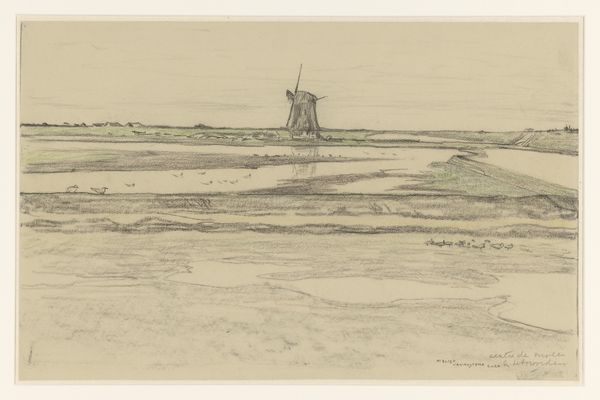
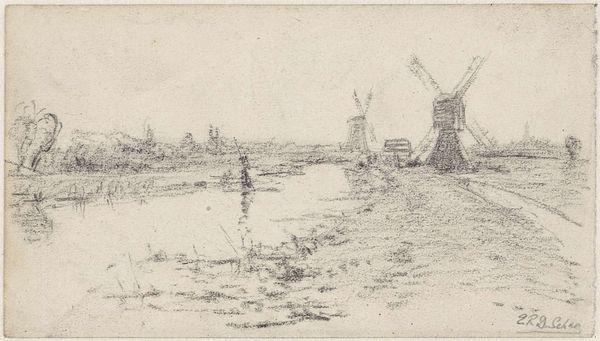
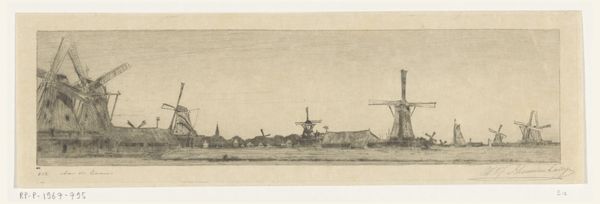
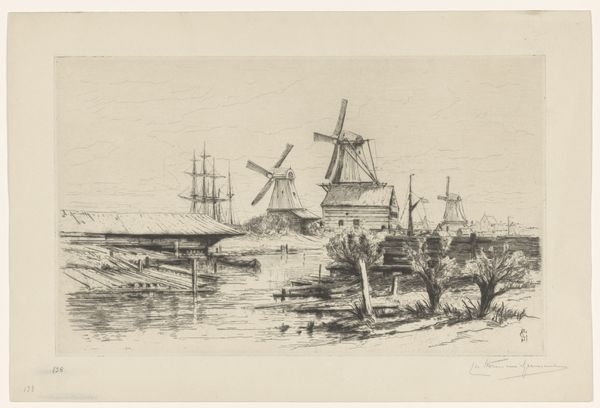
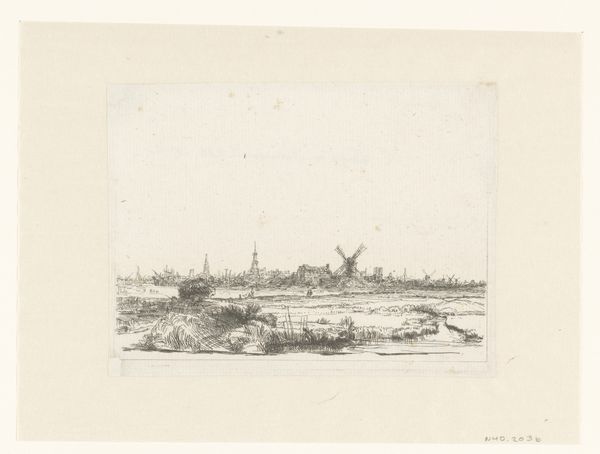
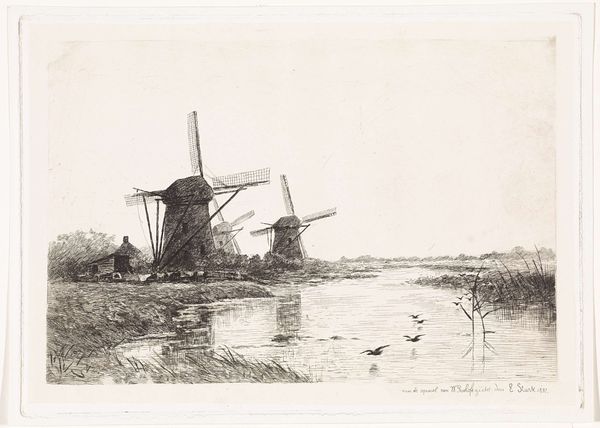
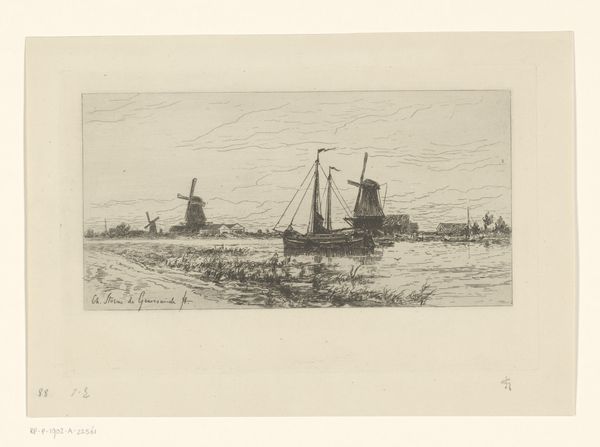
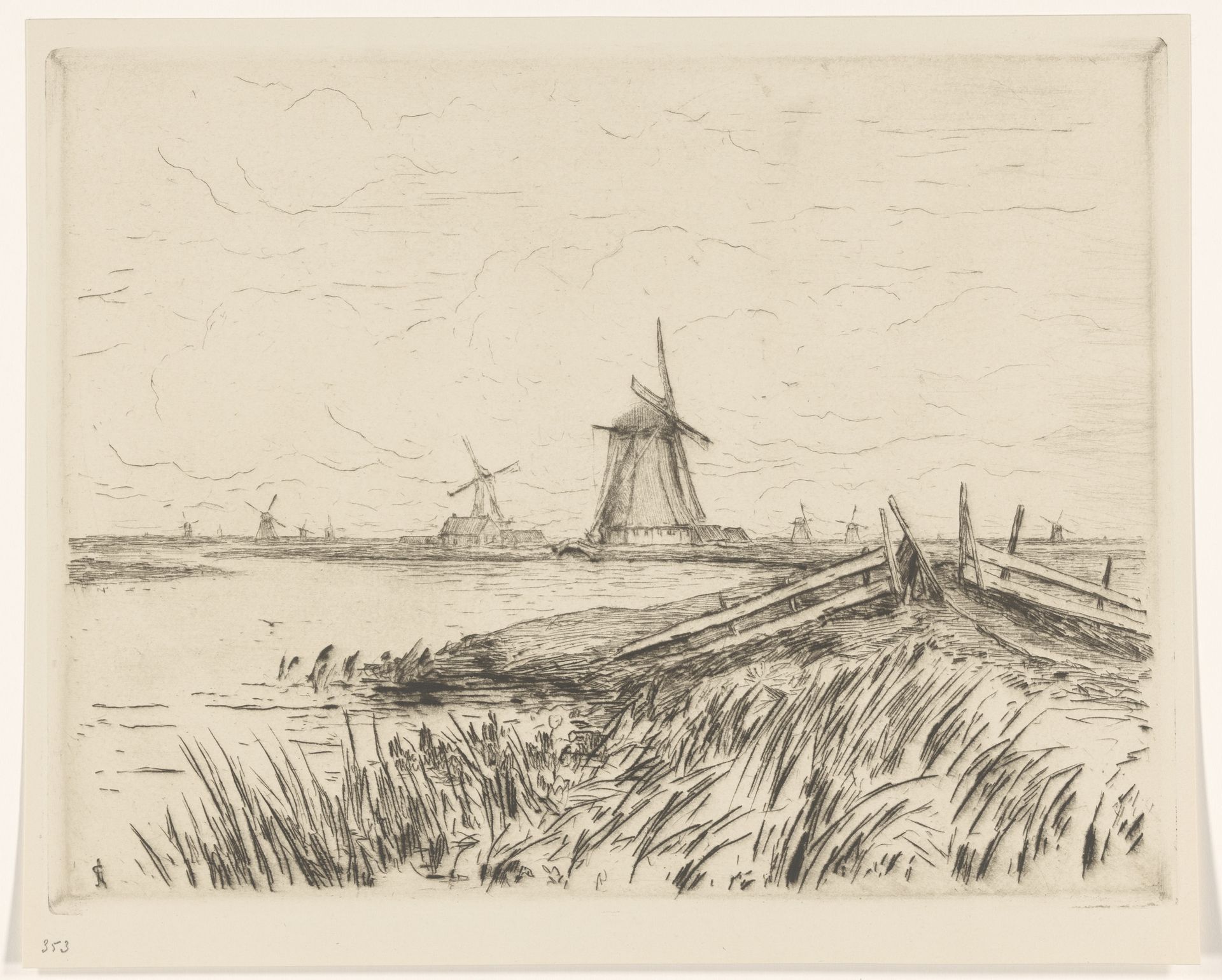
Carel Nicolaas Storm van 's-Gravesande made this etching, Molens aan de Rotte, in the Netherlands at the end of the 19th century. The etching technique, with its fine lines, allowed artists to create detailed landscapes that captured the serene beauty of the Dutch countryside. This piece embodies the Dutch Golden Age's reverence for their land and its resources, but seen through the lens of a society undergoing rapid industrialization. Mills were crucial to the Dutch economy, aiding in land reclamation and powering industries. The image creates meaning through visual codes, cultural references, and historical associations that speak to a nation proud of its engineering and agricultural prowess. The choice of landscape as a subject reflects a self-conscious conservatism, celebrating traditional Dutch values. To fully appreciate this etching, we might delve into archives detailing the socio-economic conditions of the Netherlands during this period. Understanding the institutional history of Dutch art further enriches our understanding of its cultural significance.
Molens aan de Rotte 1851 - 1902

Carel Nicolaas Storm van 's-Gravesande
1841 - 1924Location
RijksmuseumArtwork details
- Medium
- print, etching
- Dimensions
- height 250 mm, width 330 mm
- Location
- Rijksmuseum
- Copyright
- Rijks Museum: Open Domain
Tags
impressionism
etching
landscape
cityscape
realism
Comments
No comments
About this artwork
Carel Nicolaas Storm van 's-Gravesande made this etching, Molens aan de Rotte, in the Netherlands at the end of the 19th century. The etching technique, with its fine lines, allowed artists to create detailed landscapes that captured the serene beauty of the Dutch countryside. This piece embodies the Dutch Golden Age's reverence for their land and its resources, but seen through the lens of a society undergoing rapid industrialization. Mills were crucial to the Dutch economy, aiding in land reclamation and powering industries. The image creates meaning through visual codes, cultural references, and historical associations that speak to a nation proud of its engineering and agricultural prowess. The choice of landscape as a subject reflects a self-conscious conservatism, celebrating traditional Dutch values. To fully appreciate this etching, we might delve into archives detailing the socio-economic conditions of the Netherlands during this period. Understanding the institutional history of Dutch art further enriches our understanding of its cultural significance.
Comments
No comments