1863
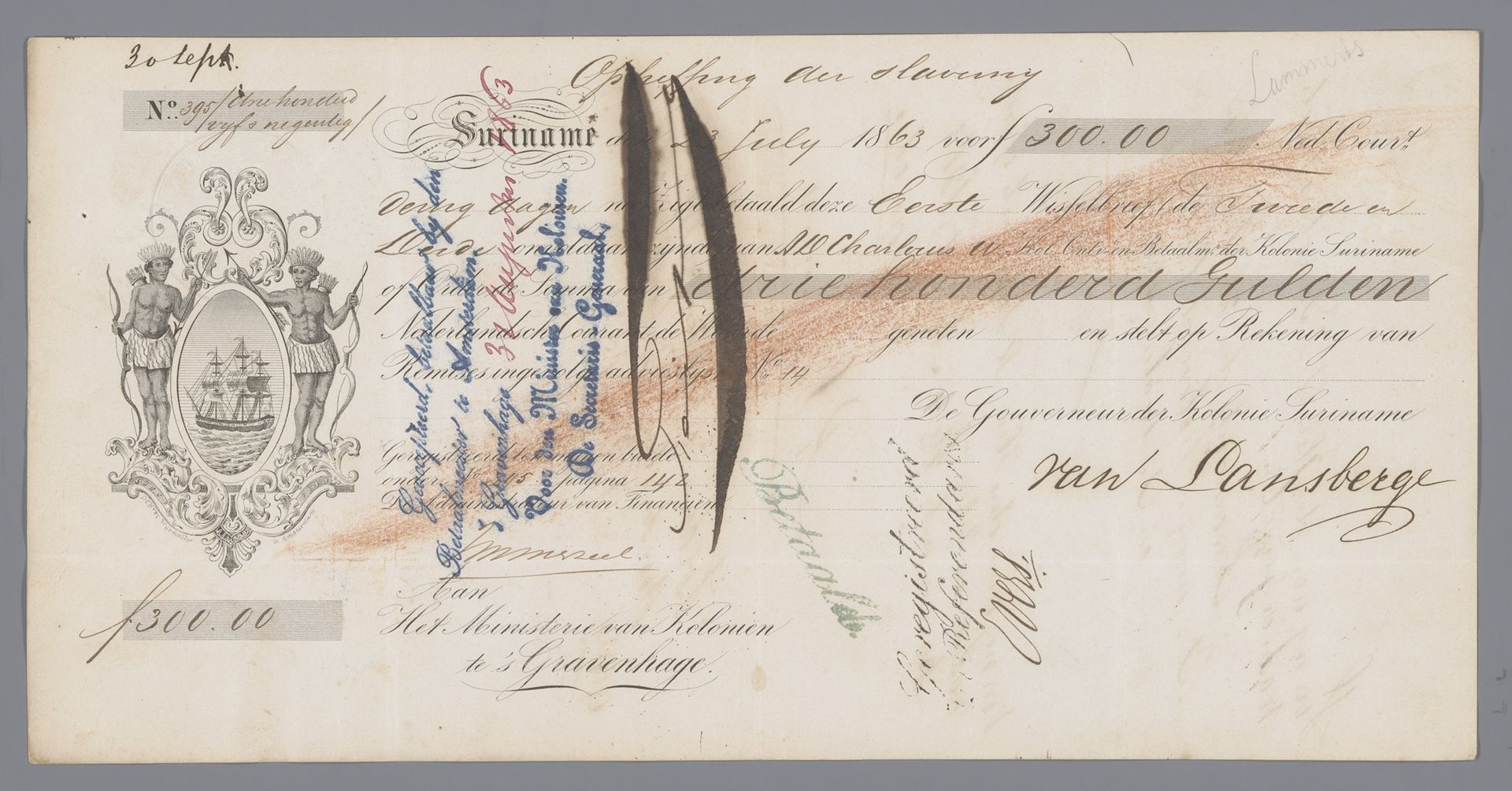
Bill of exchange ‘Abolition of Slavery’

Listen to curator's interpretation
Curatorial notes
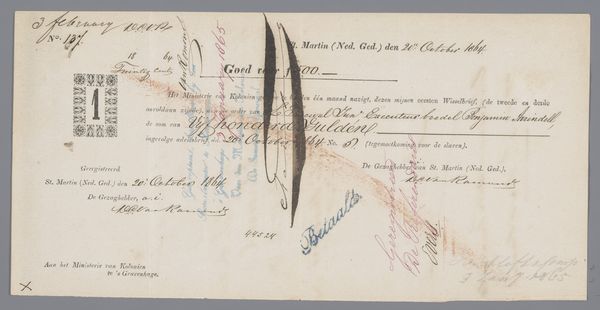
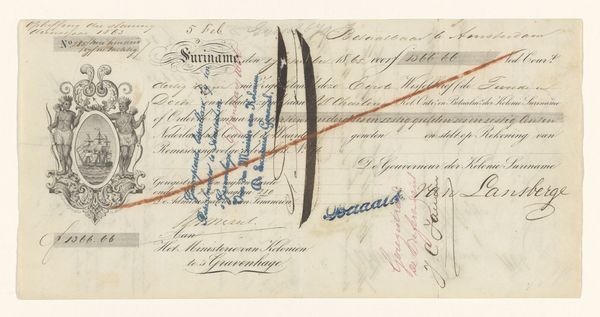
Here is an analysis of the ‘Bill of exchange ‘Abolition of Slavery’, produced in 1863 by the Ministerie van Koloniën. This bill of exchange strikes a stark contrast between the fine script denoting monetary transaction, and the monumental event it signifies: the abolition of slavery. The composition features dense calligraphic elements in black and red ink, offset by the stark emptiness of the paper. Through a formalist lens, one can understand how its structural components come together. The text's very density evokes the complex legal and economic systems which have been in place to administer colonialism and slavery. The central overprinting obscuring the text destabilizes legibility and fixed meaning. The bill's design elements, such as the colonial seal depicting indigenous figures flanking a ship, speak to the semiotic systems used to legitimize colonial power. These visual cues, alongside the bill's monetary value, suggest how abolition was not just a moral imperative, but also an economic transaction. It points to the commodification of freedom itself. Finally, the form and function of this document offer insights into the cultural and philosophical debates surrounding emancipation. It underscores that abolition was a process deeply embedded in systems of power, rather than a singular, moral event.