About this artwork
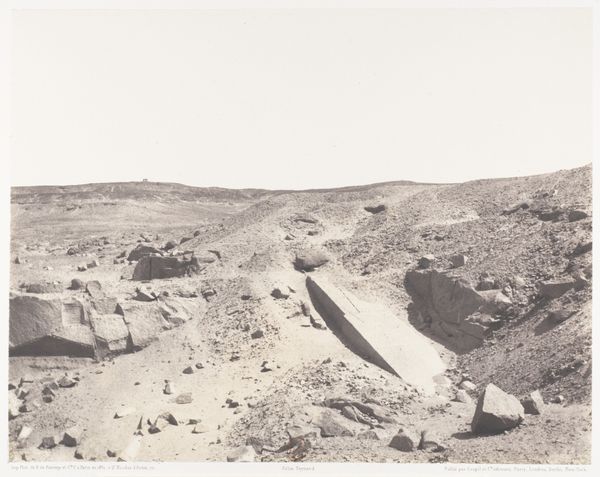
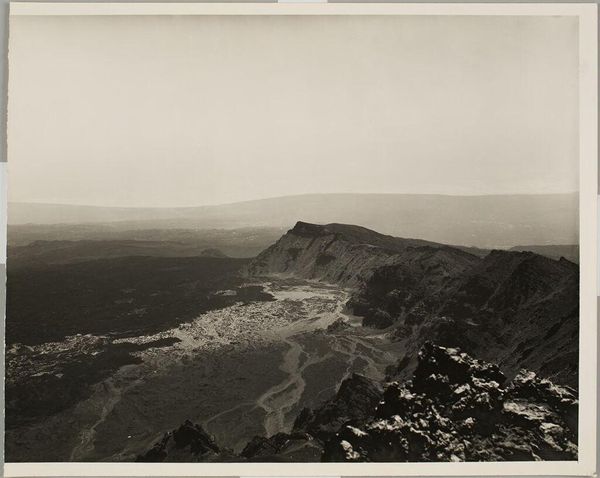
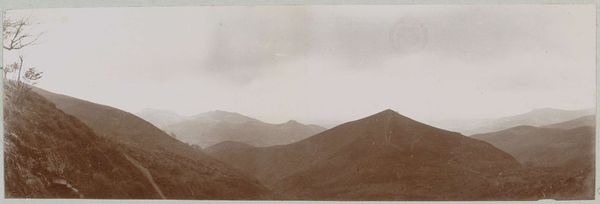
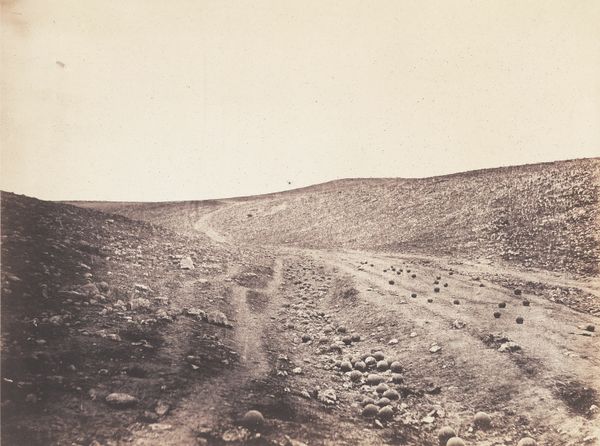
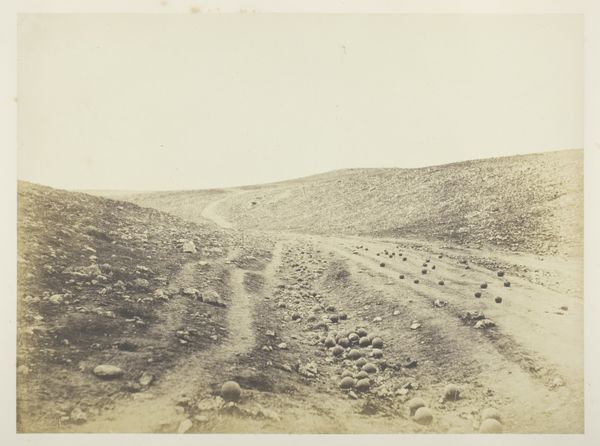
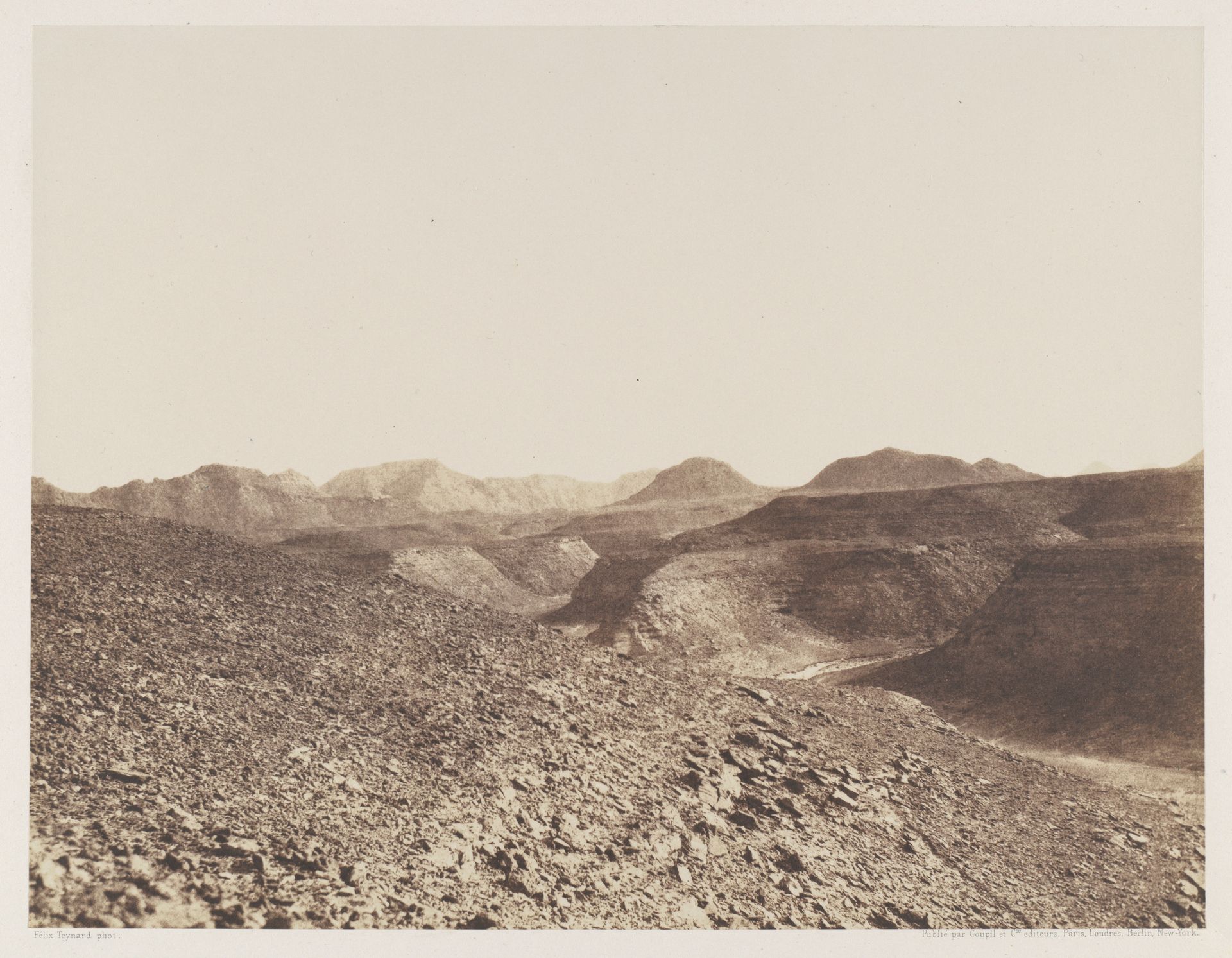
Félix Teynard captured this photograph of Nubia's Arabian Chain, near Ibrîm, using a calotype process, a testament to early photographic techniques. Observe how the image echoes motifs of desolation and pilgrimage found in ancient religious texts. The desolate landscape recalls the journeys of biblical figures across arid lands, their trials mirroring the spiritual quest for enlightenment and redemption. The ravin, or ravine, symbolizes a path, a channel through which one might traverse the complexities of life, similar to the river Styx in Greek mythology. Consider how these motifs have been portrayed across cultures and epochs: the desert as a place of revelation or the chasm as a metaphor for the abyss of the human psyche. The enduring presence of such imagery, from ancient frescoes to contemporary film, reveals the timeless human fascination with the themes of journey, trial, and transformation, suggesting a deeper connection to ancestral memories and a universal human narrative. This photograph is not merely a depiction of a place but an echo of shared human experiences.
Nubie, Environs d'Ibrîm, Chaine Arabique - Vue d'un Ravin
1851 - 1852


Artwork details
- Medium
- daguerreotype, photography
- Dimensions
- Image: 9 3/8 × 12 3/16 in. (23.8 × 31 cm) Mount: 15 13/16 × 20 3/8 in. (40.1 × 51.8 cm)
- Location
- Metropolitan Museum of Art, New York, NY
- Copyright
- Public Domain
Tags
Comments
Share your thoughts
About this artwork
Félix Teynard captured this photograph of Nubia's Arabian Chain, near Ibrîm, using a calotype process, a testament to early photographic techniques. Observe how the image echoes motifs of desolation and pilgrimage found in ancient religious texts. The desolate landscape recalls the journeys of biblical figures across arid lands, their trials mirroring the spiritual quest for enlightenment and redemption. The ravin, or ravine, symbolizes a path, a channel through which one might traverse the complexities of life, similar to the river Styx in Greek mythology. Consider how these motifs have been portrayed across cultures and epochs: the desert as a place of revelation or the chasm as a metaphor for the abyss of the human psyche. The enduring presence of such imagery, from ancient frescoes to contemporary film, reveals the timeless human fascination with the themes of journey, trial, and transformation, suggesting a deeper connection to ancestral memories and a universal human narrative. This photograph is not merely a depiction of a place but an echo of shared human experiences.
Comments
Share your thoughts