About this artwork
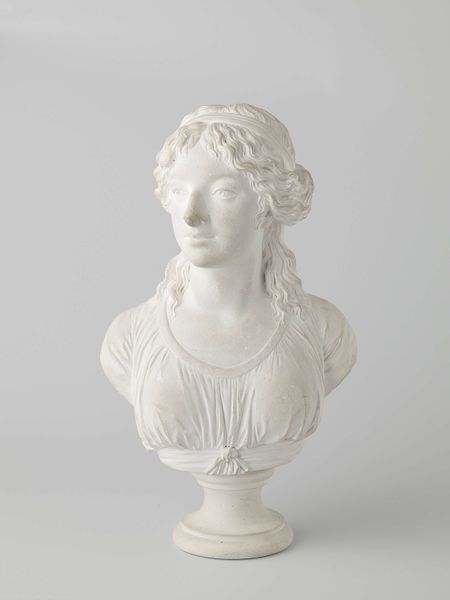
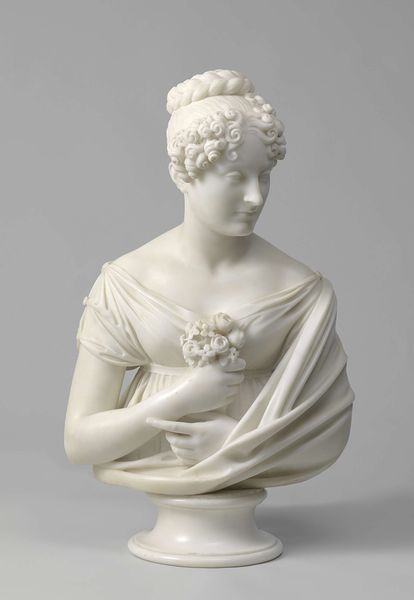
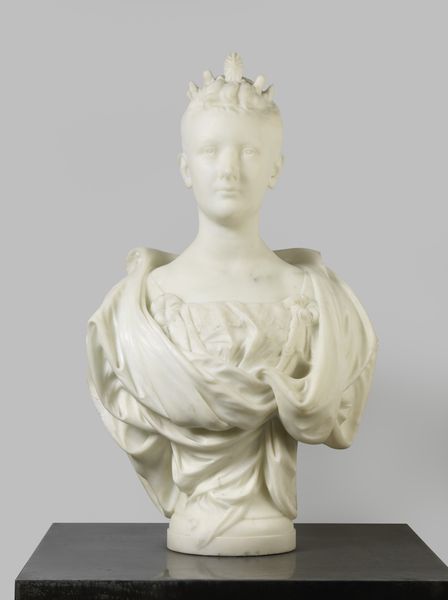
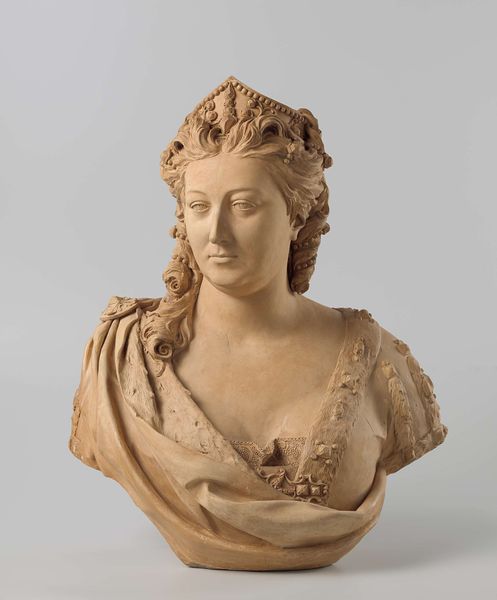
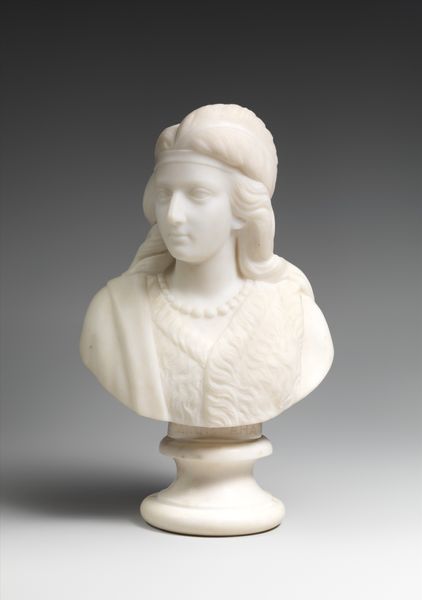
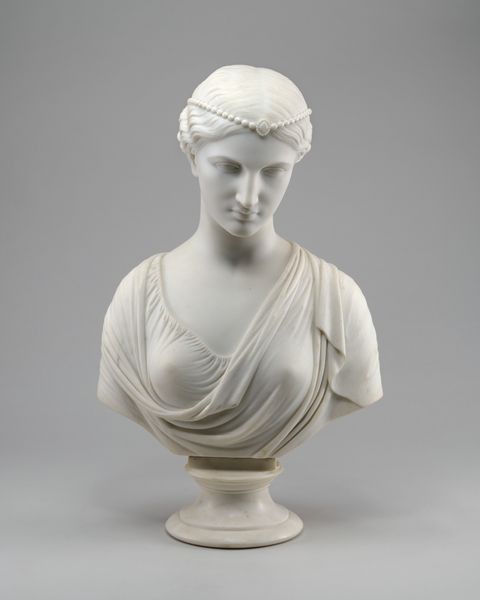
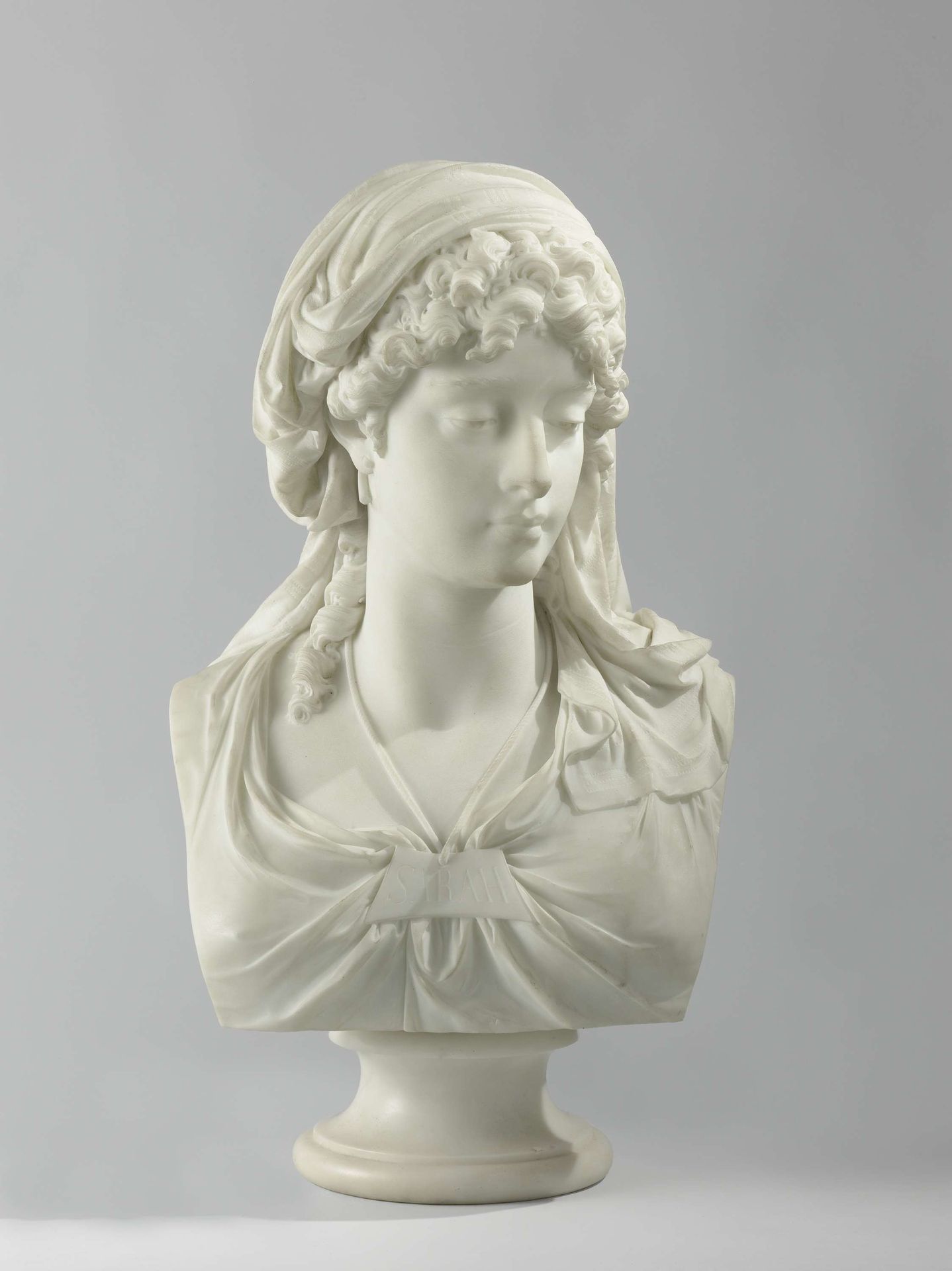
Frans Stracké made this white marble sculpture, titled 'Sarah met wit marmeren sokkel', sometime in the 19th century. During this period, there was a popular trend among European sculptors to depict idealized figures, often drawing from biblical or classical narratives. Sarah's demure gaze and the soft draping of her garments suggest a certain vision of feminine virtue, reflective of the social expectations of women at the time. However, the sculpture's focus on Sarah, a significant yet sometimes overlooked figure in religious texts, also hints at the era's increasing interest in exploring diverse perspectives within established stories. It is worth considering how Stracké, as a male artist, interprets and presents Sarah. Does he perpetuate traditional representations, or does he offer a more nuanced portrayal? The sculpture's beauty invites us to reflect on the complex interplay between faith, gender, and artistic interpretation in 19th-century Europe.
Beeldhouwwerk getiteld Sarah met wit marmeren sokkel c. 1877

Frans Stracké
1829 - 1898Location
RijksmuseumArtwork details
- Location
- Rijksmuseum
- Copyright
- Rijks Museum: Open Domain
Comments
No comments
About this artwork
Frans Stracké made this white marble sculpture, titled 'Sarah met wit marmeren sokkel', sometime in the 19th century. During this period, there was a popular trend among European sculptors to depict idealized figures, often drawing from biblical or classical narratives. Sarah's demure gaze and the soft draping of her garments suggest a certain vision of feminine virtue, reflective of the social expectations of women at the time. However, the sculpture's focus on Sarah, a significant yet sometimes overlooked figure in religious texts, also hints at the era's increasing interest in exploring diverse perspectives within established stories. It is worth considering how Stracké, as a male artist, interprets and presents Sarah. Does he perpetuate traditional representations, or does he offer a more nuanced portrayal? The sculpture's beauty invites us to reflect on the complex interplay between faith, gender, and artistic interpretation in 19th-century Europe.
Comments
No comments