About this artwork
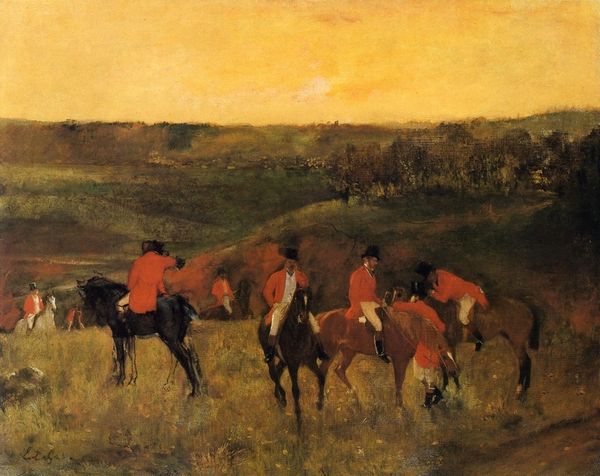
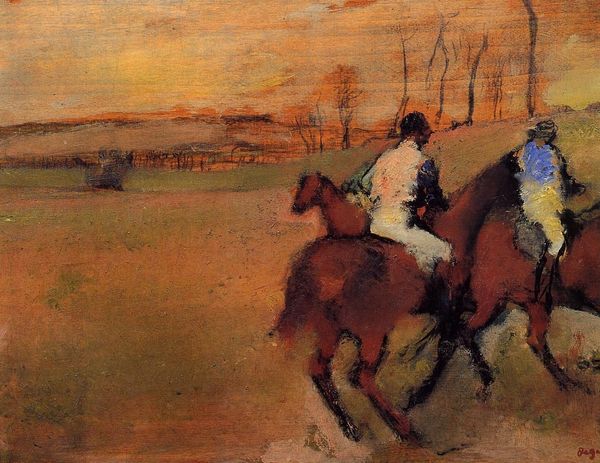
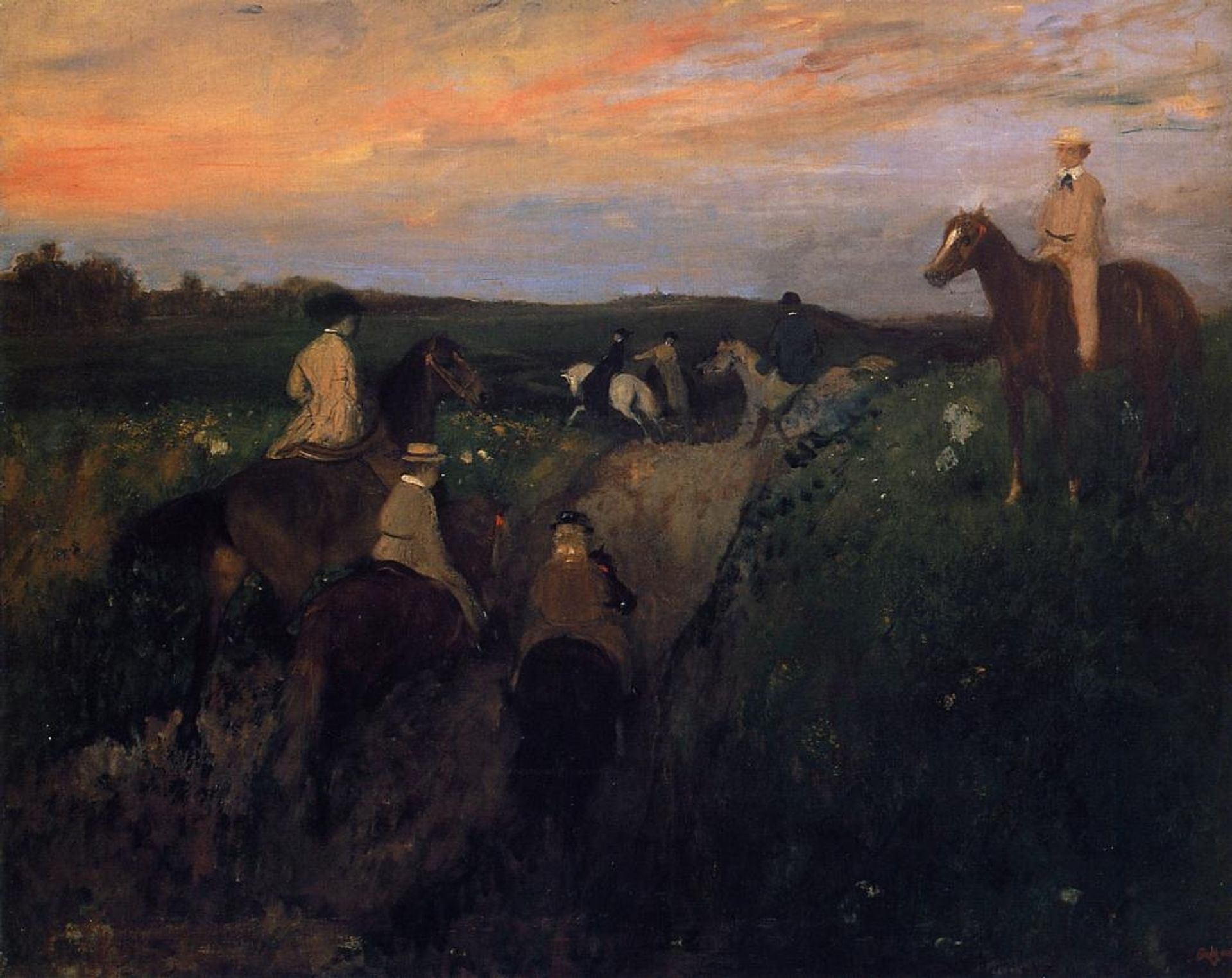
Edgar Degas created "The Promenade on Horseback" using oil paints to capture a group of riders in a landscape. The composition immediately draws you in with its dynamic arrangement and how it conveys a feeling of movement. The scene's atmosphere is enhanced by the interplay of light and shadow, achieved through layered brushstrokes and subdued colors. The arrangement of figures and landscape elements in "The Promenade on Horseback" shows Degas’ experimentation with perspective and form. This approach aligns with the changing perceptions of space that were taking place at the time. The artist destabilizes traditional landscape painting by positioning the riders at various distances, which disrupts the viewer's sense of spatial unity. The formal qualities of this painting encourage us to think about how our perception of space and representation is always open to interpretation. Degas asks us to reflect on the nature of seeing and representing the world around us.
The Promenade on Houseback
1868

Edgar Degas
1834 - 1917Location
Hiroshima Museum of Art, Hiroshima, JapanArtwork details
- Location
- Hiroshima Museum of Art, Hiroshima, Japan
- Copyright
- Public domain
Comments
Share your thoughts
About this artwork
Edgar Degas created "The Promenade on Horseback" using oil paints to capture a group of riders in a landscape. The composition immediately draws you in with its dynamic arrangement and how it conveys a feeling of movement. The scene's atmosphere is enhanced by the interplay of light and shadow, achieved through layered brushstrokes and subdued colors. The arrangement of figures and landscape elements in "The Promenade on Horseback" shows Degas’ experimentation with perspective and form. This approach aligns with the changing perceptions of space that were taking place at the time. The artist destabilizes traditional landscape painting by positioning the riders at various distances, which disrupts the viewer's sense of spatial unity. The formal qualities of this painting encourage us to think about how our perception of space and representation is always open to interpretation. Degas asks us to reflect on the nature of seeing and representing the world around us.
Comments
Share your thoughts