About this artwork
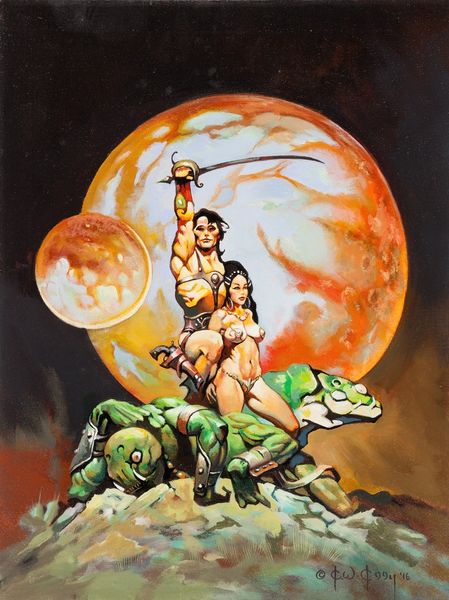
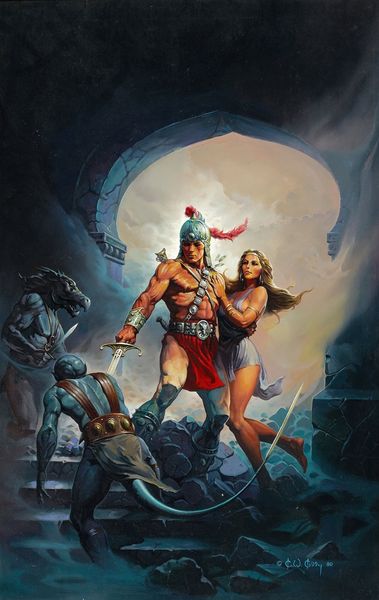
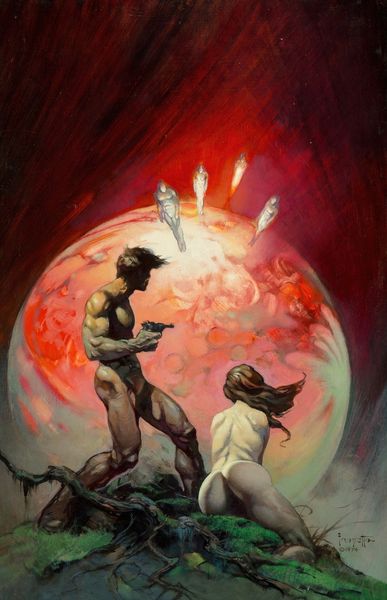
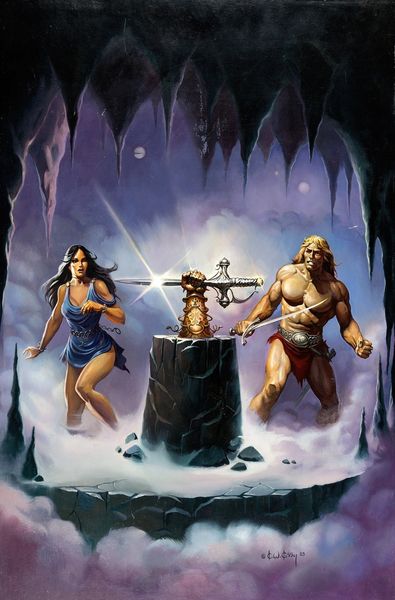
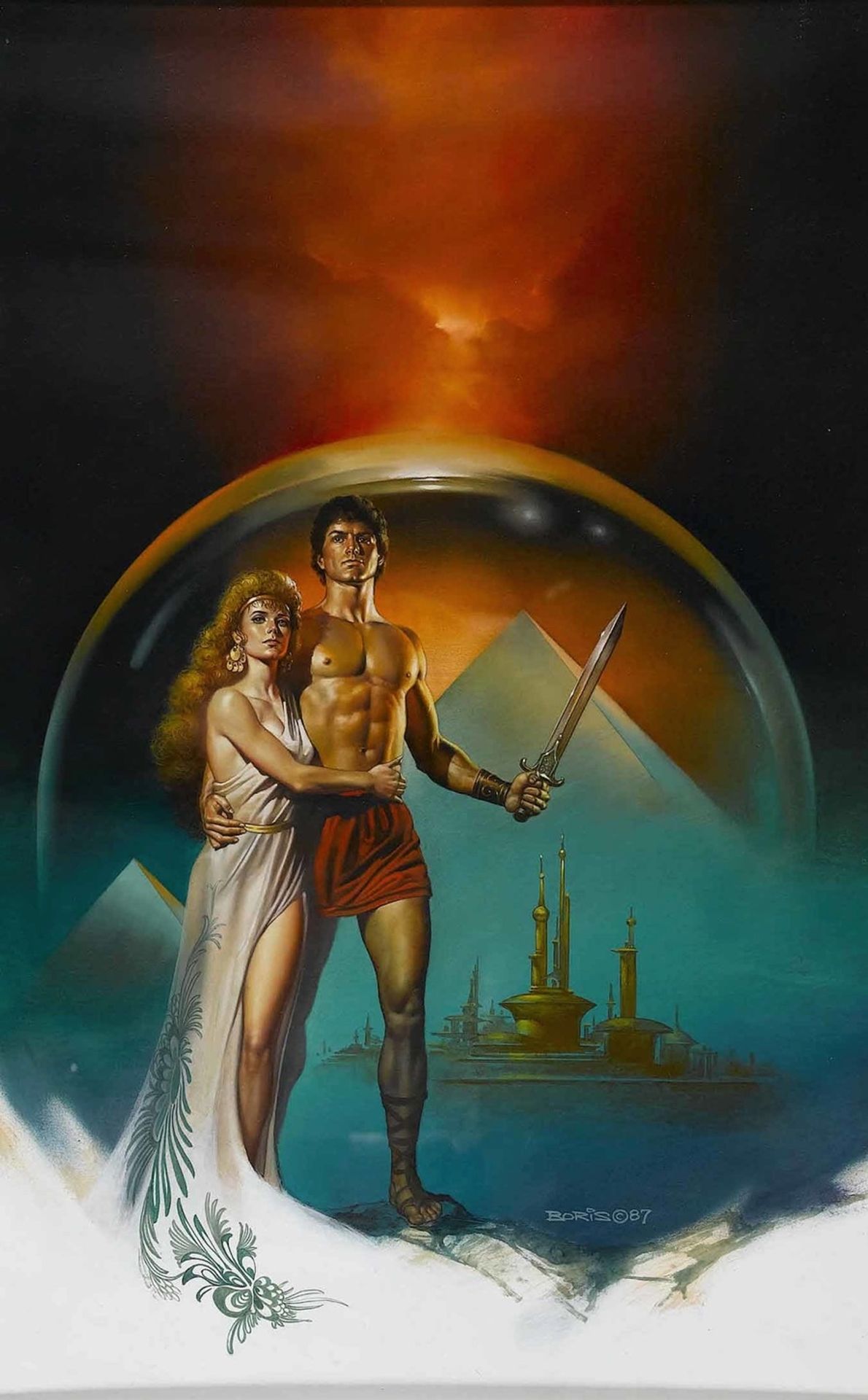
Curator: Here we have Boris Vallejo's 1988 cover art for the paperback edition of "Vengeance of Orion," a piece executed in acrylic paint. What are your initial thoughts? Editor: A primal scream rendered in shimmering colors! The juxtaposition of hyper-muscular figures and dreamlike landscapes evokes a sense of both ancient myth and futuristic yearning. Curator: Absolutely. Let’s contextualize this piece within its socio-political landscape. Emerging in the late 1980s, this imagery catered to anxieties surrounding shifting gender roles and an obsession with the hyper-masculine form prevalent during the Reagan era. This obsession extended from film icons like Rambo and permeated the media in its portrayal of the 'ideal man,' a concept that remains contested within discussions of representation and identity today. Editor: That chimes perfectly with how these symbols reverberate through culture. The sword, a clear symbol of power and authority, clashes with the woman clinging protectively. The phallic structures in the background–towers and pyramids–intensify this symbolism of dominance. It begs the question: who needs vengeance here? It hints at something deeper in the story than the narrative readily offers. Curator: I agree, and the positioning of the figures against this surreal backdrop becomes increasingly interesting. There's a stark division within the visual narrative—the couple occupies this plane hovering over what appears to be ancient monuments encased in what may be interpreted as either a protective bubble or prison, depending on your reading of its context. This can symbolize both promise and restriction; a duality echoing historical narratives of power, subjugation, and societal reform. Editor: It also invites us to consider universal, timeless motifs—the hero, the lover, the eternal quest. The fiery sky could represent apocalypse or catharsis. Curator: Precisely. Vallejo's creation acts as a microcosm for larger dialogues regarding gender, authority, and the narratives that shape our perception. Editor: What an amazing reflection on symbols shaping power! Curator: Indeed. By dissecting art through a socio-political lens, we unearth the embedded narratives that reflect back at us in today's climate of continuing gender inequity.

Artwork details
- Medium
- painting, acrylic-paint
- Copyright
- Modern Artists: Artvee
Tags
Comments
Share your thoughts
About this artwork
Curator: Here we have Boris Vallejo's 1988 cover art for the paperback edition of "Vengeance of Orion," a piece executed in acrylic paint. What are your initial thoughts? Editor: A primal scream rendered in shimmering colors! The juxtaposition of hyper-muscular figures and dreamlike landscapes evokes a sense of both ancient myth and futuristic yearning. Curator: Absolutely. Let’s contextualize this piece within its socio-political landscape. Emerging in the late 1980s, this imagery catered to anxieties surrounding shifting gender roles and an obsession with the hyper-masculine form prevalent during the Reagan era. This obsession extended from film icons like Rambo and permeated the media in its portrayal of the 'ideal man,' a concept that remains contested within discussions of representation and identity today. Editor: That chimes perfectly with how these symbols reverberate through culture. The sword, a clear symbol of power and authority, clashes with the woman clinging protectively. The phallic structures in the background–towers and pyramids–intensify this symbolism of dominance. It begs the question: who needs vengeance here? It hints at something deeper in the story than the narrative readily offers. Curator: I agree, and the positioning of the figures against this surreal backdrop becomes increasingly interesting. There's a stark division within the visual narrative—the couple occupies this plane hovering over what appears to be ancient monuments encased in what may be interpreted as either a protective bubble or prison, depending on your reading of its context. This can symbolize both promise and restriction; a duality echoing historical narratives of power, subjugation, and societal reform. Editor: It also invites us to consider universal, timeless motifs—the hero, the lover, the eternal quest. The fiery sky could represent apocalypse or catharsis. Curator: Precisely. Vallejo's creation acts as a microcosm for larger dialogues regarding gender, authority, and the narratives that shape our perception. Editor: What an amazing reflection on symbols shaping power! Curator: Indeed. By dissecting art through a socio-political lens, we unearth the embedded narratives that reflect back at us in today's climate of continuing gender inequity.
Comments
Share your thoughts