About this artwork
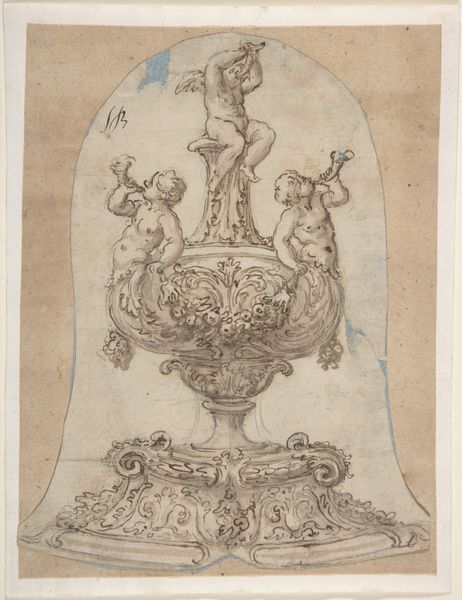
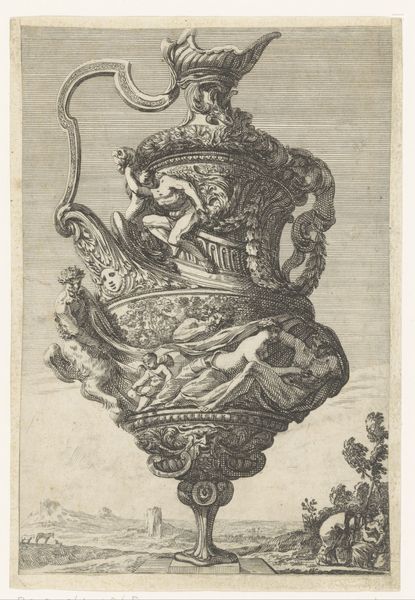
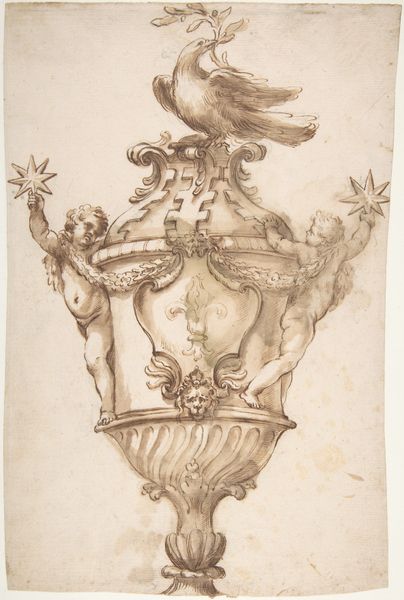
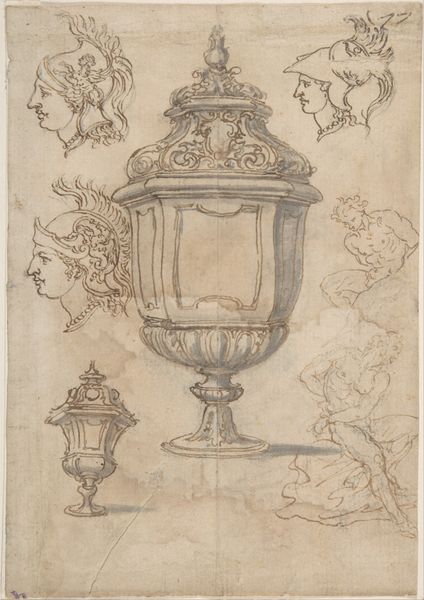
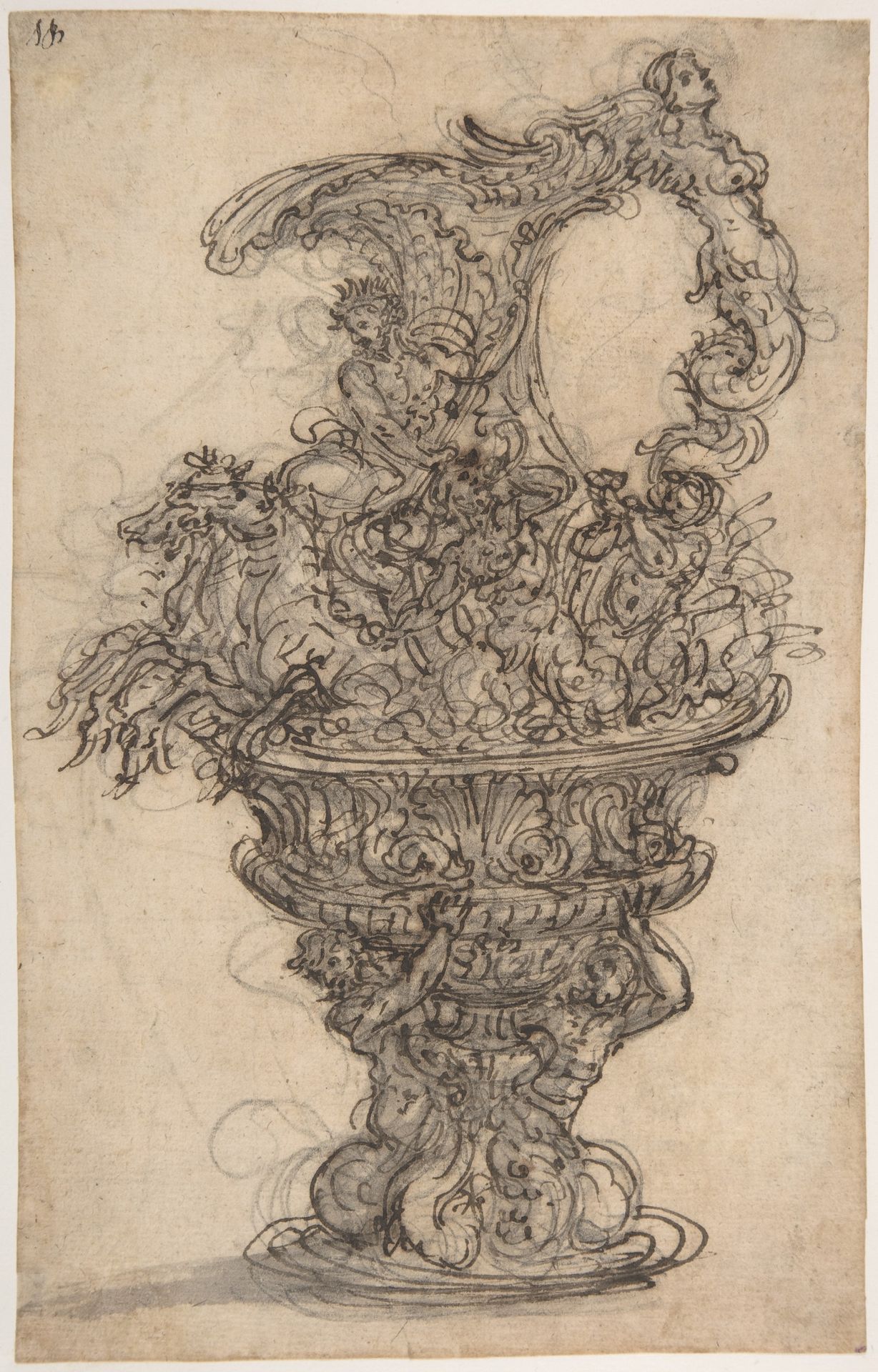
Editor: Here we have Giovanni Battista Foggini’s "Design for a Ewer with Neptune on his Chariot," dating from 1652 to 1725. It's an ink and pen drawing. It strikes me as a gloriously excessive design, almost baroque in its level of detail. What do you make of it? Curator: Well, it certainly speaks to the artistic patronage of the period. Drawings like this weren't simply artistic exercises; they were often proposals, attempts to secure commissions from wealthy patrons or institutions. Did such grandiose objects have any public use, and for what social or political purpose? Editor: That’s a great point! I was so caught up in the artistry, I didn't consider the audience. Curator: Exactly. The design, the imagery of Neptune – ruler of the seas – what message is that sending? Is it about power, trade, a connection to the wider world? The ewer itself, presumably made of precious metals if this design was ever realized, would become a potent symbol in a particular context. How do the dynamics of display in a palace affect this symbolism? Editor: So, this drawing becomes a kind of historical document itself, showcasing not only artistic skill but also the desires and values of a specific societal circle. Is there any other symbolism to be explored? Curator: Consider the choice of Neptune specifically. Were there trade wars with maritime rivals, internal squabbles for coastal territories, anything in the news influencing it at the time? Its reception would also vary greatly. Editor: It’s fascinating to see how something as seemingly straightforward as a design for an ornate ewer can reveal so much about the society that produced it! Curator: Indeed. Art objects always exist within a complex web of social, political, and economic factors. Looking at those factors provides insight and can make the object's cultural context more palpable.
Design for a Ewer with Neptune on his Chariot
1652 - 1725

Giovanni Battista Foggini
1652 - 1725
The Metropolitan Museum of Art
Metropolitan Museum of Art, New York, NYArtwork details
- Medium
- drawing, ink, pen
- Dimensions
- sheet: 10 11/16 x 6 15/16 in. (27.2 x 17.6 cm)
- Location
- Metropolitan Museum of Art, New York, NY
- Copyright
- Public Domain
Tags
drawing
ink drawing
baroque
pen drawing
ink
pen
history-painting
Comments
Be the first to share your thoughts about this work.
About this artwork
Editor: Here we have Giovanni Battista Foggini’s "Design for a Ewer with Neptune on his Chariot," dating from 1652 to 1725. It's an ink and pen drawing. It strikes me as a gloriously excessive design, almost baroque in its level of detail. What do you make of it? Curator: Well, it certainly speaks to the artistic patronage of the period. Drawings like this weren't simply artistic exercises; they were often proposals, attempts to secure commissions from wealthy patrons or institutions. Did such grandiose objects have any public use, and for what social or political purpose? Editor: That’s a great point! I was so caught up in the artistry, I didn't consider the audience. Curator: Exactly. The design, the imagery of Neptune – ruler of the seas – what message is that sending? Is it about power, trade, a connection to the wider world? The ewer itself, presumably made of precious metals if this design was ever realized, would become a potent symbol in a particular context. How do the dynamics of display in a palace affect this symbolism? Editor: So, this drawing becomes a kind of historical document itself, showcasing not only artistic skill but also the desires and values of a specific societal circle. Is there any other symbolism to be explored? Curator: Consider the choice of Neptune specifically. Were there trade wars with maritime rivals, internal squabbles for coastal territories, anything in the news influencing it at the time? Its reception would also vary greatly. Editor: It’s fascinating to see how something as seemingly straightforward as a design for an ornate ewer can reveal so much about the society that produced it! Curator: Indeed. Art objects always exist within a complex web of social, political, and economic factors. Looking at those factors provides insight and can make the object's cultural context more palpable.
Comments
Be the first to share your thoughts about this work.