About this artwork
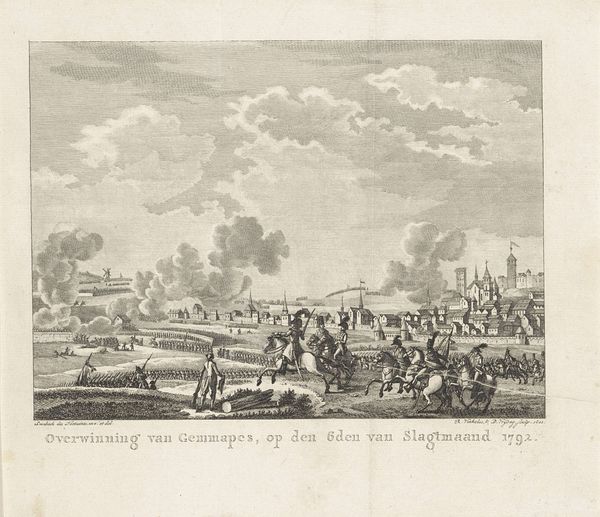
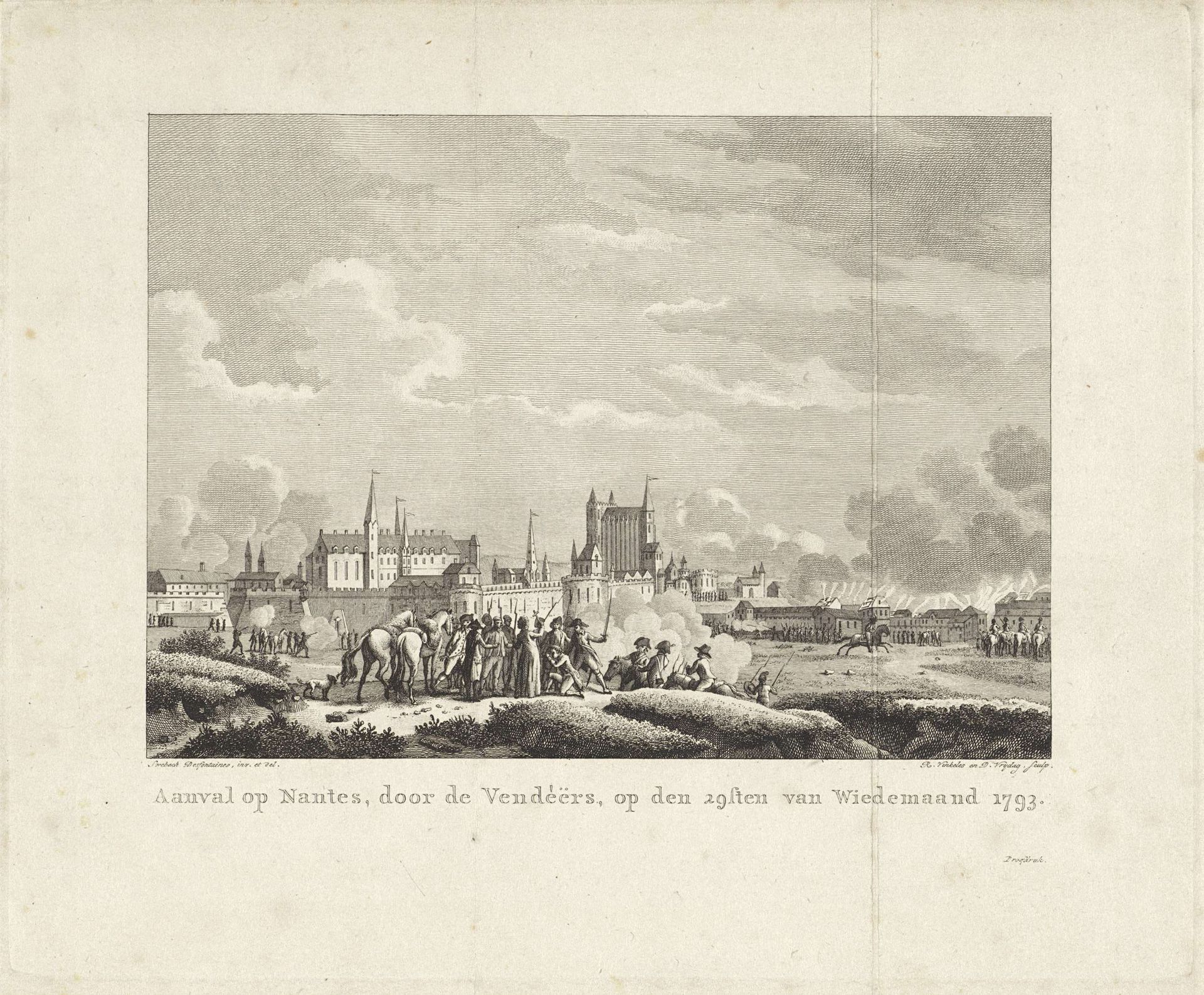
This print, made by Reinier Vinkeles around 1793, depicts the attack on Nantes using a technique called etching, which involves using acid to cut lines into a metal plate. The etcher carefully controls the depth and width of the lines to create a range of tones and textures, bringing the scene to life. Notice how the varying line weights create a sense of depth and drama, capturing the intensity of the battle. This image is not just a record of a historical event, but a testament to the skill and artistry involved in traditional printmaking. The process, though technical, allowed for the relatively quick reproduction of images, making them accessible to a wider audience, and playing a critical role in shaping public opinion during times of political upheaval. By valuing these techniques, we honor the rich history of creative expression and the skilled individuals who have shaped our visual world.
Aanval op Nantes, door de Vendeers, op den 29sten van Wiedemaand 1793
1793 - 1795

Reinier Vinkeles
1741 - 1816Location
RijksmuseumArtwork details
- Medium
- print, engraving
- Dimensions
- height 225 mm, width 275 mm
- Location
- Rijksmuseum
- Copyright
- Rijks Museum: Open Domain
Tags
Comments
Share your thoughts
About this artwork
This print, made by Reinier Vinkeles around 1793, depicts the attack on Nantes using a technique called etching, which involves using acid to cut lines into a metal plate. The etcher carefully controls the depth and width of the lines to create a range of tones and textures, bringing the scene to life. Notice how the varying line weights create a sense of depth and drama, capturing the intensity of the battle. This image is not just a record of a historical event, but a testament to the skill and artistry involved in traditional printmaking. The process, though technical, allowed for the relatively quick reproduction of images, making them accessible to a wider audience, and playing a critical role in shaping public opinion during times of political upheaval. By valuing these techniques, we honor the rich history of creative expression and the skilled individuals who have shaped our visual world.
Comments
Share your thoughts