About this artwork
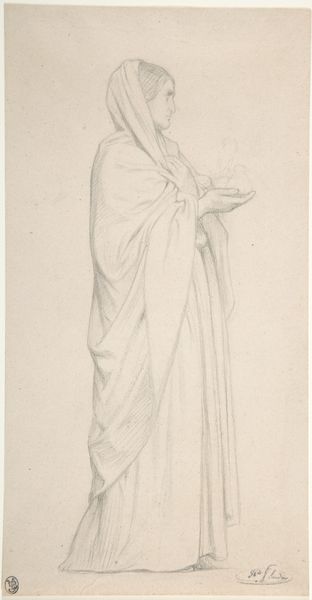
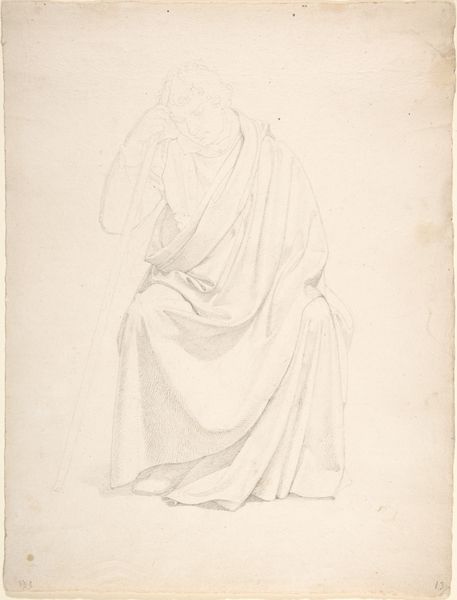
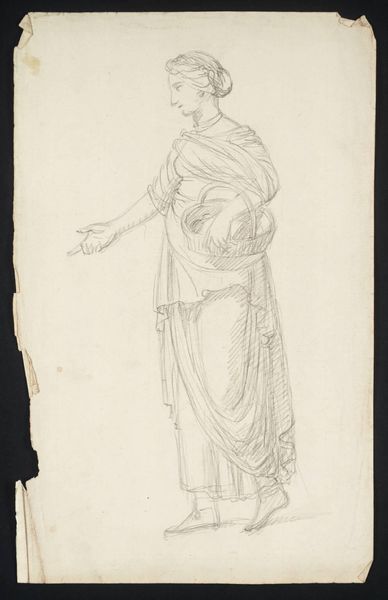
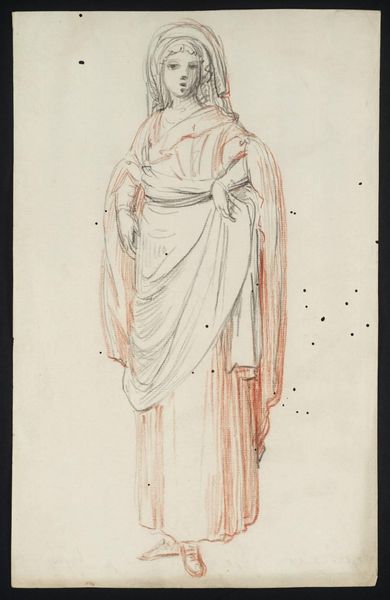
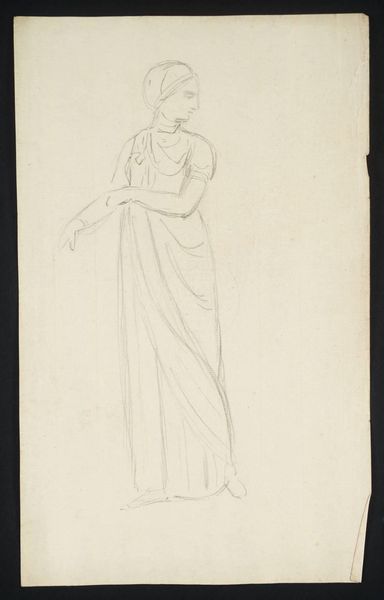
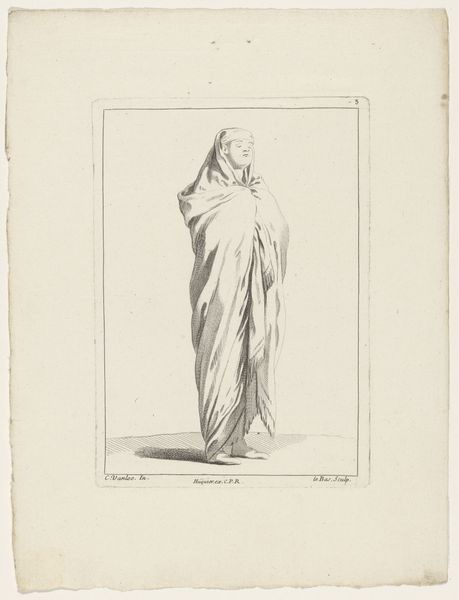
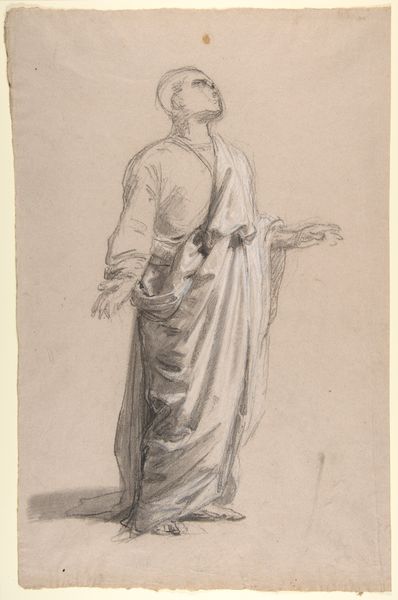
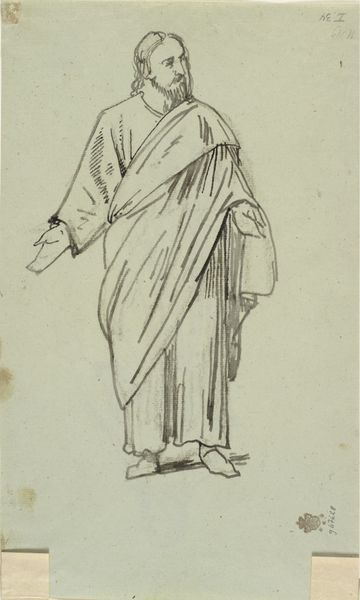
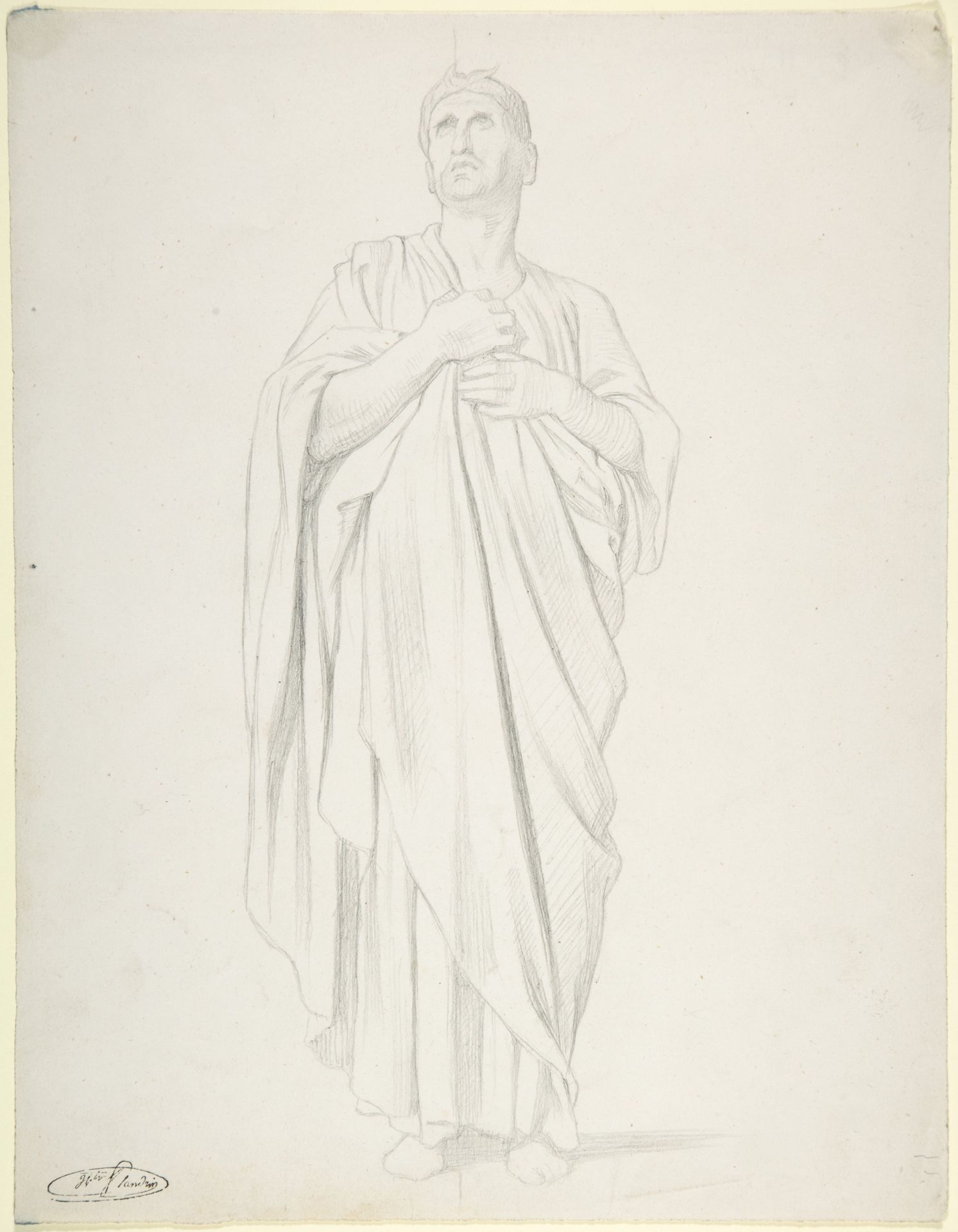
Hippolyte Flandrin created this graphite drawing, "Study of an Apostle," between 1839 and 1863, as a preparatory sketch for his larger painting of the Ascension in Saint-Germain-des-Pres, Paris. Flandrin, working in 19th century France, lived in a time where academic art was the standard. Yet, this study carries an emotional weight. Look at the apostle's face, caught between solemnity and upward gaze, conveying a sense of hope. His robes, draped in classical style, also conceal. What does it mean to represent spiritual figures with such controlled emotion, at a time when religious and social norms were deeply intertwined? Flandrin’s choice to depict this figure with a blend of classical idealism and restrained emotion invites us to consider the complex relationship between faith, identity, and representation in 19th-century art. This drawing captures not just a study of form, but also a study of feeling, of the internal life made visible through the subtle art of portraiture.
Study of an Apostle, for the painting of the Ascension in Saint-Germain-des-Pres, Paris (1839-1863) 1822 - 1864


Artwork details
- Medium
- drawing, print, pencil
- Dimensions
- 11 1/16 x 8 9/16 in. (28.1 x 21.8cm)
- Location
- Metropolitan Museum of Art, New York, NY
- Copyright
- Public Domain
Tags
portrait
pencil drawn
drawing
pencil sketch
classical-realism
pencil drawing
pencil
academic-art
Comments
No comments
About this artwork
Hippolyte Flandrin created this graphite drawing, "Study of an Apostle," between 1839 and 1863, as a preparatory sketch for his larger painting of the Ascension in Saint-Germain-des-Pres, Paris. Flandrin, working in 19th century France, lived in a time where academic art was the standard. Yet, this study carries an emotional weight. Look at the apostle's face, caught between solemnity and upward gaze, conveying a sense of hope. His robes, draped in classical style, also conceal. What does it mean to represent spiritual figures with such controlled emotion, at a time when religious and social norms were deeply intertwined? Flandrin’s choice to depict this figure with a blend of classical idealism and restrained emotion invites us to consider the complex relationship between faith, identity, and representation in 19th-century art. This drawing captures not just a study of form, but also a study of feeling, of the internal life made visible through the subtle art of portraiture.
Comments
No comments