About this artwork
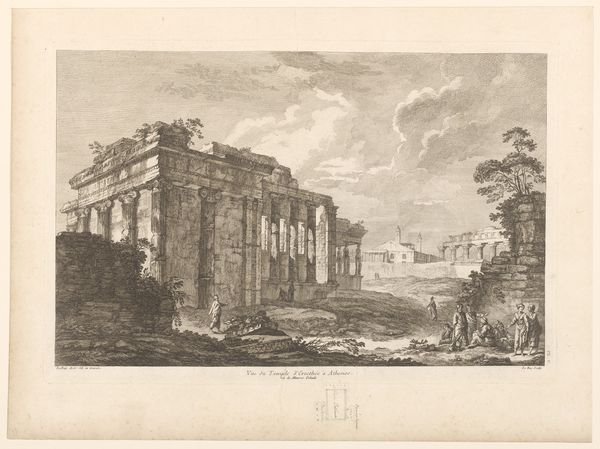
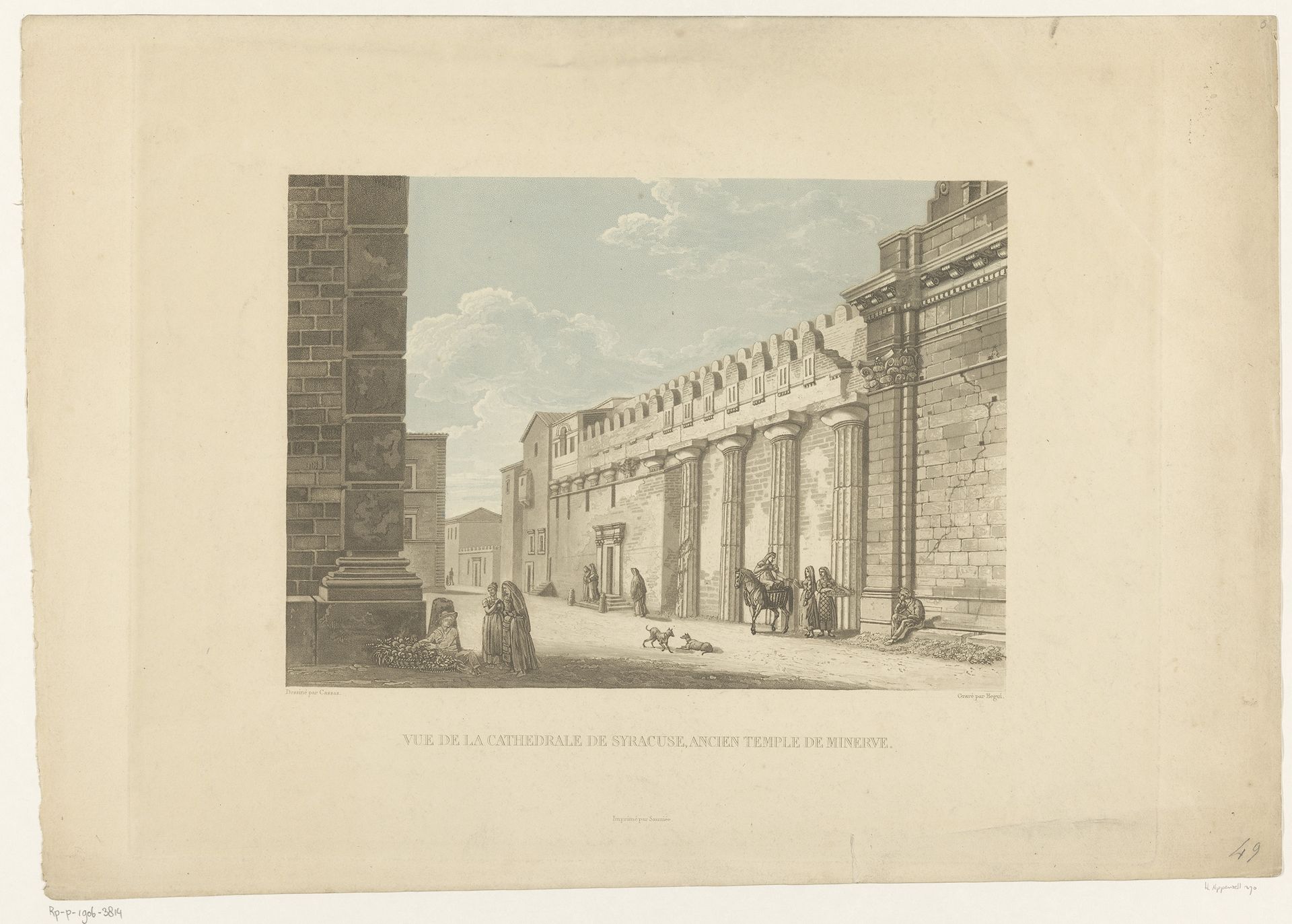
Franz Hegi made this print of the Syracuse Cathedral, or Duomo, in Sicily, using etching. The cathedral is a fascinating architectural palimpsest, a layering of historical styles and religious functions. Originally a Greek temple dedicated to Athena, it was converted into a Christian church in the 7th century. Hegi’s image, made sometime before 1850, captures this layering, as the ancient columns of the temple of Athena are clearly visible, incorporated into the walls of the church. This kind of architectural hybridity speaks to Sicily’s complex history as a crossroads of cultures, from ancient Greece and Rome to the Byzantine Empire, the Arab world, and Norman Europe. Hegi's print serves as a visual document of this history, inviting us to consider the ways in which different cultures and religions have shaped the island's identity. By researching the history of Syracuse, we gain insight into the social, political, and religious forces that have shaped this remarkable building.
Gezicht op de linkerzijde van de kathedraal in Syracuse
1812 - 1850

Franz Hegi
1774 - 1850Location
RijksmuseumArtwork details
- Medium
- print, engraving
- Dimensions
- height 365 mm, width 430 mm
- Location
- Rijksmuseum
- Copyright
- Rijks Museum: Open Domain
Tags
neoclacissism
old engraving style
landscape
cityscape
engraving
realism
Comments
Be the first to share your thoughts about this work.
About this artwork
Franz Hegi made this print of the Syracuse Cathedral, or Duomo, in Sicily, using etching. The cathedral is a fascinating architectural palimpsest, a layering of historical styles and religious functions. Originally a Greek temple dedicated to Athena, it was converted into a Christian church in the 7th century. Hegi’s image, made sometime before 1850, captures this layering, as the ancient columns of the temple of Athena are clearly visible, incorporated into the walls of the church. This kind of architectural hybridity speaks to Sicily’s complex history as a crossroads of cultures, from ancient Greece and Rome to the Byzantine Empire, the Arab world, and Norman Europe. Hegi's print serves as a visual document of this history, inviting us to consider the ways in which different cultures and religions have shaped the island's identity. By researching the history of Syracuse, we gain insight into the social, political, and religious forces that have shaped this remarkable building.
Comments
Be the first to share your thoughts about this work.