About this artwork
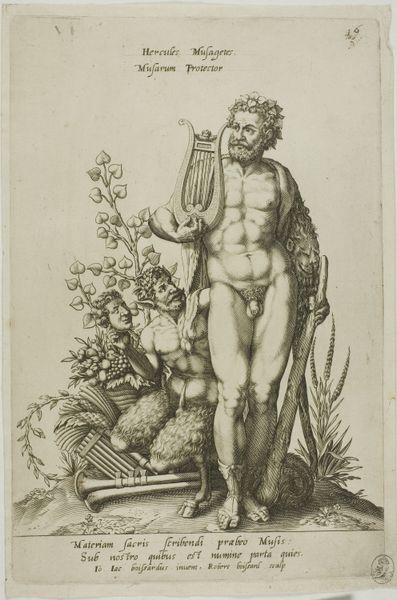
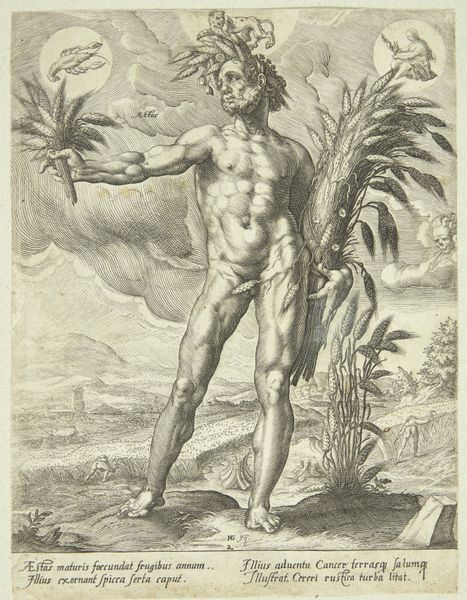
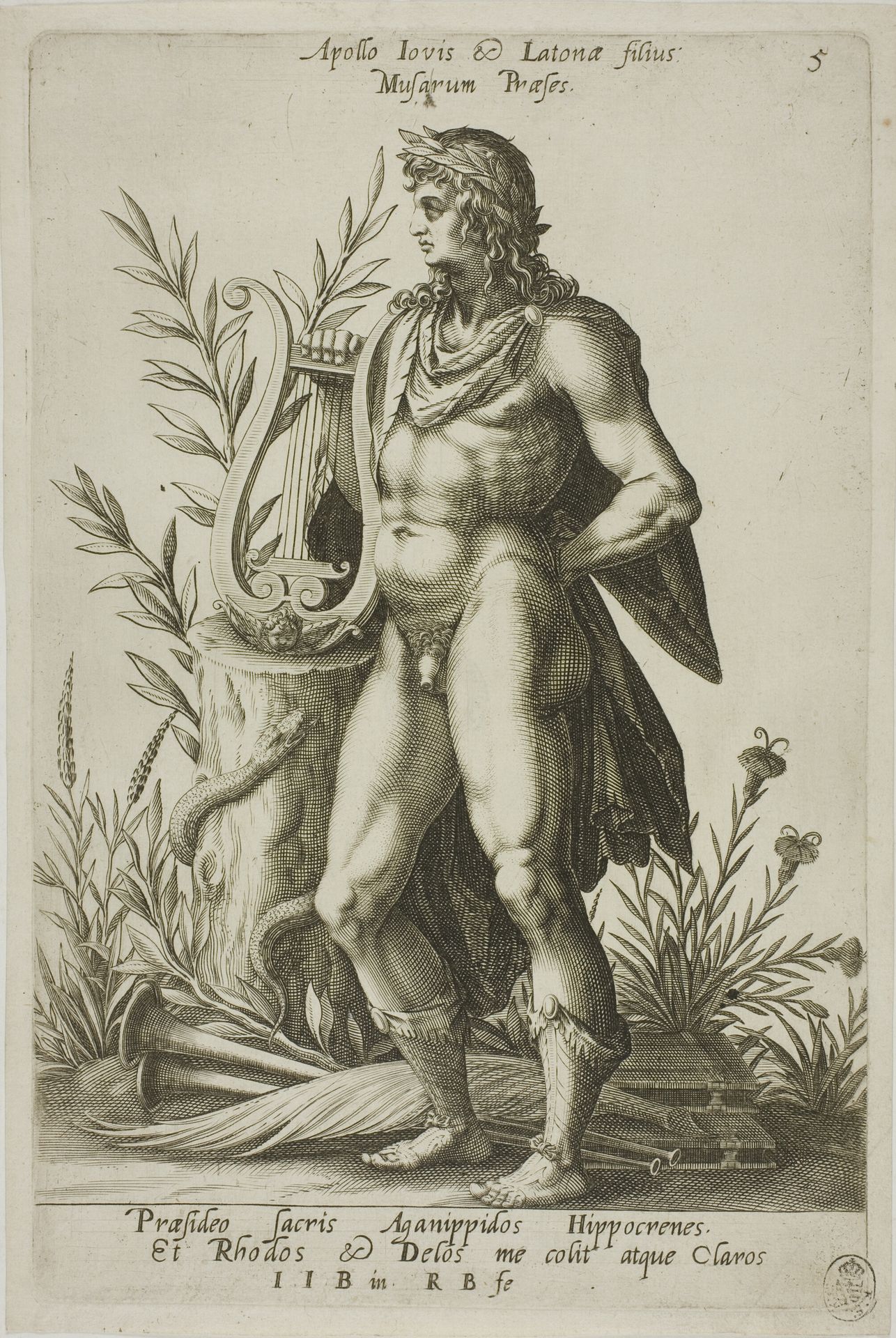
Robert Boissard created this print, *Apollo, plate 5 from Parnassus Biceps,* sometime in the late 16th or early 17th century. During this time, the rediscovery of classical art and literature heavily influenced European art. Here we see the god Apollo, nude, athletic, and wreathed, embodying ideals of masculine beauty from ancient Greece. Look closely, and you’ll notice that this isn’t simply a celebration of the male form. Consider what it meant to depict a mythological figure like Apollo, during an era marked by rigid social hierarchies and religious norms. Boissard challenges us to consider shifting attitudes towards the body and sexuality. How does Boissard use the figure of Apollo to navigate the complex terrain of cultural heritage, personal expression, and societal expectations? In a time of both religious devotion and emerging scientific inquiry, artists often turned to classical mythology as a means of exploring the boundaries of knowledge, desire, and identity. The way that Boissard uses Apollo reflects society's developing values, and the emotional, intellectual, and spiritual explorations of the time.
Apollo, plate 5 from Parnassus Biceps
1601


Artwork details
- Medium
- drawing, print, paper, engraving
- Dimensions
- 250 × 179 mm (image); 271 × 179 mm (plate); 284 × 188 mm (sheet)
- Location
- The Art Institute of Chicago
- Copyright
- Public Domain
Tags
Comments
Share your thoughts
About this artwork
Robert Boissard created this print, *Apollo, plate 5 from Parnassus Biceps,* sometime in the late 16th or early 17th century. During this time, the rediscovery of classical art and literature heavily influenced European art. Here we see the god Apollo, nude, athletic, and wreathed, embodying ideals of masculine beauty from ancient Greece. Look closely, and you’ll notice that this isn’t simply a celebration of the male form. Consider what it meant to depict a mythological figure like Apollo, during an era marked by rigid social hierarchies and religious norms. Boissard challenges us to consider shifting attitudes towards the body and sexuality. How does Boissard use the figure of Apollo to navigate the complex terrain of cultural heritage, personal expression, and societal expectations? In a time of both religious devotion and emerging scientific inquiry, artists often turned to classical mythology as a means of exploring the boundaries of knowledge, desire, and identity. The way that Boissard uses Apollo reflects society's developing values, and the emotional, intellectual, and spiritual explorations of the time.
Comments
Share your thoughts