1889
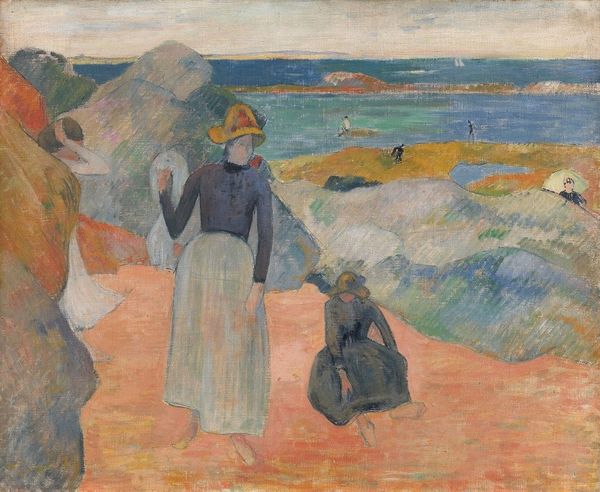
The Kelp Gatherers


Listen to curator's interpretation
Curatorial notes
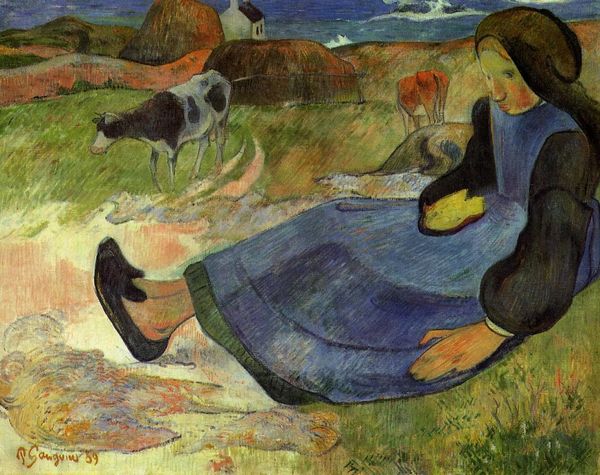
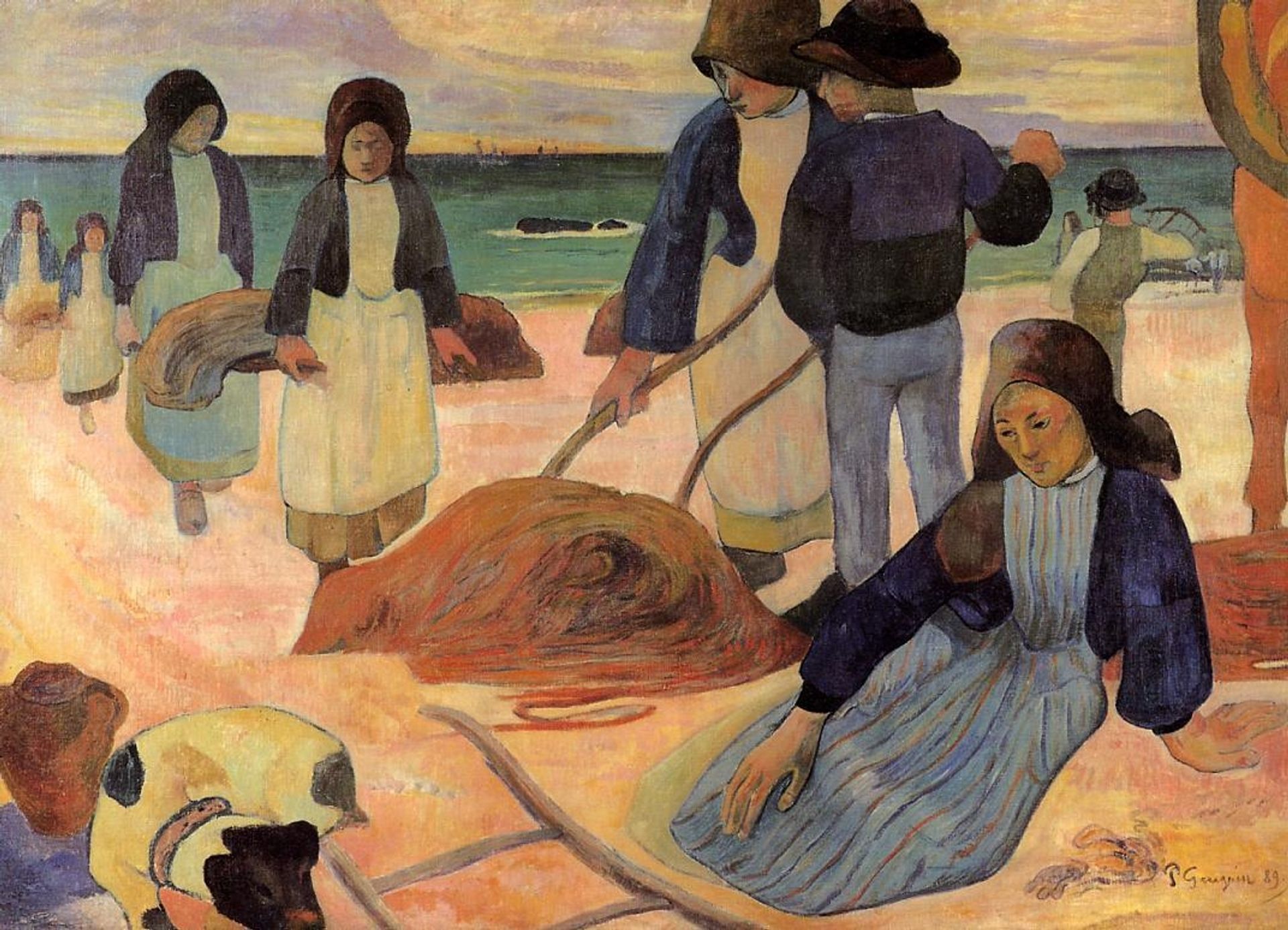
Paul Gauguin rendered "The Kelp Gatherers," an oil on canvas, with dimensions of 123 by 87 centimeters. At first glance, you are met with the artist's post-impressionistic style, which prioritizes blocks of color and flattened perspective. Gauguin’s composition unfolds as a rhythmic interplay of figures against a backdrop of the sea. The painting’s structural elements include the figures themselves, arranged in a frieze-like manner that eschews traditional depth for a more immediate, surface-oriented experience. These forms invite a semiotic reading, where each element—the kelp, the sea, the laborers—functions as a signifier. The absence of shadow enhances the sense of flatness, challenging conventional notions of space and form. The piece is not merely a representation but a meditation on labor and the human relationship with nature. It rejects academic realism, embracing instead a symbolic language that invites introspection. The painting’s formal qualities lead us to question how Gauguin challenges the traditional values of Western art. It is a call to rethink our expectations of what a painting should represent and how it communicates meaning.