About this artwork
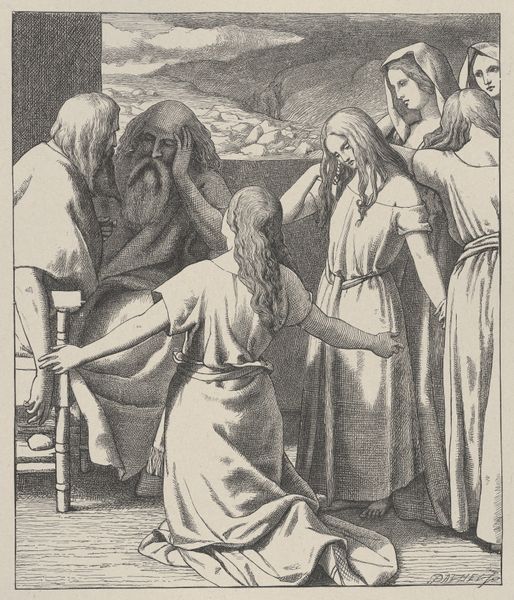
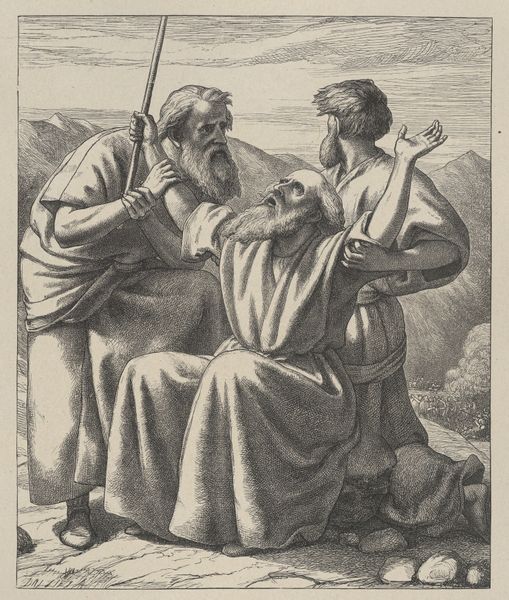
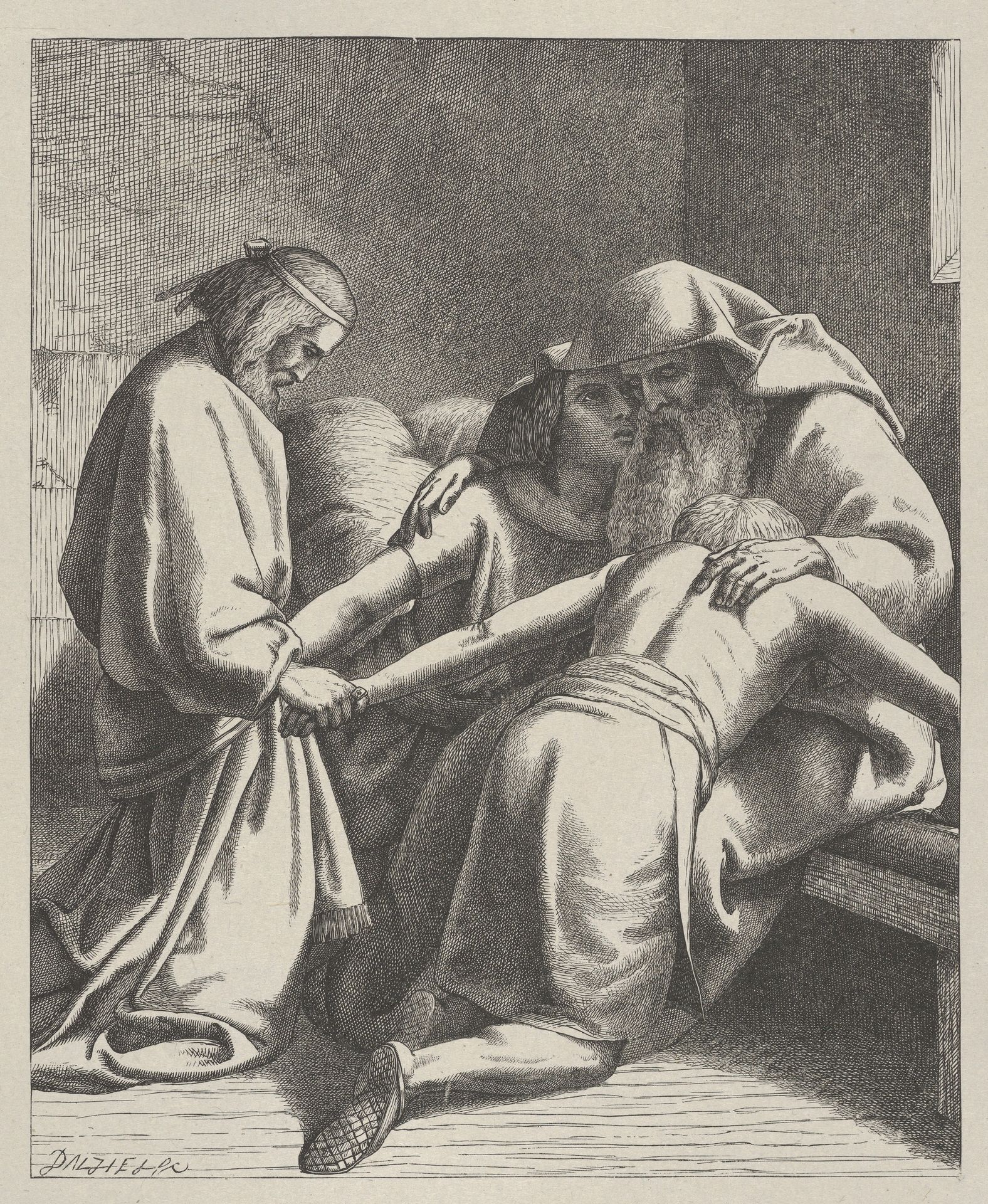
This print by Frederick Richard Pickersgill illustrates Jacob blessing his grandsons, Ephraim and Manasseh. The patriarchal blessing, a symbol of familial continuity and divine favor, is central here. Jacob's hands, crossed in a deliberate act, defy the natural order of inheritance, a visual motif charged with meaning. Consider the gesture of blessing – a hand raised or placed upon the head, a conduit of grace. We find echoes of it in countless images across cultures, from the laying on of hands in religious rituals to the benedictions of secular leaders. Yet, here, the crossing of hands introduces a disruption. It challenges the viewer to confront notions of destiny and divine intervention. This motif transcends mere representation; it taps into primal anxieties about legacy and succession. In the Renaissance, similar gestures appear in depictions of familial inheritance, laden with political implications. The blessing hand has evolved to represent an unbroken chain, resurfacing and taking on new meanings in different historical contexts.
Jacob Blessing Ephraim and Manasseh, from "Dalziels' Bible Gallery" 1881

Frederick Richard Pickersgill
1820 - 1900
The Metropolitan Museum of Art
Metropolitan Museum of Art, New York, NYArtwork details
- Medium
- drawing, print, engraving
- Dimensions
- Image: 8 7/16 × 6 15/16 in. (21.5 × 17.6 cm) India sheet: 10 5/8 × 8 7/8 in. (27 × 22.5 cm) Mount: 16 7/16 in. × 12 15/16 in. (41.8 × 32.8 cm)
- Location
- Metropolitan Museum of Art, New York, NY
- Copyright
- Public Domain
Tags
drawing
narrative-art
history-painting
academic-art
engraving
Comments
No comments
About this artwork
This print by Frederick Richard Pickersgill illustrates Jacob blessing his grandsons, Ephraim and Manasseh. The patriarchal blessing, a symbol of familial continuity and divine favor, is central here. Jacob's hands, crossed in a deliberate act, defy the natural order of inheritance, a visual motif charged with meaning. Consider the gesture of blessing – a hand raised or placed upon the head, a conduit of grace. We find echoes of it in countless images across cultures, from the laying on of hands in religious rituals to the benedictions of secular leaders. Yet, here, the crossing of hands introduces a disruption. It challenges the viewer to confront notions of destiny and divine intervention. This motif transcends mere representation; it taps into primal anxieties about legacy and succession. In the Renaissance, similar gestures appear in depictions of familial inheritance, laden with political implications. The blessing hand has evolved to represent an unbroken chain, resurfacing and taking on new meanings in different historical contexts.
Comments
No comments