1645
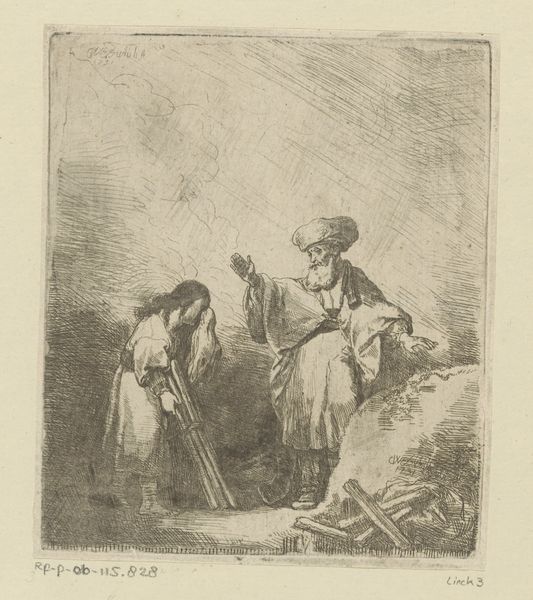
Abraham and Isaac

Rembrandt van Rijn
1606 - 1669Location
RijksmuseumListen to curator's interpretation
Curatorial notes
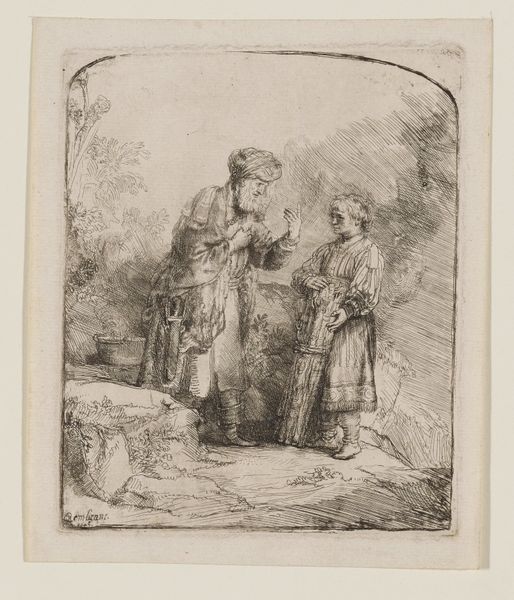
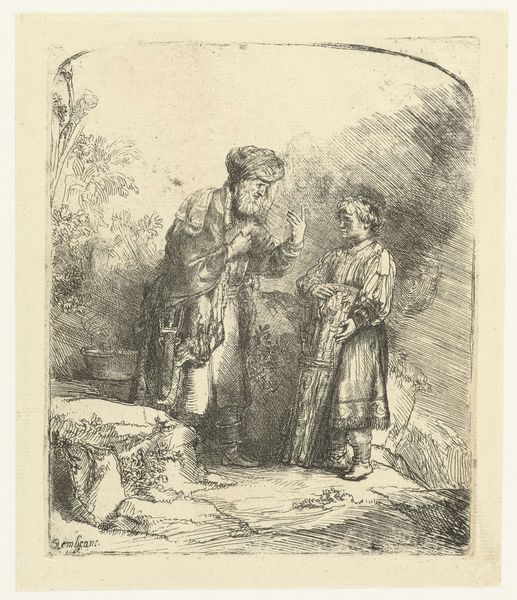
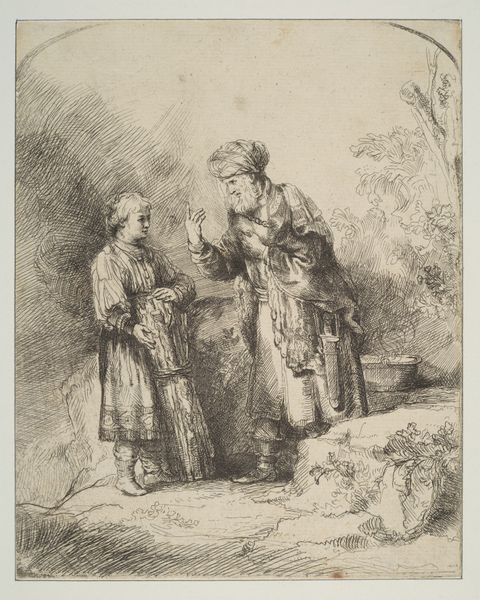
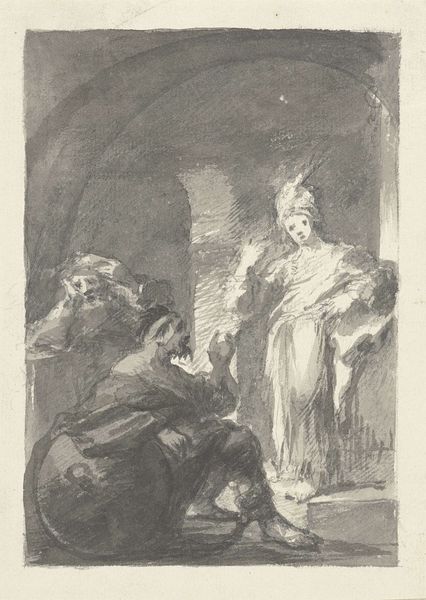
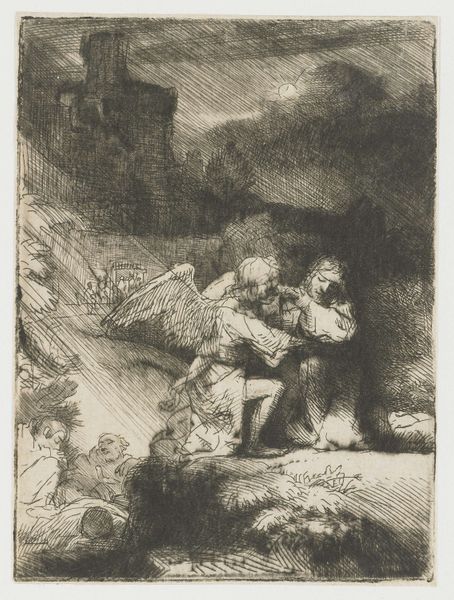
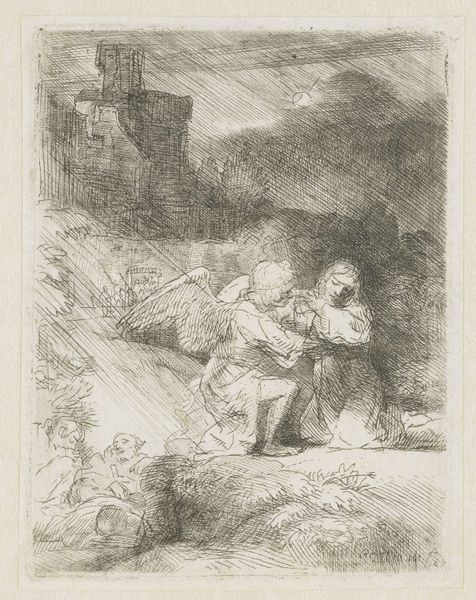
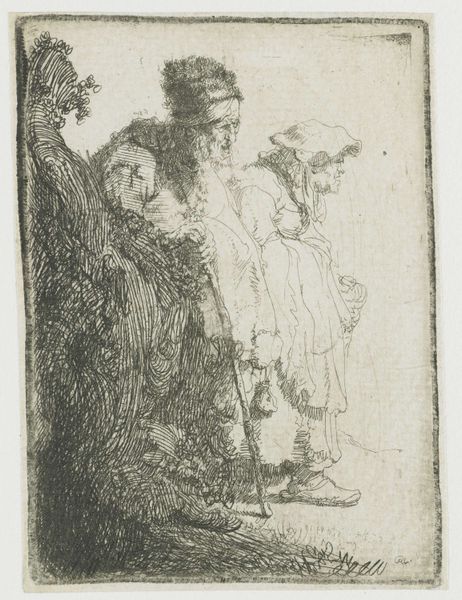
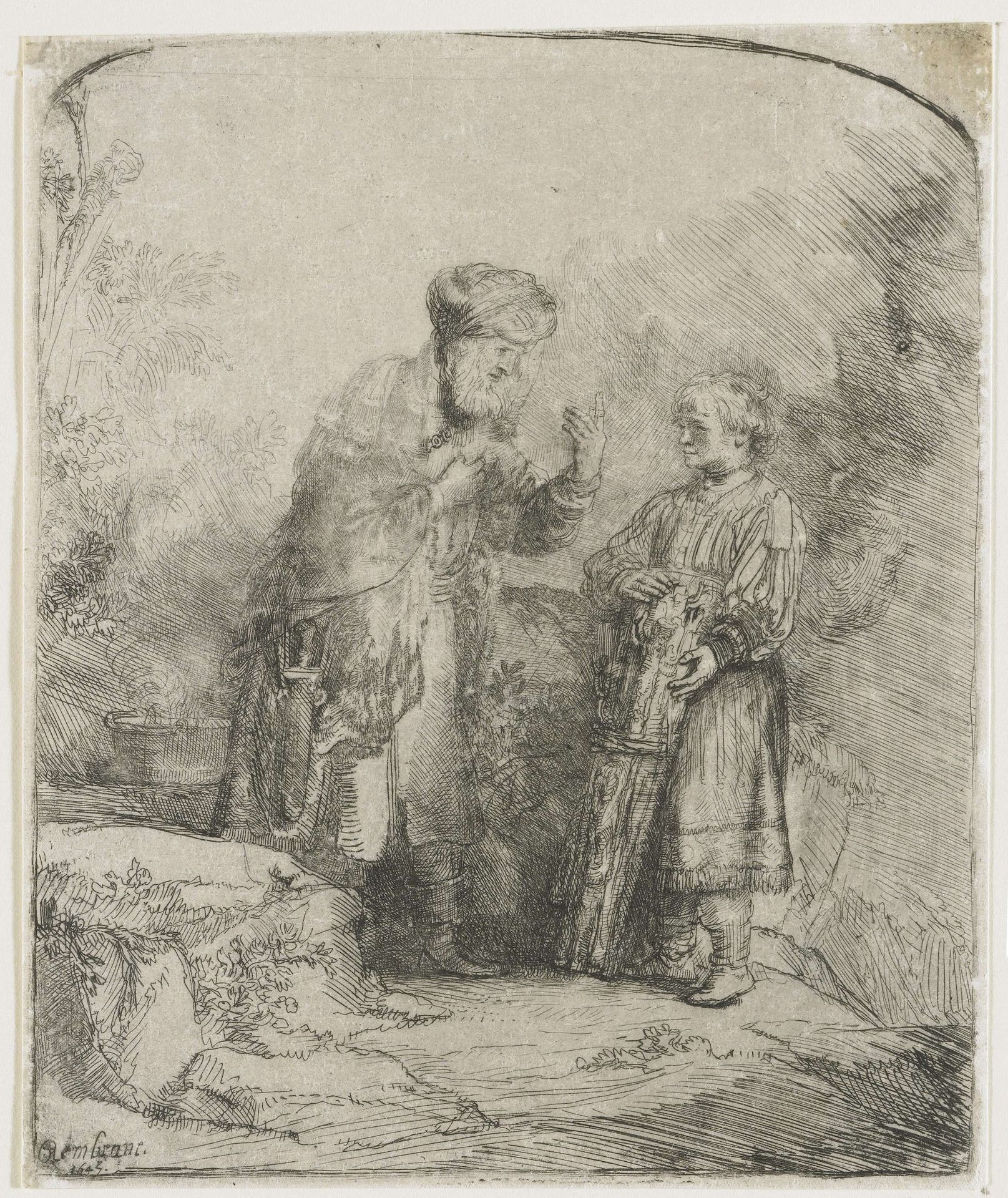
Curator: Immediately striking is the somber mood evoked through delicate strokes, the tonal gradations adding to the visual drama, even in miniature scale. Editor: Indeed. This is "Abraham and Isaac," an etching crafted by Rembrandt van Rijn in 1645. Rembrandt, known for his command of light and shadow, translates a poignant biblical scene into this subtle, emotive print now held at the Rijksmuseum. Curator: Notice the interplay of light; it falls quite pointedly on the faces, underscoring their psychological state, from what can be surmised as bewilderment to absolute devotion. Editor: Yes, this divine trial encapsulates the Old Testament's dramatic confrontations between faith and duty, promise and despair. Abraham's turbaned figure feels burdened. Curator: His garments indicate a man of significance, certainly, but look at his hand raised. The visual effect renders him momentarily still, mid-speech as if reconsidering an action he can scarcely comprehend. The blade’s visibility on his robe reveals more to this dramatic and grim picture. Editor: Absolutely. The symbolism speaks directly to the Abrahamic covenant; but look, there are nuances: the very palpable father-son dynamic playing out. It echoes even today the parental demand and childish expectation present in this visual narrative. Curator: We’re accustomed to seeing the drama heightened in painting, where colors saturate the subject. In etching, Rembrandt's use of line achieves a similar end. Its intimacy is gripping. Editor: What do you take away from this etching’s treatment? Curator: The narrative reverberates far beyond its initial setting. Sacrifice. It represents all forms of submission across societal power structures. And from the formal side, a strong composition belies an extremely delicate, almost vulnerable use of etching. Editor: I will echo your points that there’s power in the subdued aesthetic—it urges one to ponder the intricacies within the story's broad themes of faith, obedience, and fatherhood. Curator: Agreed. Ultimately, its modest size and monochrome quality only add to the immense emotions simmering just beneath the surface.