About this artwork
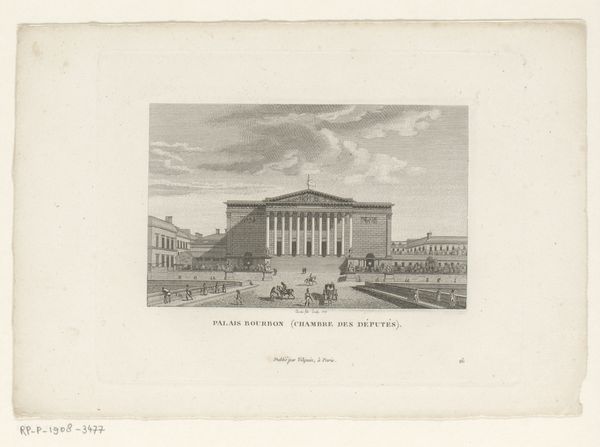
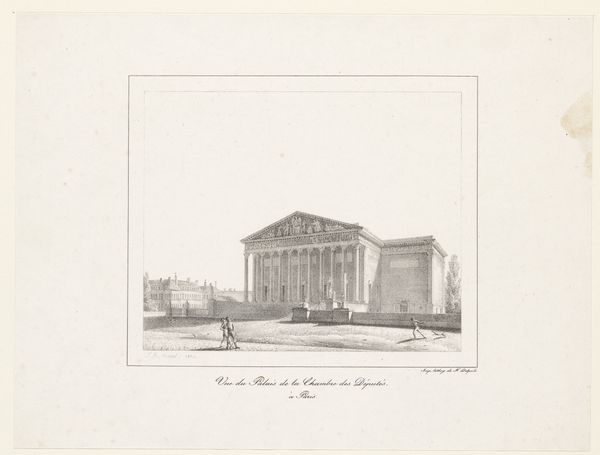
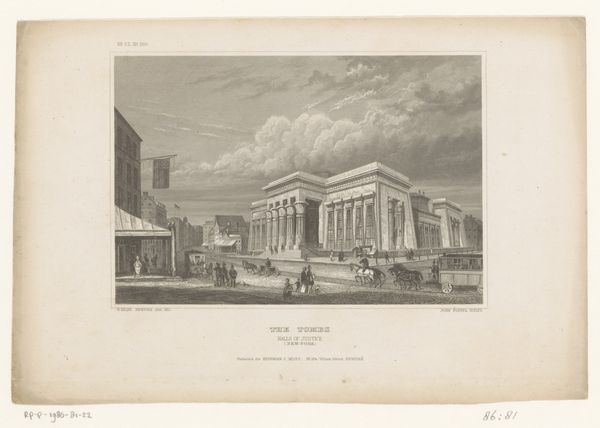
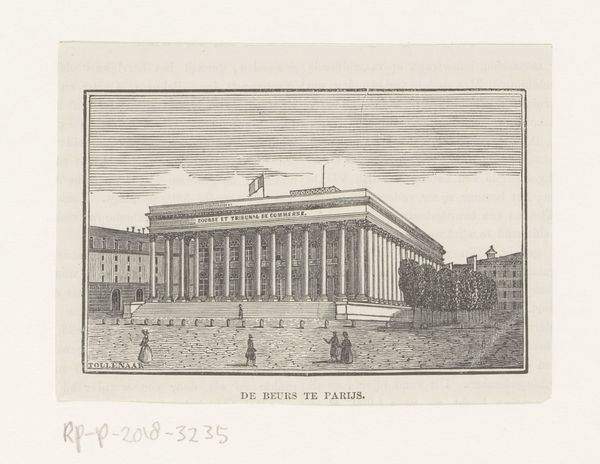
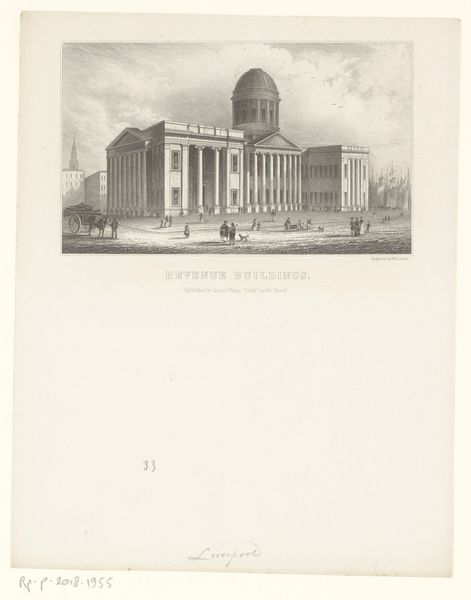
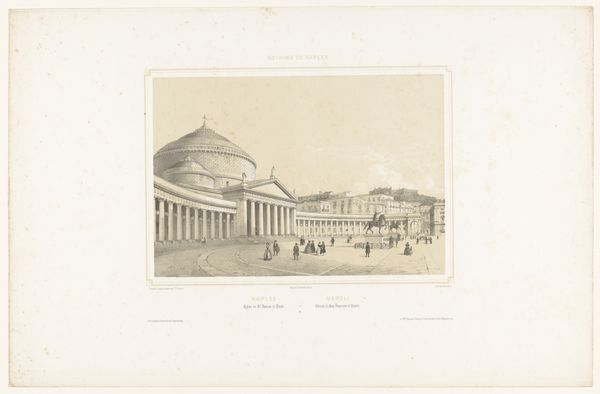
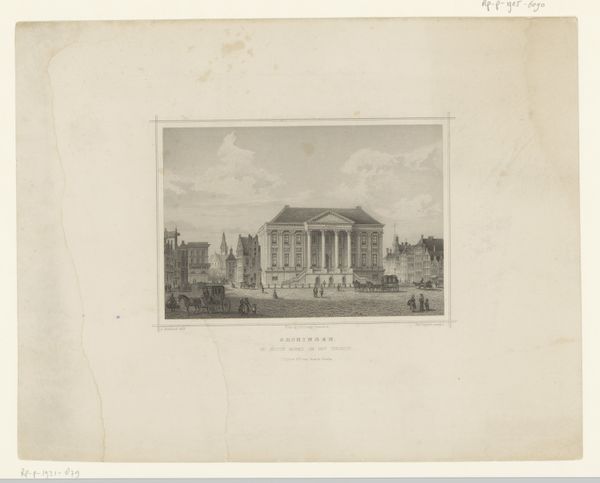
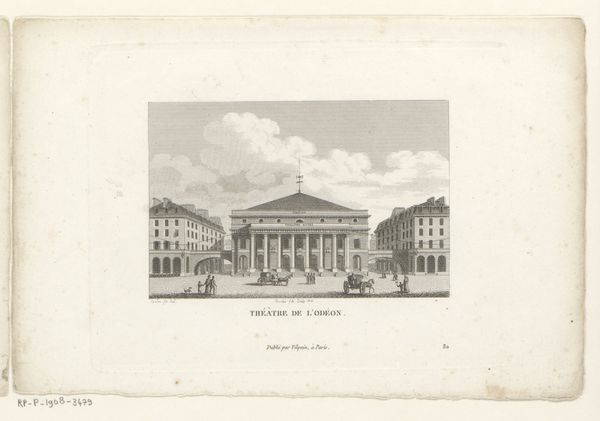
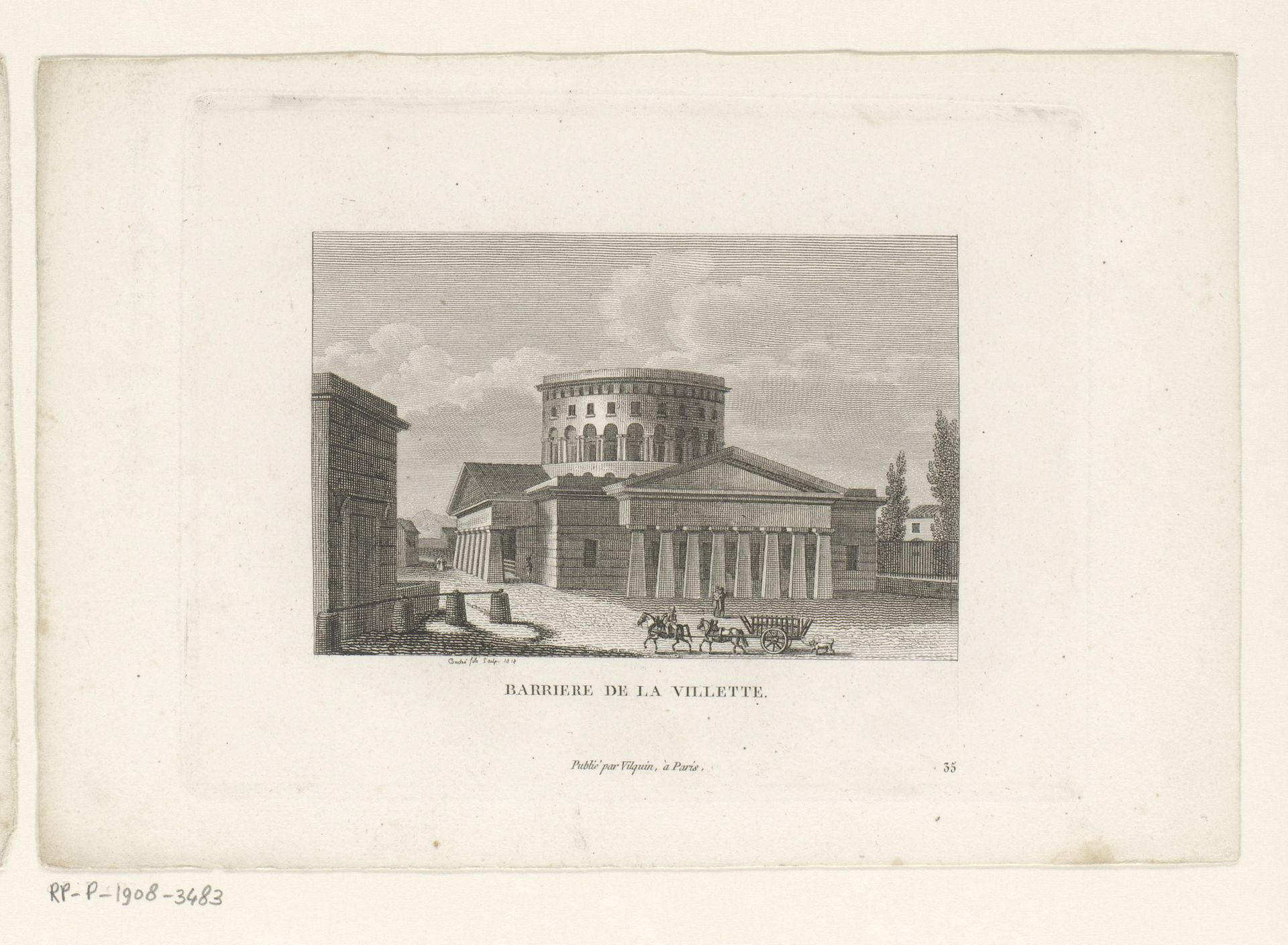
François Louis Couché created this print of the Rotonde de la Villette in Paris. At the time the print was made, Paris was undergoing radical changes. The city’s physical and social landscape was being reshaped by industrialization, urbanization, and political upheaval. The Rotonde, initially a customs building, stood as a literal gate between the city and its outskirts. It controlled the flow of goods and people, embodying the power dynamics inherent in urban development. This print offers a glimpse into the socio-economic structures of 19th-century Paris, where class distinctions were stark, and access to resources was unevenly distributed. The figures in the foreground, likely laborers or merchants, are dwarfed by the imposing architecture, which suggests the individual's place in the grand scheme of the city. The image, with its neoclassical design, presents an idealized view of progress, while hinting at the underlying tensions of a society in flux. As you contemplate this image, consider who benefits from this vision of progress, and who is marginalized in its wake.
Gezicht op de Rotonde de la Villette te Parijs
1818

François Louis Couché
1782 - 1849Location
RijksmuseumArtwork details
- Medium
- drawing, print, paper, pencil, engraving
- Dimensions
- height 125 mm, width 160 mm
- Location
- Rijksmuseum
- Copyright
- Rijks Museum: Open Domain
Tags
Comments
Share your thoughts
About this artwork
François Louis Couché created this print of the Rotonde de la Villette in Paris. At the time the print was made, Paris was undergoing radical changes. The city’s physical and social landscape was being reshaped by industrialization, urbanization, and political upheaval. The Rotonde, initially a customs building, stood as a literal gate between the city and its outskirts. It controlled the flow of goods and people, embodying the power dynamics inherent in urban development. This print offers a glimpse into the socio-economic structures of 19th-century Paris, where class distinctions were stark, and access to resources was unevenly distributed. The figures in the foreground, likely laborers or merchants, are dwarfed by the imposing architecture, which suggests the individual's place in the grand scheme of the city. The image, with its neoclassical design, presents an idealized view of progress, while hinting at the underlying tensions of a society in flux. As you contemplate this image, consider who benefits from this vision of progress, and who is marginalized in its wake.
Comments
Share your thoughts