About this artwork
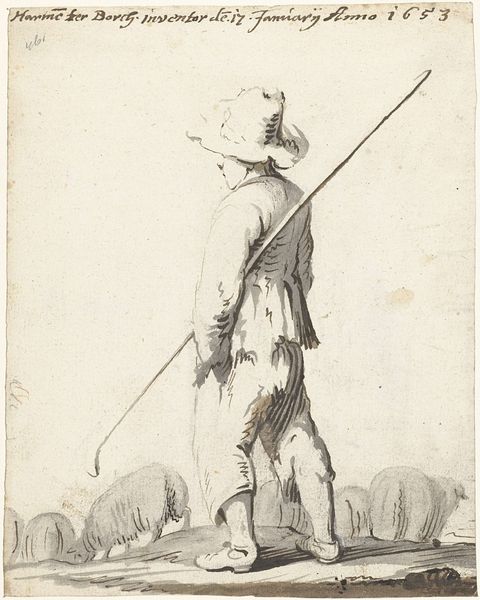
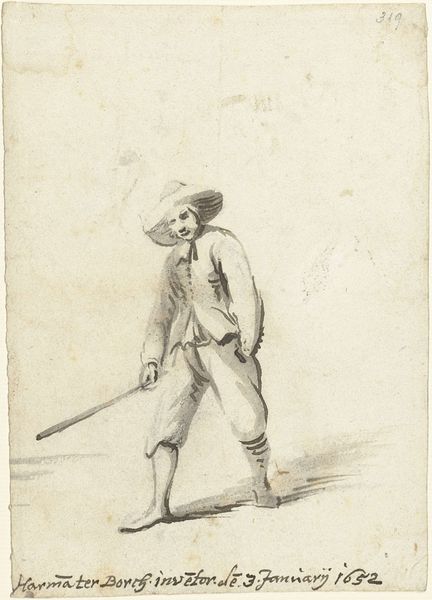
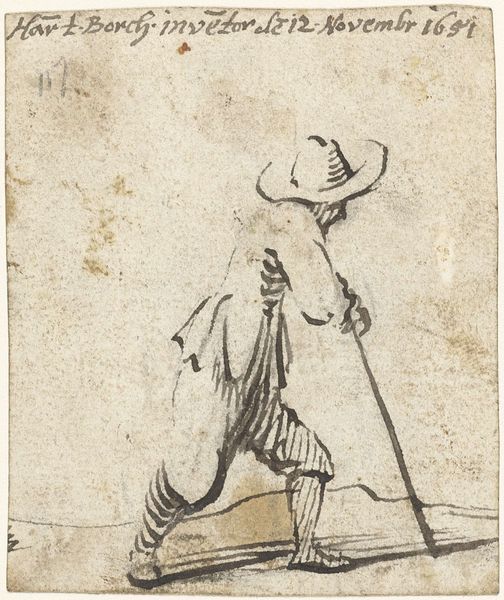
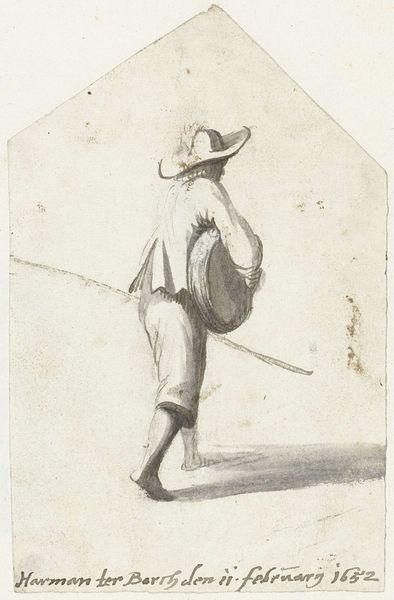
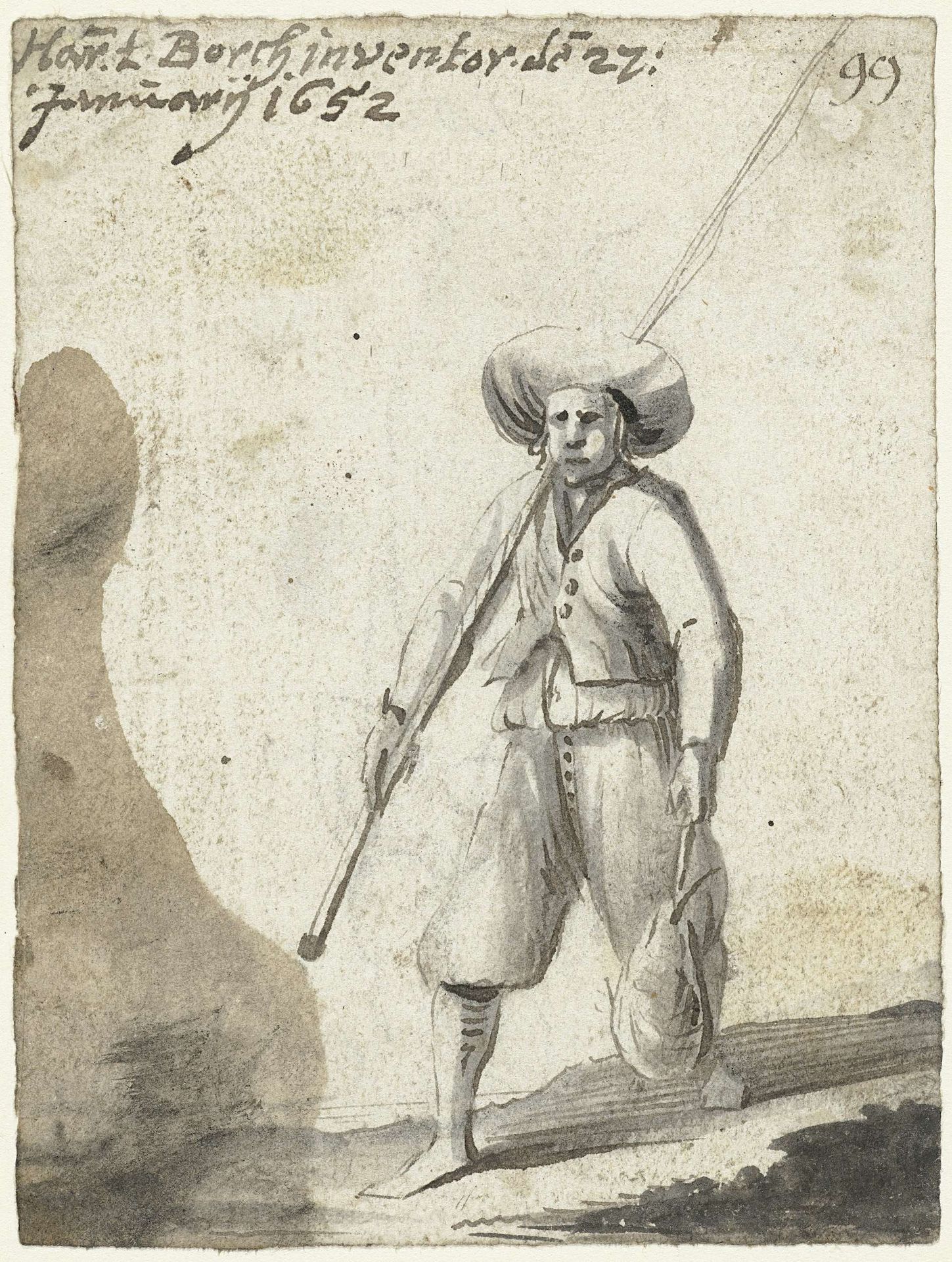
This drawing, "Visser met een hengel en een tas, naar links," was created by Harmen ter Borch in 1652, using pen and brown ink. The work presents a fisherman in a state of casual repose, rendered with economical lines against the stark white of the paper. The composition, though simple, reveals a sophisticated understanding of form and space. Borch masterfully uses tonal variations to suggest depth and texture. The fisherman's clothing and the landscape elements are delineated with subtle gradations of ink wash, creating a sense of volume and mass. The figure is presented with confident strokes, while the background is barely indicated, which serves to isolate the fisherman. The overall effect is one of studied understatement, reflecting a semiotic interplay between presence and absence. This aesthetic choice challenges the expectations of traditional landscape art. It encourages us to consider the cultural codes embedded within such representations and to question fixed meanings.
Visser met een hengel en een tas, naar links
Possibly 1652

Harmen ter Borch
1638 - 1677Location
RijksmuseumArtwork details
- Medium
- drawing, paper, ink
- Dimensions
- height 106 mm, width 80 mm
- Location
- Rijksmuseum
- Copyright
- Rijks Museum: Open Domain
Tags
portrait
drawing
dutch-golden-age
pencil sketch
paper
ink
sketchbook drawing
watercolour illustration
genre-painting
watercolor
Comments
Be the first to share your thoughts about this work.
About this artwork
This drawing, "Visser met een hengel en een tas, naar links," was created by Harmen ter Borch in 1652, using pen and brown ink. The work presents a fisherman in a state of casual repose, rendered with economical lines against the stark white of the paper. The composition, though simple, reveals a sophisticated understanding of form and space. Borch masterfully uses tonal variations to suggest depth and texture. The fisherman's clothing and the landscape elements are delineated with subtle gradations of ink wash, creating a sense of volume and mass. The figure is presented with confident strokes, while the background is barely indicated, which serves to isolate the fisherman. The overall effect is one of studied understatement, reflecting a semiotic interplay between presence and absence. This aesthetic choice challenges the expectations of traditional landscape art. It encourages us to consider the cultural codes embedded within such representations and to question fixed meanings.
Comments
Be the first to share your thoughts about this work.