About this artwork
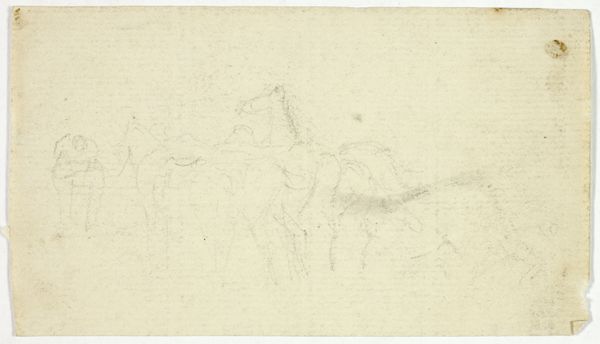
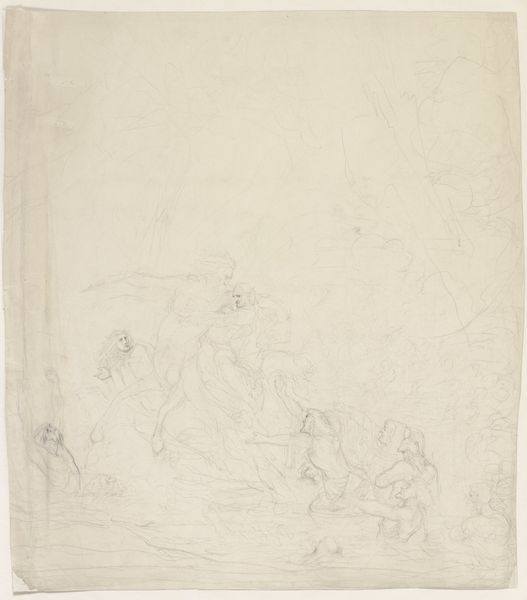
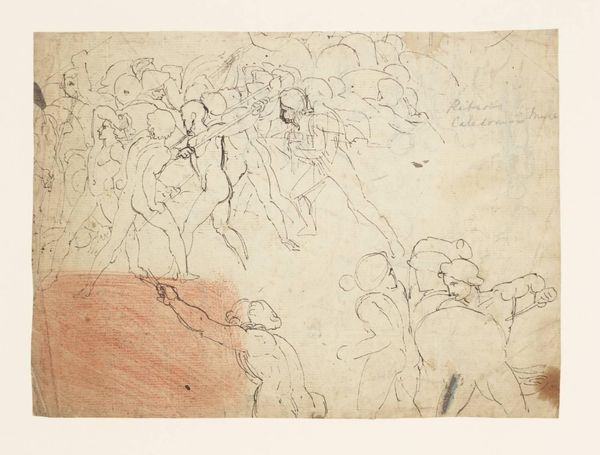
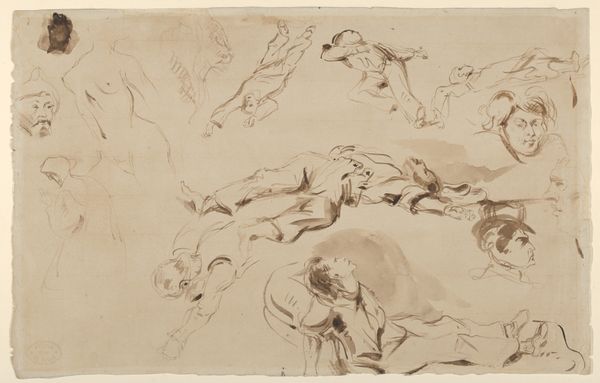
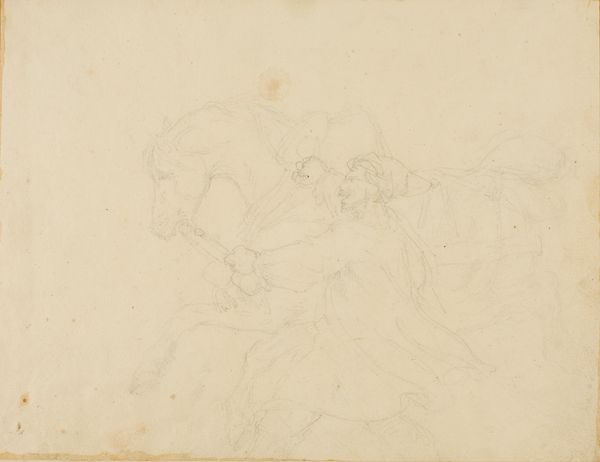
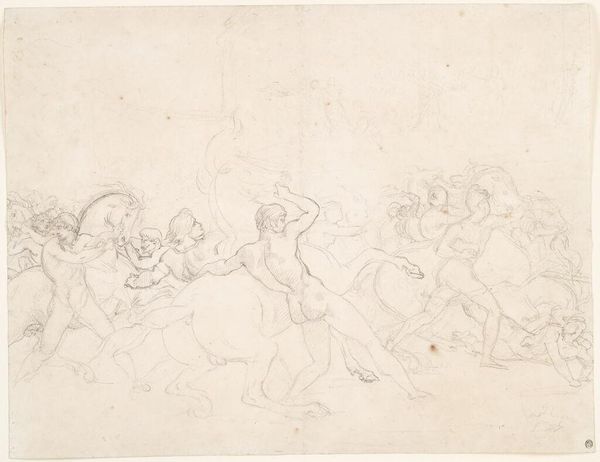
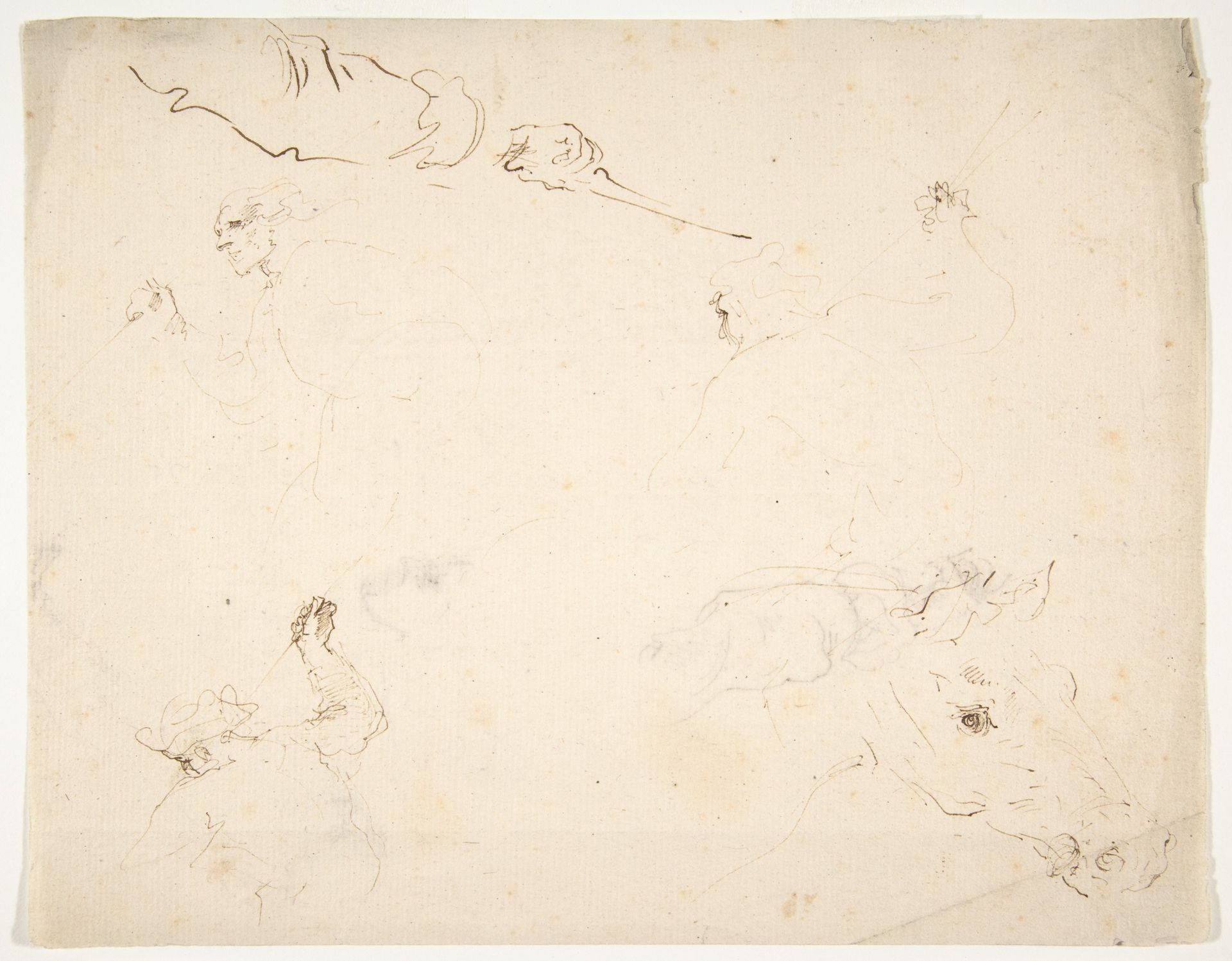
This drawing titled, Figures in Battle and Head of a Horse, was made by Stefano della Bella, most likely in the mid-17th century. Bella’s drawing strikes one as an exercise in pure line. Look closely, and you’ll notice the composition is created with a network of delicate lines that bring to life figures amidst battle. Note how the artist used this linear approach to sketch a horse's head, capturing its essence with minimal strokes. The lines appear almost weightless, yet they define forms and convey movement. Consider how the seemingly random placement of figures across the page, framed by the edges, invites your eye to roam, piecing together a narrative from fragmented elements. This approach disrupts traditional notions of a structured, coherent composition, instead offering a glimpse into the artist's process of exploration. Ultimately, the drawing challenges the viewer to actively participate in constructing meaning, reflecting a broader shift towards more subjective and interpretive modes of engagement with art.
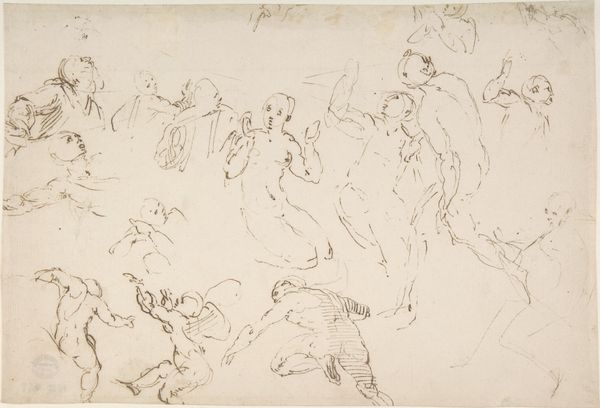
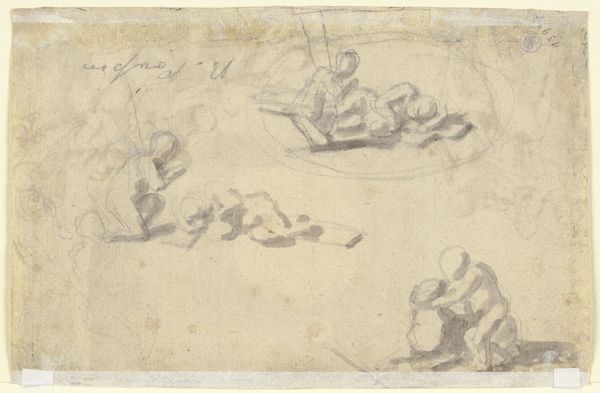
Figures in Battle and Head of a Horse (recto); Studies of a Man's Head and Arms (verso) 1610 - 1664


Artwork details
- Medium
- drawing, print, paper, ink
- Dimensions
- 6 7/8 x 8 3/4in. (17.5 x 22.2cm)
- Location
- Metropolitan Museum of Art, New York, NY
- Copyright
- Public Domain
Tags
portrait
drawing
baroque
ink painting
head
paper
ink
horse
watercolor
Comments
No comments
About this artwork
This drawing titled, Figures in Battle and Head of a Horse, was made by Stefano della Bella, most likely in the mid-17th century. Bella’s drawing strikes one as an exercise in pure line. Look closely, and you’ll notice the composition is created with a network of delicate lines that bring to life figures amidst battle. Note how the artist used this linear approach to sketch a horse's head, capturing its essence with minimal strokes. The lines appear almost weightless, yet they define forms and convey movement. Consider how the seemingly random placement of figures across the page, framed by the edges, invites your eye to roam, piecing together a narrative from fragmented elements. This approach disrupts traditional notions of a structured, coherent composition, instead offering a glimpse into the artist's process of exploration. Ultimately, the drawing challenges the viewer to actively participate in constructing meaning, reflecting a broader shift towards more subjective and interpretive modes of engagement with art.
Comments
No comments