About this artwork
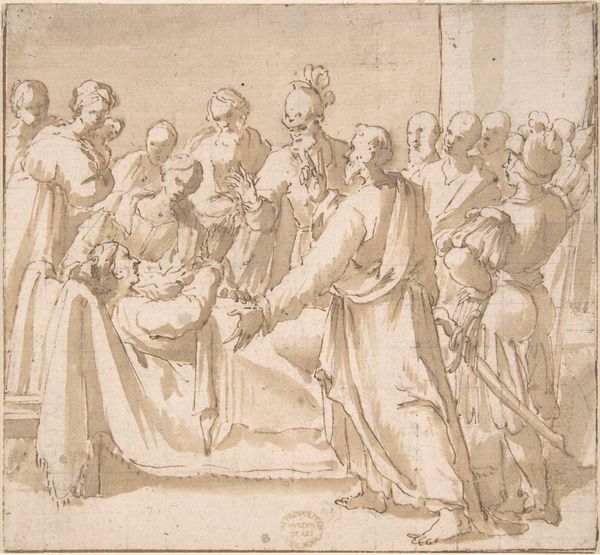
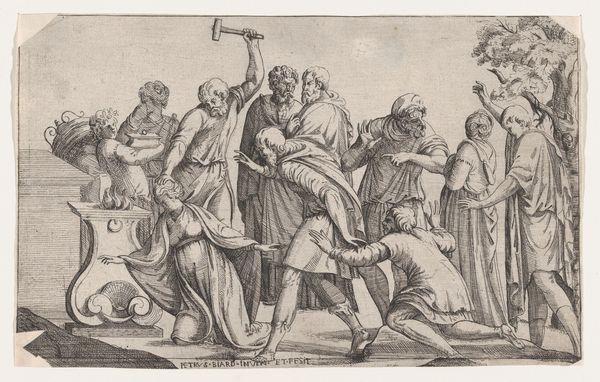
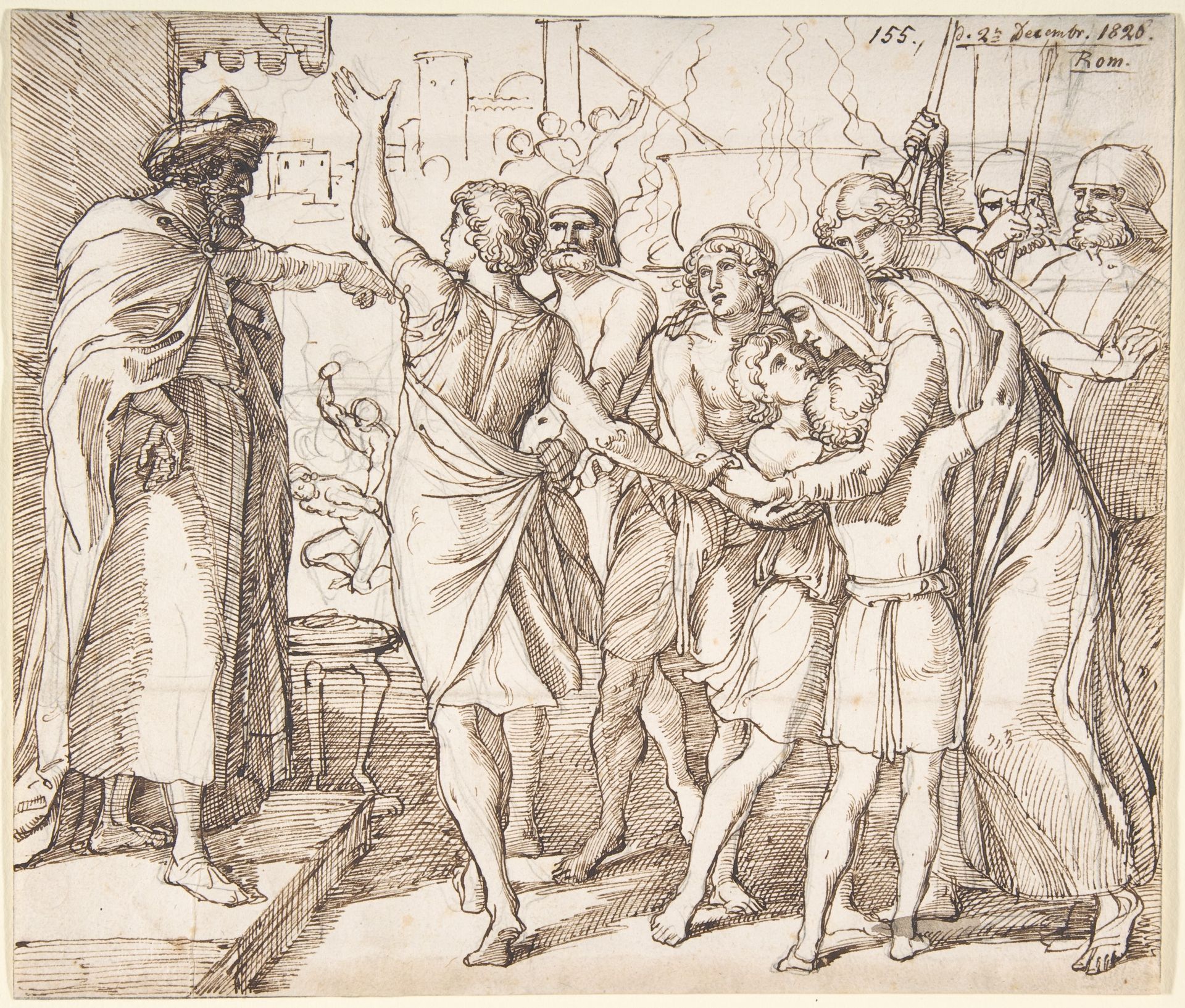
Julius Schnorr von Carolsfeld created this ink drawing, “The Martyrdom of the Seven Brothers,” in 1828. It depicts a scene of familial grief and resistance amidst religious persecution. Drawn during a period of growing religious and nationalistic fervor in Europe, Schnorr von Carolsfeld’s work reflects the intersection of faith, identity, and power. The narrative, taken from the Old Testament, tells of seven brothers and their mother who were tortured and killed for refusing to violate their religious laws under the rule of King Antiochus. Notice how the figures are drawn with intense emotion. The mother's desperate embrace of her children speaks to the universal themes of maternal love and sacrifice. Meanwhile, the brothers’ defiance in the face of death highlights the complexities of religious conviction and cultural identity when confronted by oppressive regimes. This drawing serves as a potent reminder of the human cost of ideological conflict. It reflects both the historical struggles and the timeless emotional and spiritual dimensions of resistance.
The Martyrdom of the seven brothers; verso: Sketch of two men wrestling (?) 1826

Julius Schnorr von Carolsfeld
1794 - 1872
The Metropolitan Museum of Art
Metropolitan Museum of Art, New York, NYArtwork details
- Medium
- drawing, print, ink, pencil, pen
- Dimensions
- sheet: 8 7/16 x 9 13/16 in. (21.5 x 25 cm)
- Location
- Metropolitan Museum of Art, New York, NY
- Copyright
- Public Domain
Tags
drawing
narrative-art
pen sketch
pencil sketch
figuration
ink
pencil
pen
history-painting
academic-art
Comments
No comments
About this artwork
Julius Schnorr von Carolsfeld created this ink drawing, “The Martyrdom of the Seven Brothers,” in 1828. It depicts a scene of familial grief and resistance amidst religious persecution. Drawn during a period of growing religious and nationalistic fervor in Europe, Schnorr von Carolsfeld’s work reflects the intersection of faith, identity, and power. The narrative, taken from the Old Testament, tells of seven brothers and their mother who were tortured and killed for refusing to violate their religious laws under the rule of King Antiochus. Notice how the figures are drawn with intense emotion. The mother's desperate embrace of her children speaks to the universal themes of maternal love and sacrifice. Meanwhile, the brothers’ defiance in the face of death highlights the complexities of religious conviction and cultural identity when confronted by oppressive regimes. This drawing serves as a potent reminder of the human cost of ideological conflict. It reflects both the historical struggles and the timeless emotional and spiritual dimensions of resistance.
Comments
No comments