About this artwork
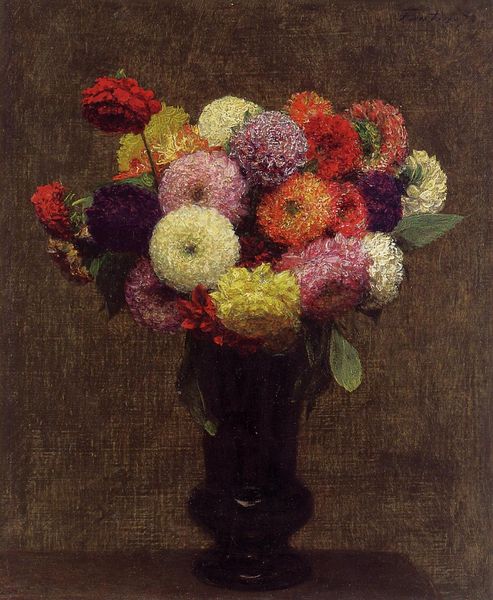
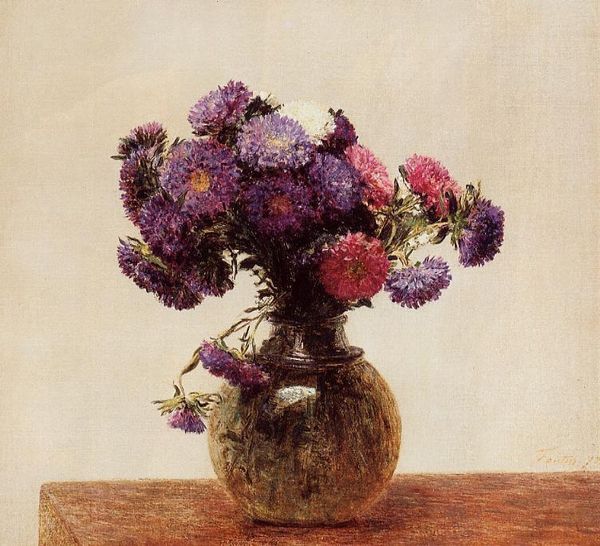
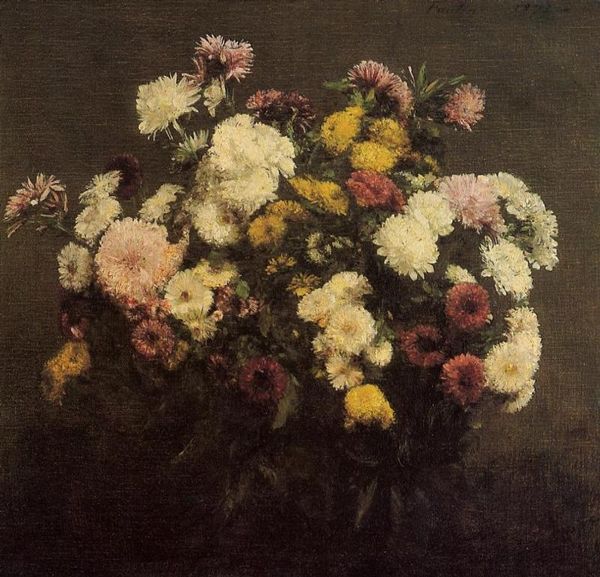
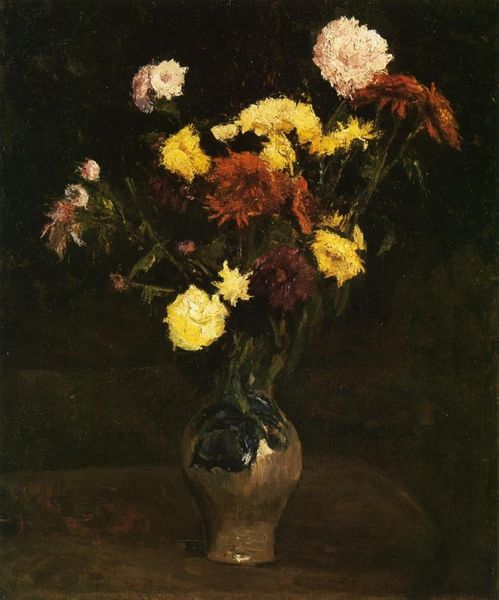
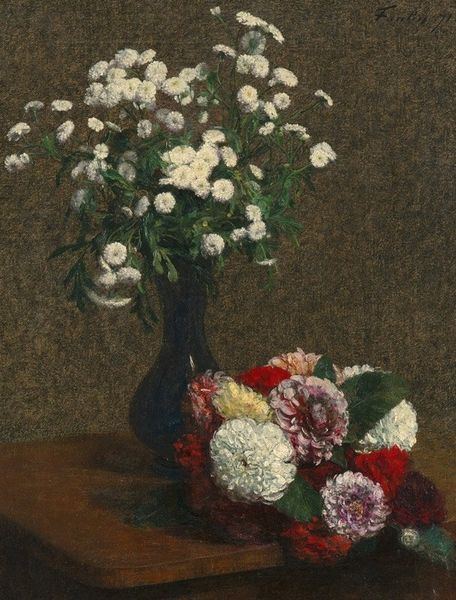
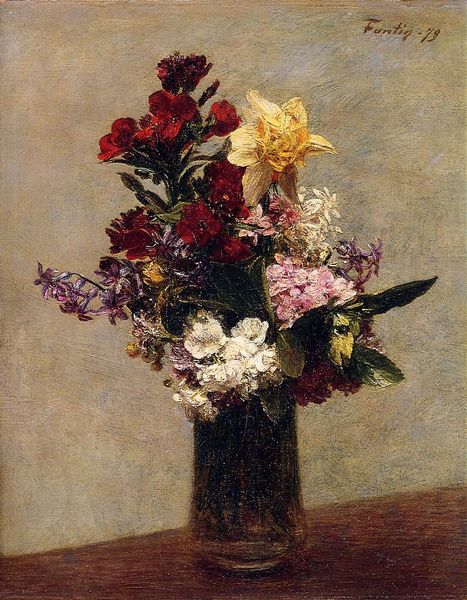
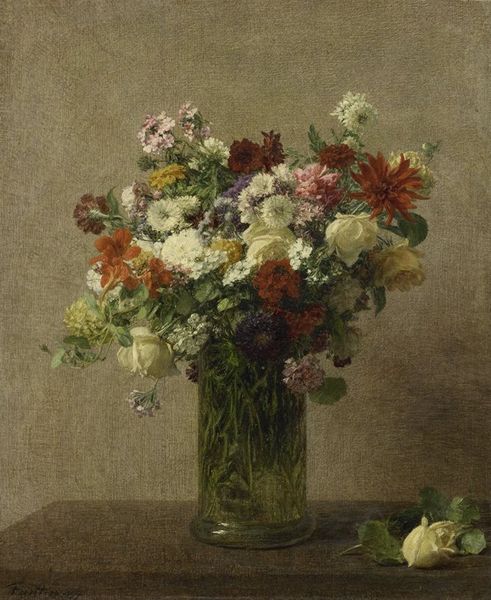
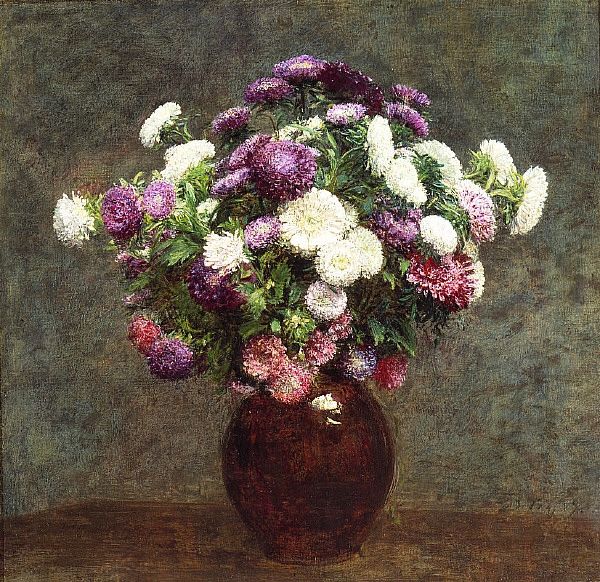
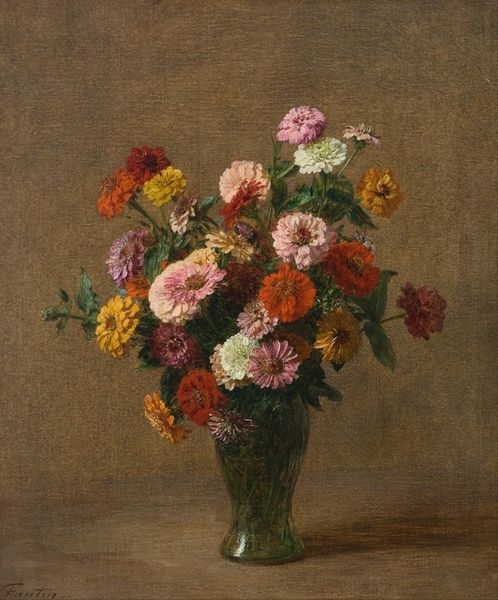
Henri Fantin-Latour painted 'Daisies,' a still life, in France sometime in the late 19th century. It's a fairly straightforward image: a vase of colorful flowers. But the choice to paint something so conventional tells us a lot about the shifting landscape of the art world at the time. By the late 1800s, the French Salon system, once the gatekeeper of artistic taste, was losing its grip. Artists were increasingly challenging academic conventions, exploring new subjects, and embracing individual expression. Fantin-Latour, while associated with some avant-garde figures, largely stuck to traditional genres like still life and portraiture. So, what does it mean to paint daisies at a moment of radical artistic change? Perhaps Fantin-Latour was making a statement about the enduring appeal of classic beauty or carving a niche for himself. Or maybe it's a reflection of the growing middle class and their interest in the finer things in life, things that were previously only accessible to the aristocracy. To delve deeper, we might look at exhibition records, critical reviews, or even Fantin-Latour's correspondence. After all, meaning in art is always shaped by its time.

Artwork details
- Medium
- painting, oil-paint, photography
- Location
- Private Collection
- Copyright
- Public domain
Tags
still-life
gouache
painting
impressionism
oil-paint
photography
oil painting
realism
Comments
Be the first to share your thoughts about this work.
About this artwork
Henri Fantin-Latour painted 'Daisies,' a still life, in France sometime in the late 19th century. It's a fairly straightforward image: a vase of colorful flowers. But the choice to paint something so conventional tells us a lot about the shifting landscape of the art world at the time. By the late 1800s, the French Salon system, once the gatekeeper of artistic taste, was losing its grip. Artists were increasingly challenging academic conventions, exploring new subjects, and embracing individual expression. Fantin-Latour, while associated with some avant-garde figures, largely stuck to traditional genres like still life and portraiture. So, what does it mean to paint daisies at a moment of radical artistic change? Perhaps Fantin-Latour was making a statement about the enduring appeal of classic beauty or carving a niche for himself. Or maybe it's a reflection of the growing middle class and their interest in the finer things in life, things that were previously only accessible to the aristocracy. To delve deeper, we might look at exhibition records, critical reviews, or even Fantin-Latour's correspondence. After all, meaning in art is always shaped by its time.
Comments
Be the first to share your thoughts about this work.