About this artwork
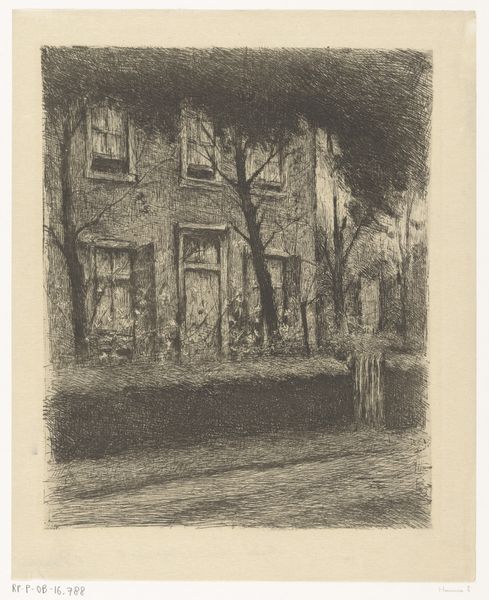
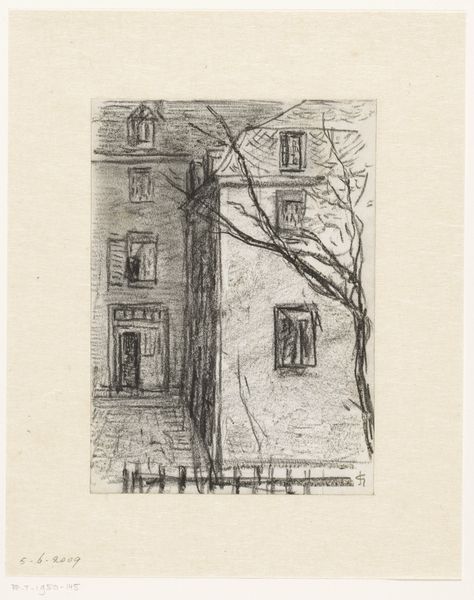
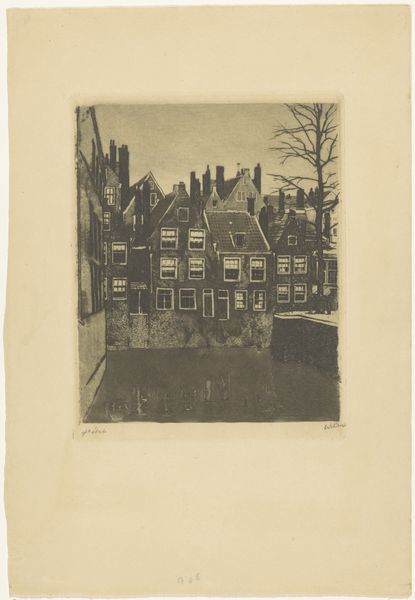
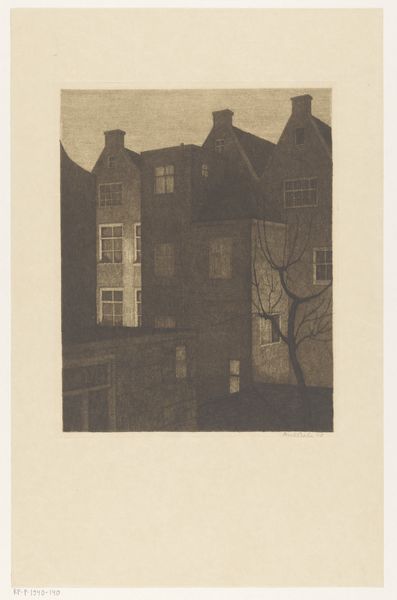
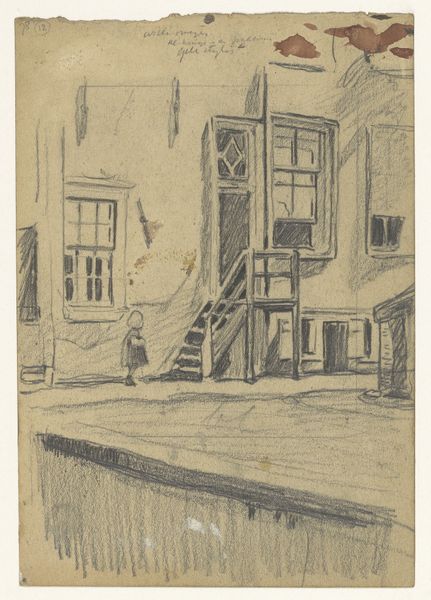
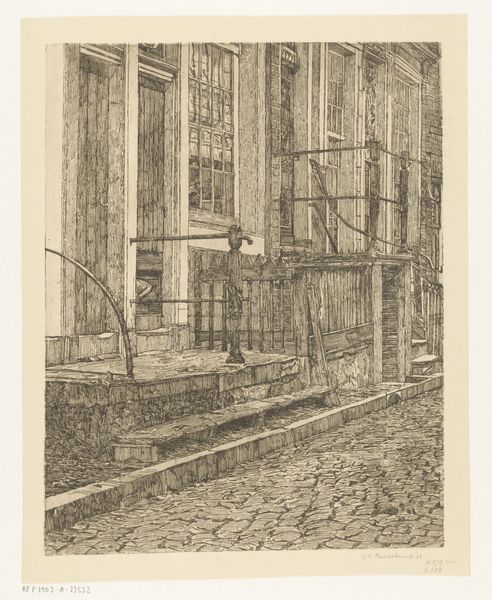
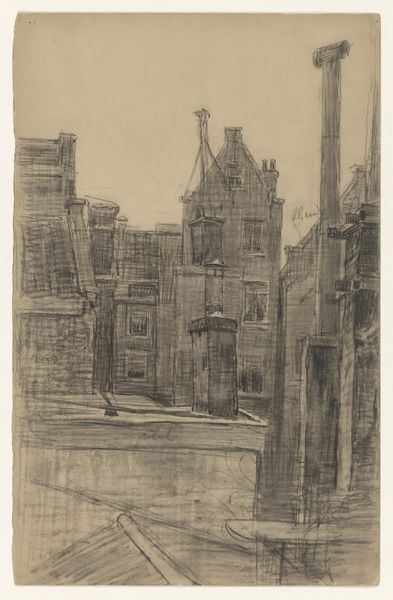
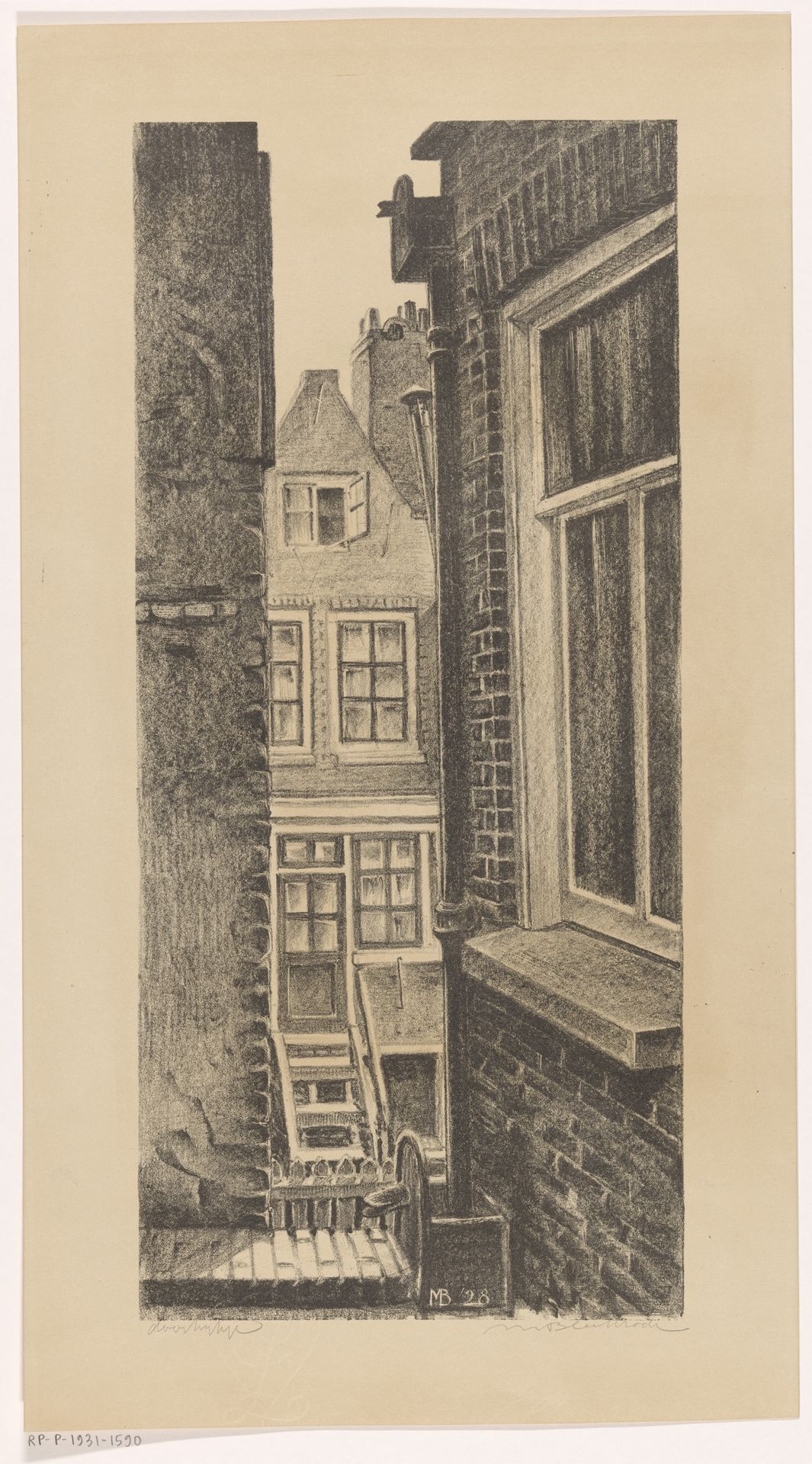
Editor: Here we have Meijer Bleekrode's "Doorkijkje" from 1928, rendered with pencil and etching. The composition immediately struck me; it’s such a specific, almost voyeuristic, glimpse into an urban alleyway. How do you interpret this work? Curator: It's more than just an alleyway; it's a portal, isn't it? Notice how the buildings frame the scene, guiding your eye to that distant house. The window acts as an eye staring back. Do you see a cultural memory at play here? This narrow view almost functions as a memento, evoking Dutch Golden Age themes but with an interwar austerity. Editor: I hadn’t considered the “eye” of the window, but that makes so much sense. The older house in the background is also framed in such a way, surrounded by decay and disrepair. Curator: Indeed! That older architecture embodies a sense of the past, held up against the encroaching modern world. The contrast invites contemplation on time's passage and societal evolution. Perhaps Bleekrode is prompting a dialogue between then and now. What feelings are evoked as you, the viewer, are positioned in that neglected space? Editor: It’s almost unsettling; like witnessing something I shouldn’t be, while at the same time a little bit like nostalgia. It does feel very Dutch, in its bones. It seems I learn more each time that I look at this piece. Curator: Yes, the visual echoes resonate across time, bridging personal memory with shared cultural experiences. It gives us so much more to consider.

Artwork details
- Medium
- drawing, pencil
- Dimensions
- height 478 mm, width 218 mm
- Location
- Rijksmuseum
- Copyright
- Rijks Museum: Open Domain
Tags
Comments
Share your thoughts
About this artwork
Editor: Here we have Meijer Bleekrode's "Doorkijkje" from 1928, rendered with pencil and etching. The composition immediately struck me; it’s such a specific, almost voyeuristic, glimpse into an urban alleyway. How do you interpret this work? Curator: It's more than just an alleyway; it's a portal, isn't it? Notice how the buildings frame the scene, guiding your eye to that distant house. The window acts as an eye staring back. Do you see a cultural memory at play here? This narrow view almost functions as a memento, evoking Dutch Golden Age themes but with an interwar austerity. Editor: I hadn’t considered the “eye” of the window, but that makes so much sense. The older house in the background is also framed in such a way, surrounded by decay and disrepair. Curator: Indeed! That older architecture embodies a sense of the past, held up against the encroaching modern world. The contrast invites contemplation on time's passage and societal evolution. Perhaps Bleekrode is prompting a dialogue between then and now. What feelings are evoked as you, the viewer, are positioned in that neglected space? Editor: It’s almost unsettling; like witnessing something I shouldn’t be, while at the same time a little bit like nostalgia. It does feel very Dutch, in its bones. It seems I learn more each time that I look at this piece. Curator: Yes, the visual echoes resonate across time, bridging personal memory with shared cultural experiences. It gives us so much more to consider.
Comments
Share your thoughts