About this artwork
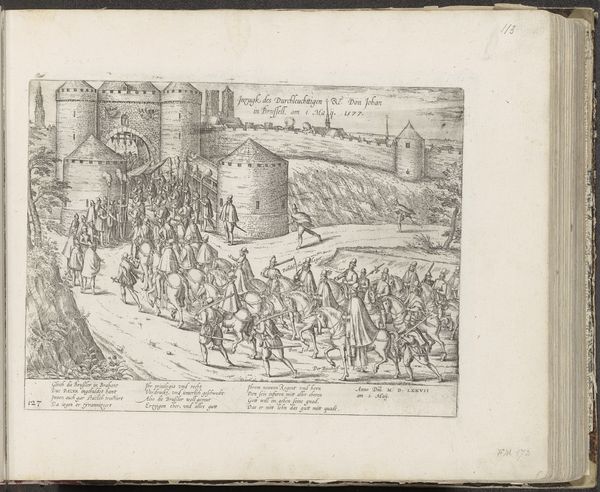
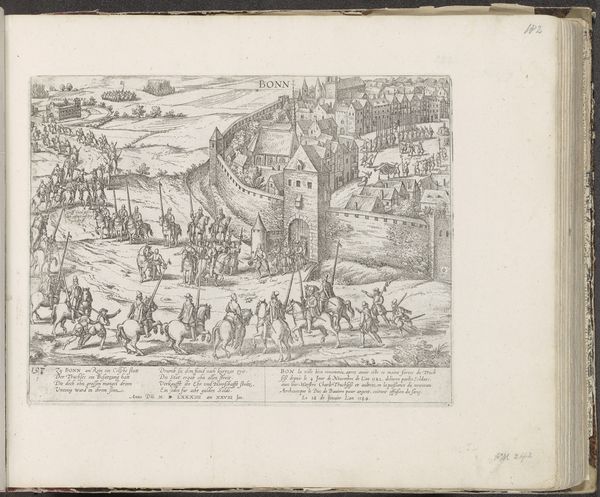
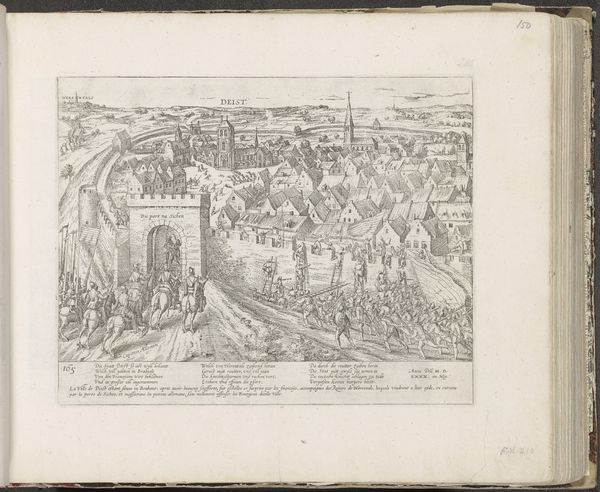
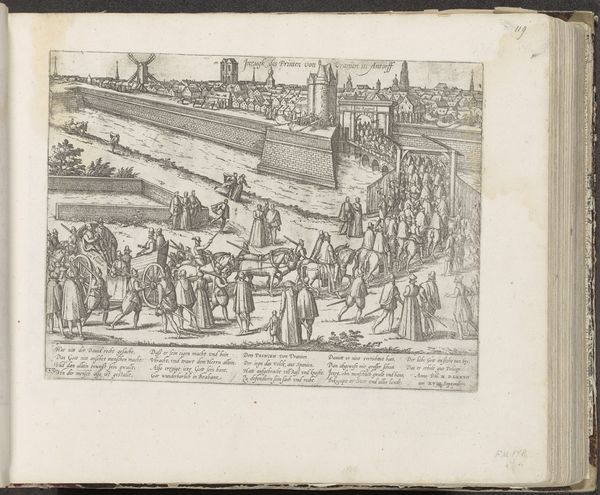
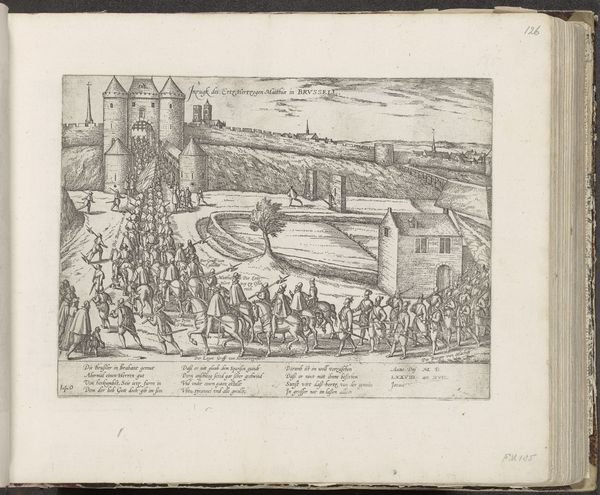
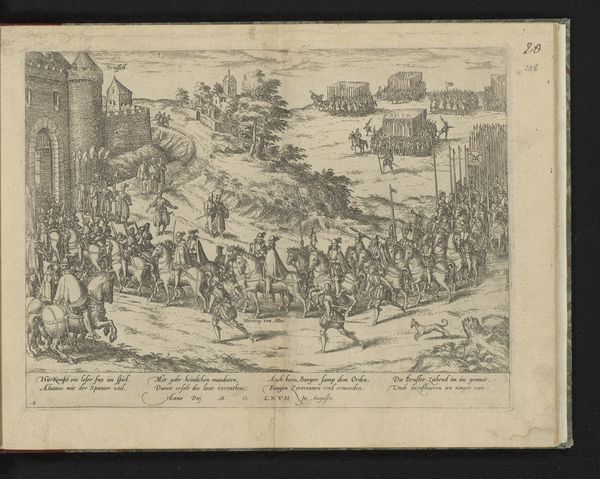
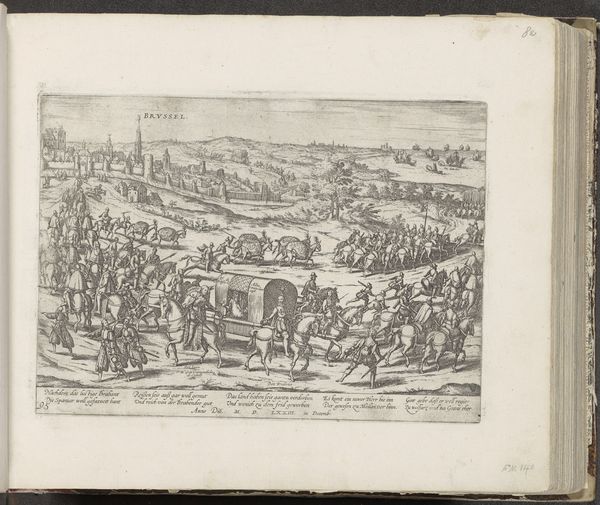
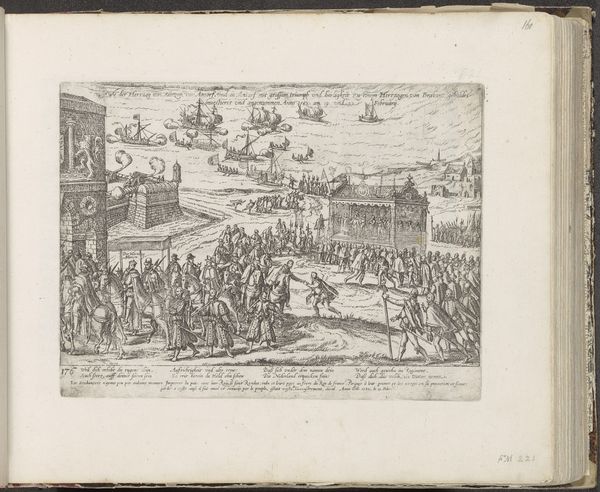
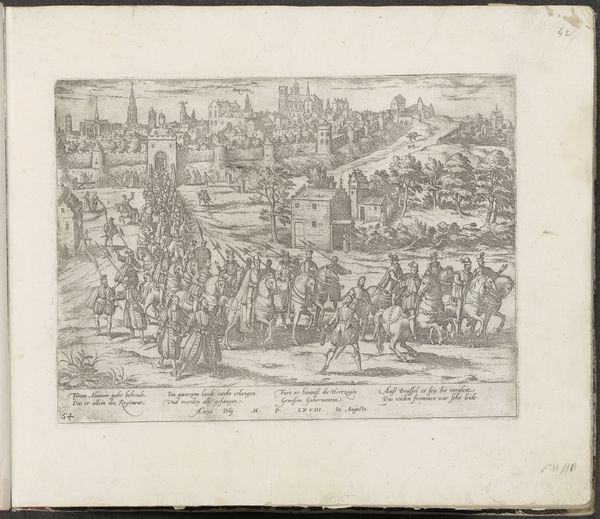
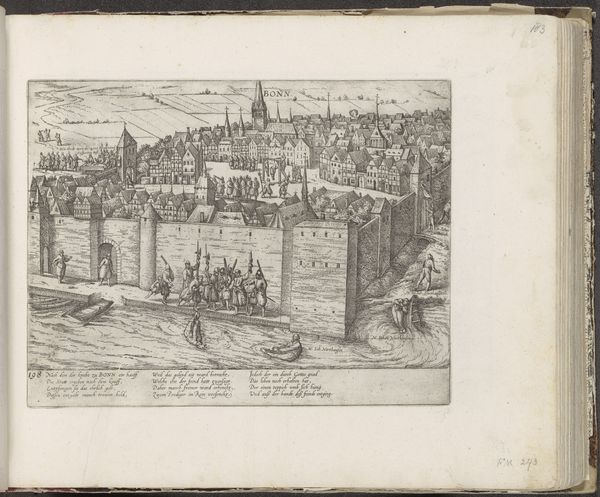
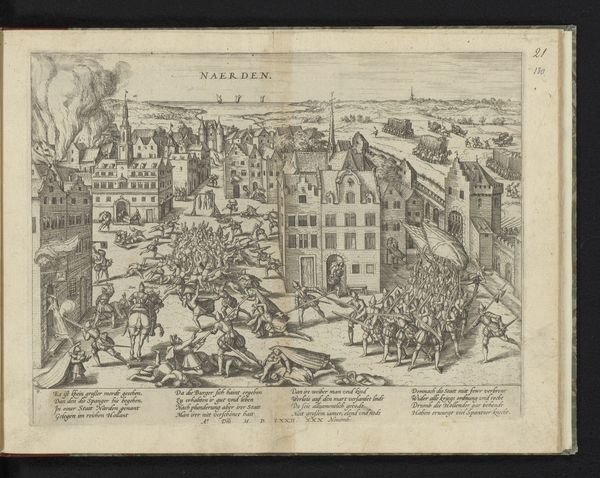
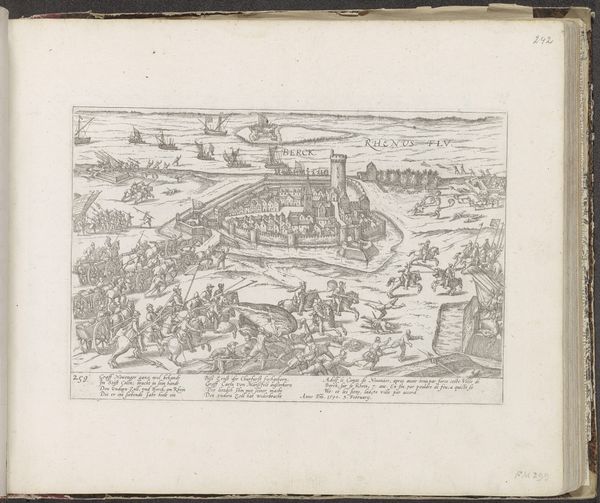
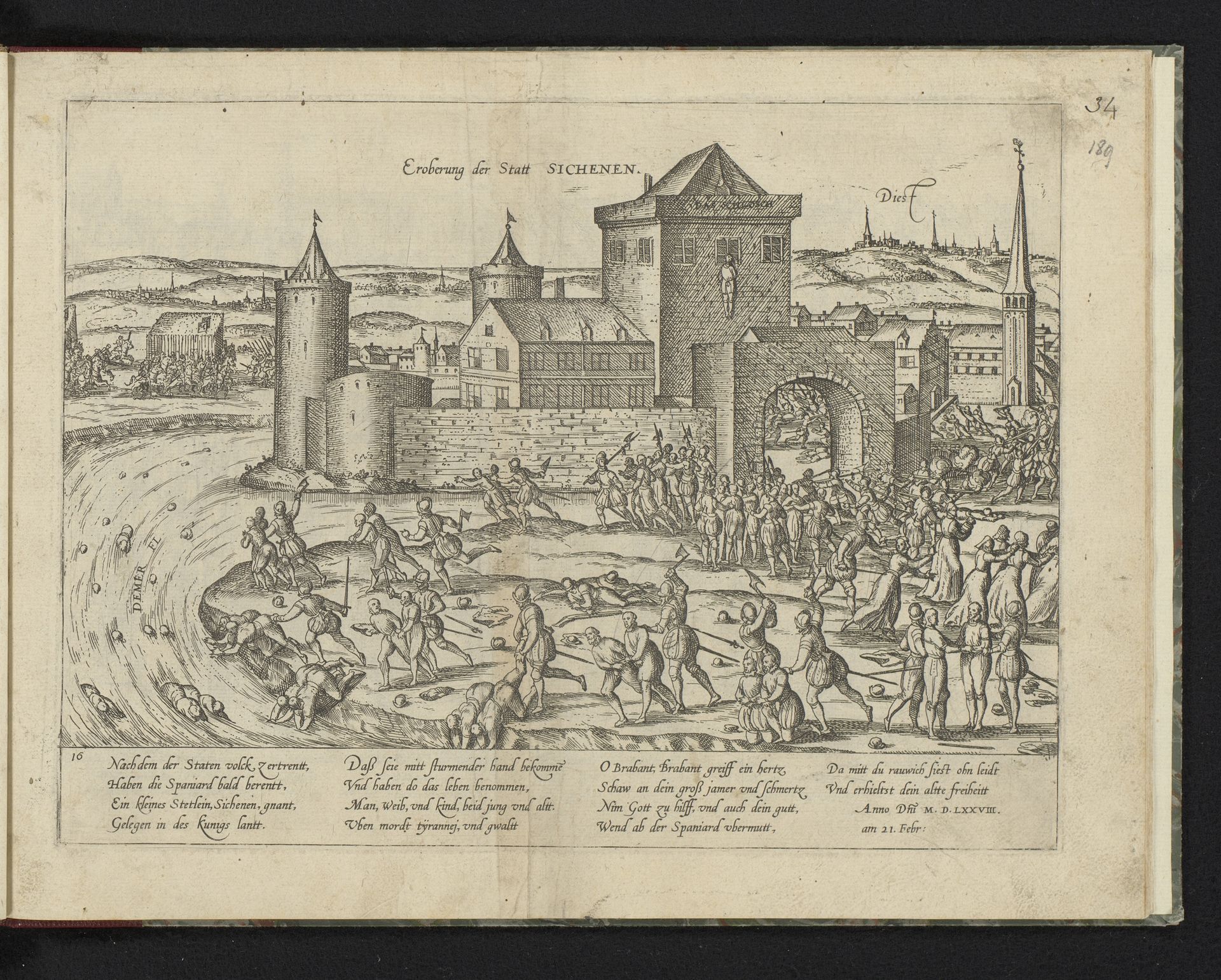
Frans Hogenberg created "Bestraffing van Zichem" in 1578, an engraving now housed in the Rijksmuseum. The composition is structured around a fortified town under siege, rendered in meticulous detail through line work. The stark contrast between light and shadow intensifies the chaotic energy of the scene. The artwork is organized around a central axis that draws the eye through the archway into the heart of the conflict. Figures are rendered with a flattened perspective, emphasizing their symbolic function over realistic representation. The linear style and the use of hatching to create tonal variations are typical of the period’s printmaking techniques. Hogenberg's approach embodies a structural representation of power dynamics. The print destabilizes conventional heroism by depicting violence and disorder. The attention to architectural details, contrasted with the unruly figures, highlights the fragility of civilization amidst conflict. This visual language invites a semiotic reading of the artwork, where forms and compositions serve as signs of broader political and social upheaval.

Artwork details
- Medium
- print, engraving
- Dimensions
- height 212 mm, width 284 mm
- Location
- Rijksmuseum
- Copyright
- Rijks Museum: Open Domain
Tags
Comments
Share your thoughts
About this artwork
Frans Hogenberg created "Bestraffing van Zichem" in 1578, an engraving now housed in the Rijksmuseum. The composition is structured around a fortified town under siege, rendered in meticulous detail through line work. The stark contrast between light and shadow intensifies the chaotic energy of the scene. The artwork is organized around a central axis that draws the eye through the archway into the heart of the conflict. Figures are rendered with a flattened perspective, emphasizing their symbolic function over realistic representation. The linear style and the use of hatching to create tonal variations are typical of the period’s printmaking techniques. Hogenberg's approach embodies a structural representation of power dynamics. The print destabilizes conventional heroism by depicting violence and disorder. The attention to architectural details, contrasted with the unruly figures, highlights the fragility of civilization amidst conflict. This visual language invites a semiotic reading of the artwork, where forms and compositions serve as signs of broader political and social upheaval.
Comments
Share your thoughts