About this artwork
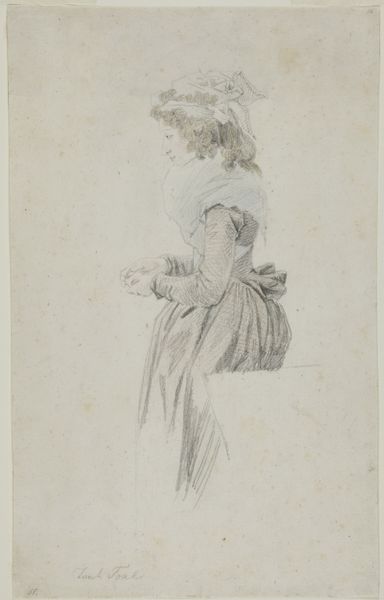
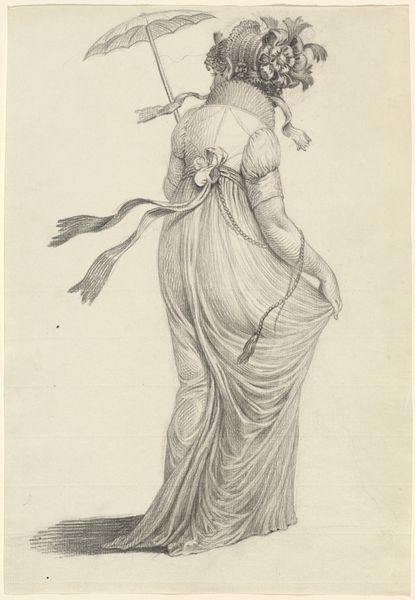
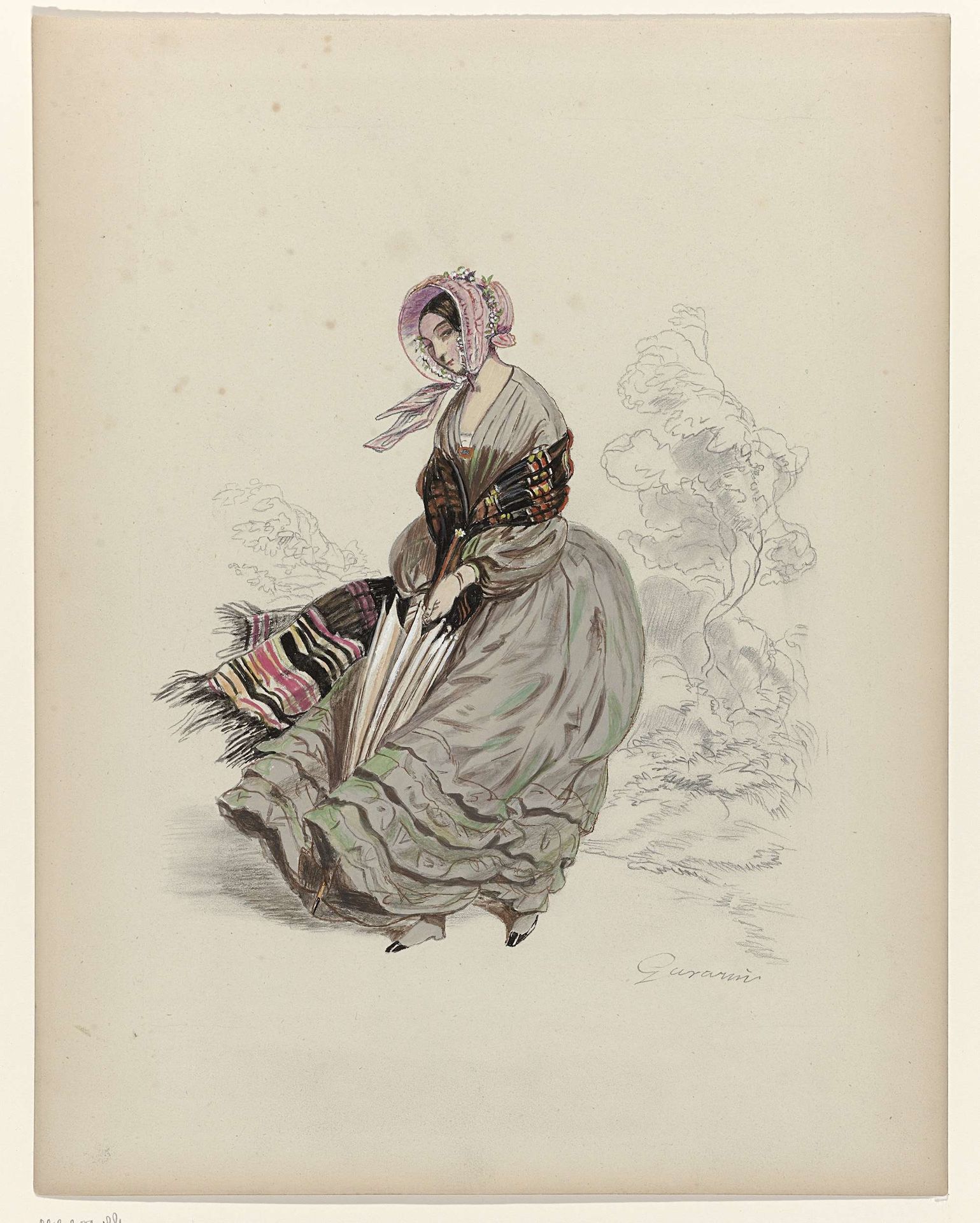
Paul Gavarni created this watercolor in 1840, presenting a woman battling the wind. At first glance, the composition appears simple: a central figure dynamically offset by a sketch of a tree to the right. But Gavarni’s mastery lies in how he uses line and color to convey movement and emotion. Notice how the woman's clothing—her billowing skirt and scarf—are rendered with flowing lines, suggesting the force of the wind. The color palette, predominantly muted greys and browns, evokes a somber mood, yet the splashes of pink in her bonnet and the vibrant stripes of her scarf add a touch of defiance. Gavarni uses the principles of structuralism, where underlying structures create meaning. Here, the opposition between the woman's forward motion and the resisting wind embodies a broader theme: the individual versus the forces of nature. The drawing questions fixed meanings, instead, it invites us to contemplate the complex interplay between subject and environment.
Vrouw, lopend in de wind, met parasol, 1840
before 1840

Paul Gavarni
1804 - 1866Location
RijksmuseumArtwork details
- Medium
- drawing, coloured-pencil, pencil
- Dimensions
- height 288 mm, width 224 mm
- Location
- Rijksmuseum
- Copyright
- Rijks Museum: Open Domain
Tags
Comments
Share your thoughts
About this artwork
Paul Gavarni created this watercolor in 1840, presenting a woman battling the wind. At first glance, the composition appears simple: a central figure dynamically offset by a sketch of a tree to the right. But Gavarni’s mastery lies in how he uses line and color to convey movement and emotion. Notice how the woman's clothing—her billowing skirt and scarf—are rendered with flowing lines, suggesting the force of the wind. The color palette, predominantly muted greys and browns, evokes a somber mood, yet the splashes of pink in her bonnet and the vibrant stripes of her scarf add a touch of defiance. Gavarni uses the principles of structuralism, where underlying structures create meaning. Here, the opposition between the woman's forward motion and the resisting wind embodies a broader theme: the individual versus the forces of nature. The drawing questions fixed meanings, instead, it invites us to contemplate the complex interplay between subject and environment.
Comments
Share your thoughts