About this artwork
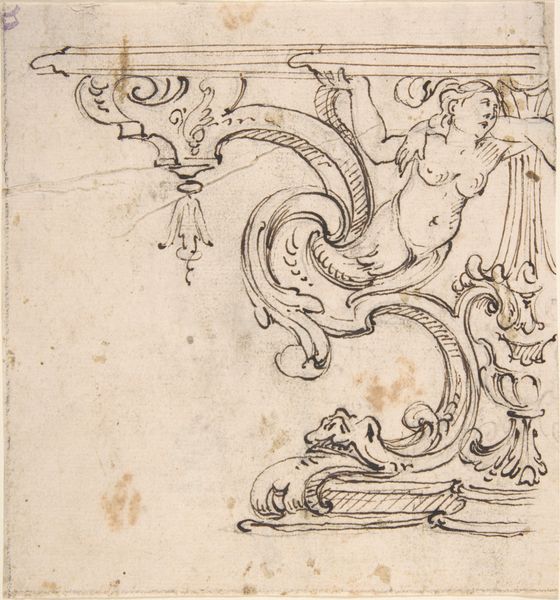
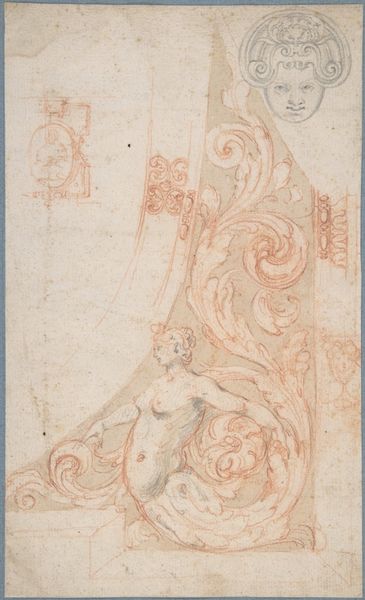
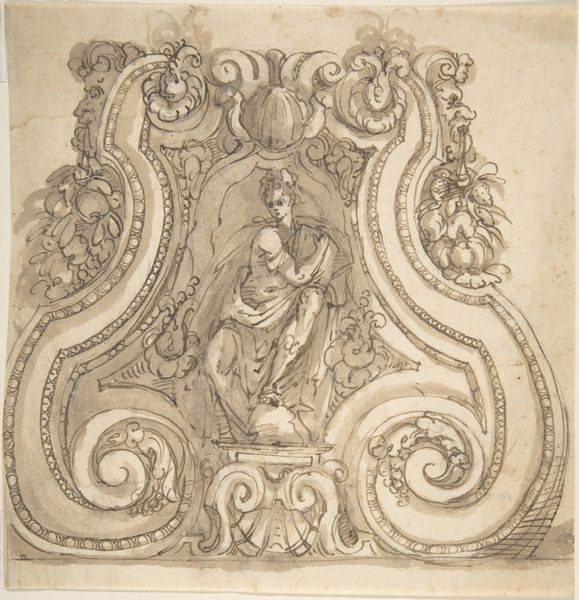
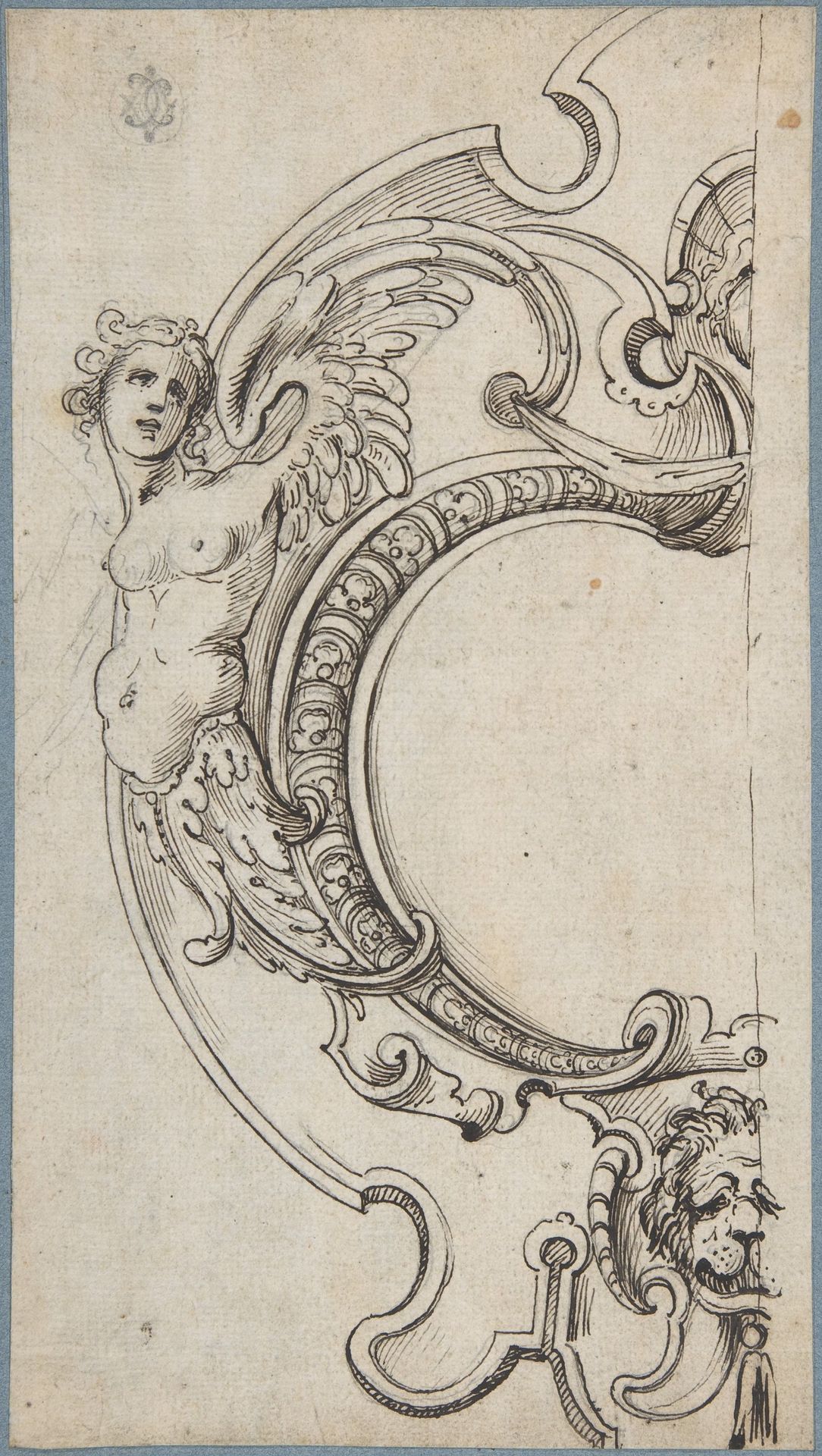
This is a drawing of half a cartouche with a female figure on the left and a lion's head on the bottom, created anonymously. Consider the historical context of the cartouche itself, often used to frame names of importance, like royalty. Here, we find it incomplete, bisected, with the gaze of the female figure directed away, embodying a sense of absence. The lion's head, a traditional symbol of strength and power, is relegated to the bottom, almost as an afterthought. The female figure herself is a study in contrasts: both idealized and objectified. She is drawn with delicate lines, yet her body is presented as a decorative element. What does it mean to see a woman depicted as part of an ornamental structure? Is she a figure of empowerment or merely a decorative element, trapped within the confines of artistic convention? The incompleteness of the piece and the tension in its imagery resonate with our understanding of historical and social narratives, continually shaped and reshaped, as we grapple with representation, power, and identity.
Half of a Cartouche with a Female Figure on the Left and a Lion's Head on the Bottom
17th century


Artwork details
- Medium
- drawing, print, ink, engraving
- Dimensions
- 10-1/2 x 5-7/8 in. (26.6 x 14.9 cm)
- Location
- Metropolitan Museum of Art, New York, NY
- Copyright
- Public Domain
Tags
drawing
baroque
figuration
ink
engraving
Comments
Be the first to share your thoughts about this work.
About this artwork
This is a drawing of half a cartouche with a female figure on the left and a lion's head on the bottom, created anonymously. Consider the historical context of the cartouche itself, often used to frame names of importance, like royalty. Here, we find it incomplete, bisected, with the gaze of the female figure directed away, embodying a sense of absence. The lion's head, a traditional symbol of strength and power, is relegated to the bottom, almost as an afterthought. The female figure herself is a study in contrasts: both idealized and objectified. She is drawn with delicate lines, yet her body is presented as a decorative element. What does it mean to see a woman depicted as part of an ornamental structure? Is she a figure of empowerment or merely a decorative element, trapped within the confines of artistic convention? The incompleteness of the piece and the tension in its imagery resonate with our understanding of historical and social narratives, continually shaped and reshaped, as we grapple with representation, power, and identity.
Comments
Be the first to share your thoughts about this work.