About this artwork
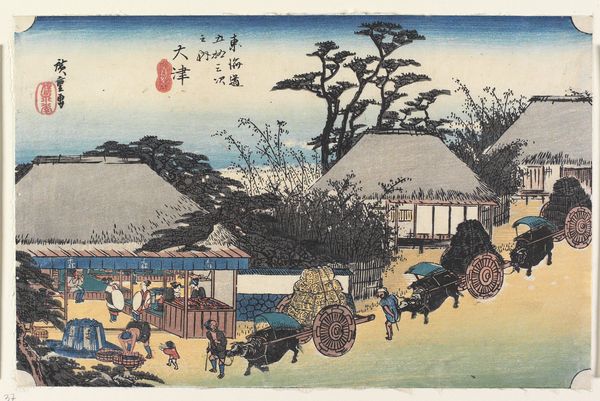
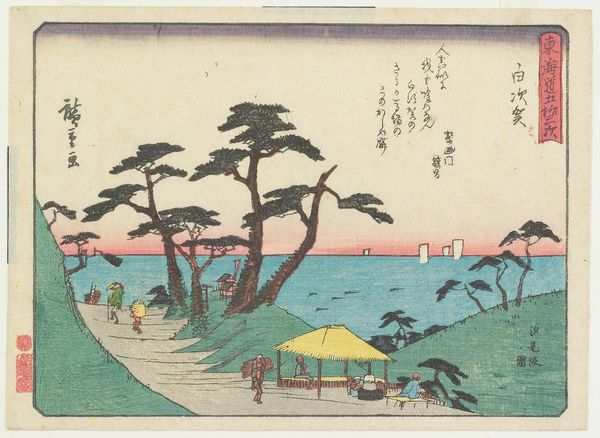
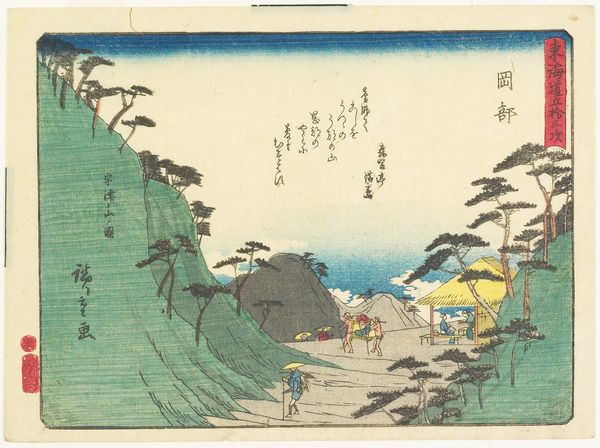
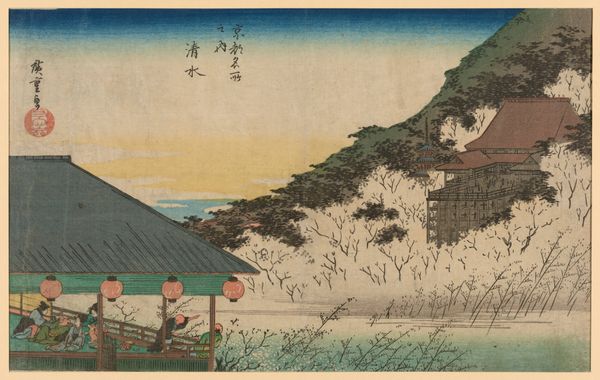
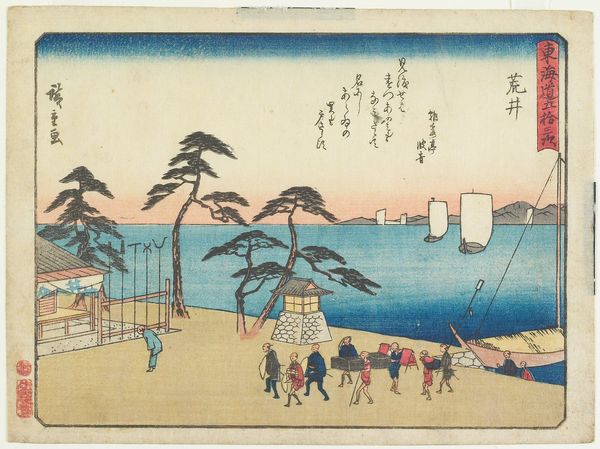
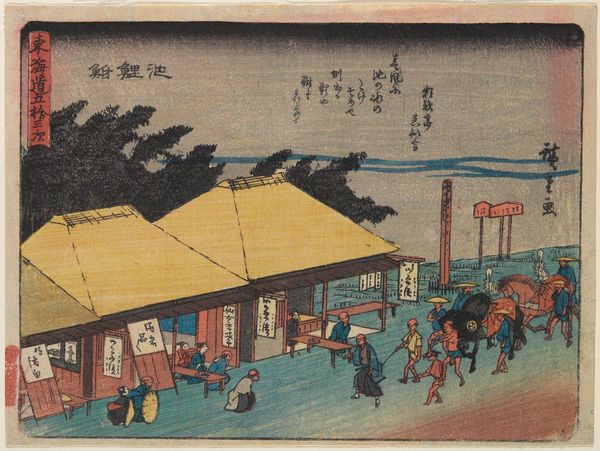
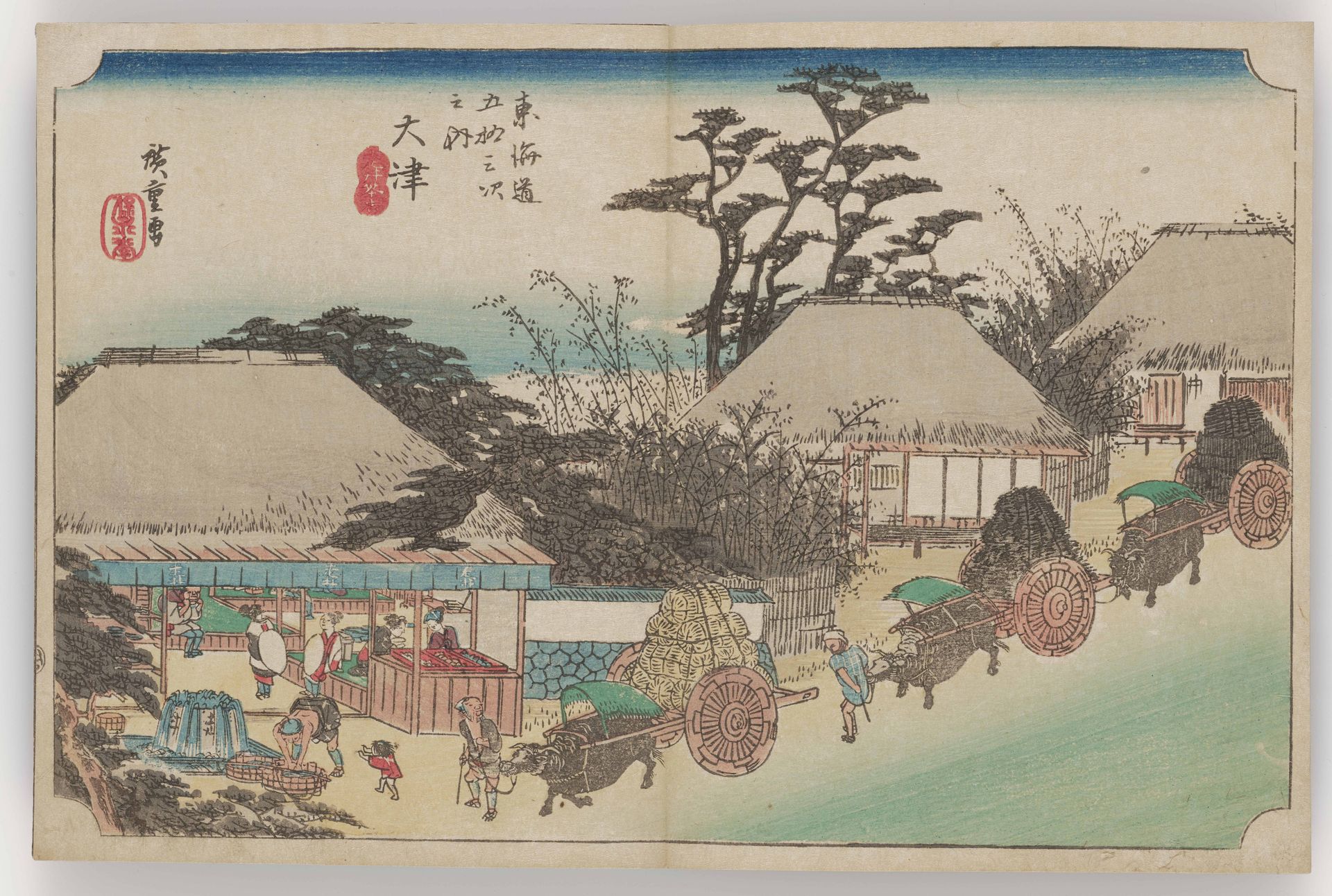
Utagawa Hiroshige created this woodblock print, Ōtsu—Teahouse by the Fountain, in the 19th century, a time when Japan was opening up to the West, leading to new cultural exchanges and artistic expressions. The print captures a roadside scene of a teahouse and travelers in Ōtsu, a town along the Tōkaidō road, which was a major route connecting Edo (modern Tokyo) and Kyoto. Hiroshige masterfully uses perspective to create depth, drawing us into the bustling environment of a common rest stop. Through his representation of laborers and merchants, Hiroshige depicts the social dynamics and daily life of ordinary people during this time. Ōtsu—Teahouse by the Fountain moves beyond a simple depiction of a scene. It invites us to reflect on the shifting cultural identities and social structures that define our understanding of 19th century Japan. It's an invitation to consider how we are all travelers, journeying through our own lives.
Ōtsu--Teahouse by the Fountain c. 1832 - 1833


Artwork details
- Medium
- print, ink, woodblock-print
- Dimensions
- 9 1/2 × 14 1/4 in. (24.13 × 36.2 cm) (sheet, horizontal ōban)
- Location
- Minneapolis Institute of Art
- Copyright
- Public Domain
Tags
water colours
landscape
ukiyo-e
japan
ink
coloured pencil
woodblock-print
watercolor
Comments
No comments
About this artwork
Utagawa Hiroshige created this woodblock print, Ōtsu—Teahouse by the Fountain, in the 19th century, a time when Japan was opening up to the West, leading to new cultural exchanges and artistic expressions. The print captures a roadside scene of a teahouse and travelers in Ōtsu, a town along the Tōkaidō road, which was a major route connecting Edo (modern Tokyo) and Kyoto. Hiroshige masterfully uses perspective to create depth, drawing us into the bustling environment of a common rest stop. Through his representation of laborers and merchants, Hiroshige depicts the social dynamics and daily life of ordinary people during this time. Ōtsu—Teahouse by the Fountain moves beyond a simple depiction of a scene. It invites us to reflect on the shifting cultural identities and social structures that define our understanding of 19th century Japan. It's an invitation to consider how we are all travelers, journeying through our own lives.
Comments
No comments