About this artwork
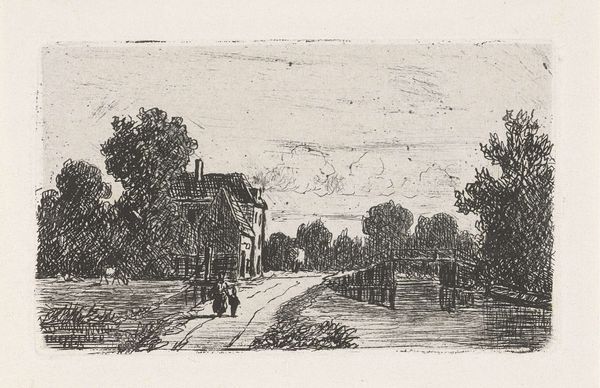
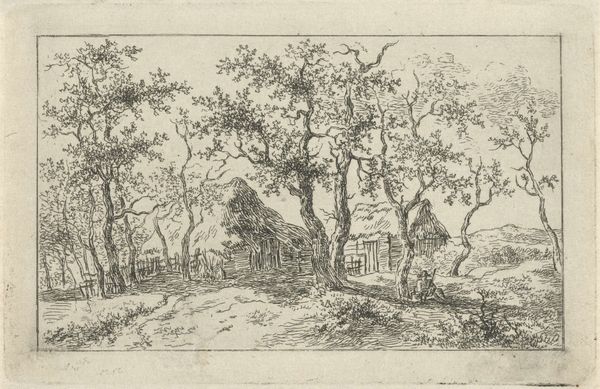
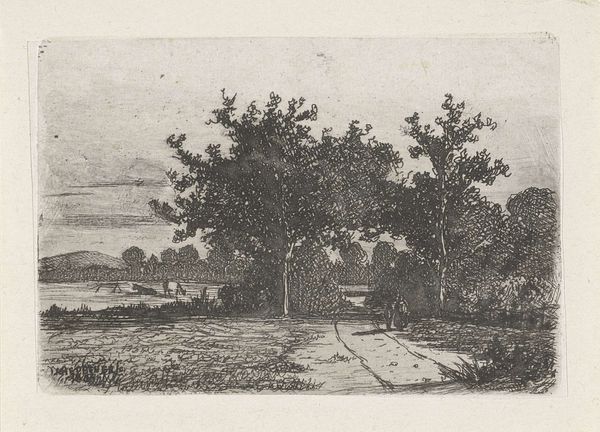
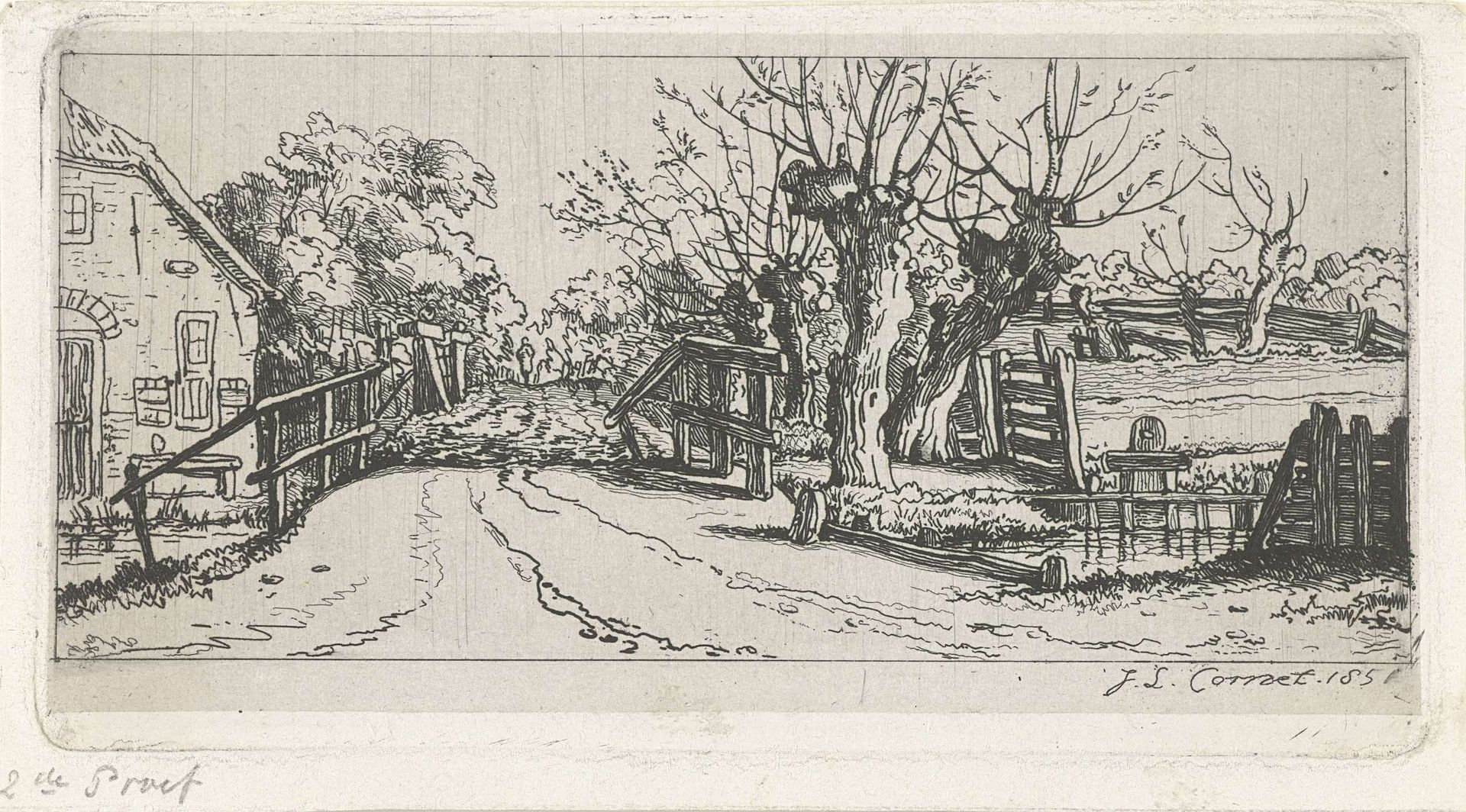
Jacobus Ludovicus Cornet made this print of a farm track in 1851, using a technique called etching. This involves drawing into a waxy ground on a metal plate, which is then bathed in acid. The acid bites into the metal where the ground has been removed, creating an image that can be inked and printed. Notice how the etched lines vary in thickness and depth, creating a range of tones and textures. The artist's hand is evident in the drawing, but also in the controlled application of the acid. The way Cornet used the etching process, with its reliance on craft skills, gave him the opportunity to capture the rural landscape around the farm. This image is a product of its time, when new technologies of printmaking allowed artists to reach a broader public. The subject matter reflects a growing interest in the countryside, as a counterpoint to the industrializing cities. This print celebrates the intimate connection between people and the land, highlighting the beauty and the value of Dutch rural life.

Artwork details
- Medium
- drawing, ink
- Dimensions
- width 127 mm, height 68 mm
- Location
- Rijksmuseum
- Copyright
- Rijks Museum: Open Domain
Tags
drawing
dutch-golden-age
pen sketch
landscape
ink
realism
Comments
Be the first to share your thoughts about this work.
About this artwork
Jacobus Ludovicus Cornet made this print of a farm track in 1851, using a technique called etching. This involves drawing into a waxy ground on a metal plate, which is then bathed in acid. The acid bites into the metal where the ground has been removed, creating an image that can be inked and printed. Notice how the etched lines vary in thickness and depth, creating a range of tones and textures. The artist's hand is evident in the drawing, but also in the controlled application of the acid. The way Cornet used the etching process, with its reliance on craft skills, gave him the opportunity to capture the rural landscape around the farm. This image is a product of its time, when new technologies of printmaking allowed artists to reach a broader public. The subject matter reflects a growing interest in the countryside, as a counterpoint to the industrializing cities. This print celebrates the intimate connection between people and the land, highlighting the beauty and the value of Dutch rural life.
Comments
Be the first to share your thoughts about this work.