1559 - 1561
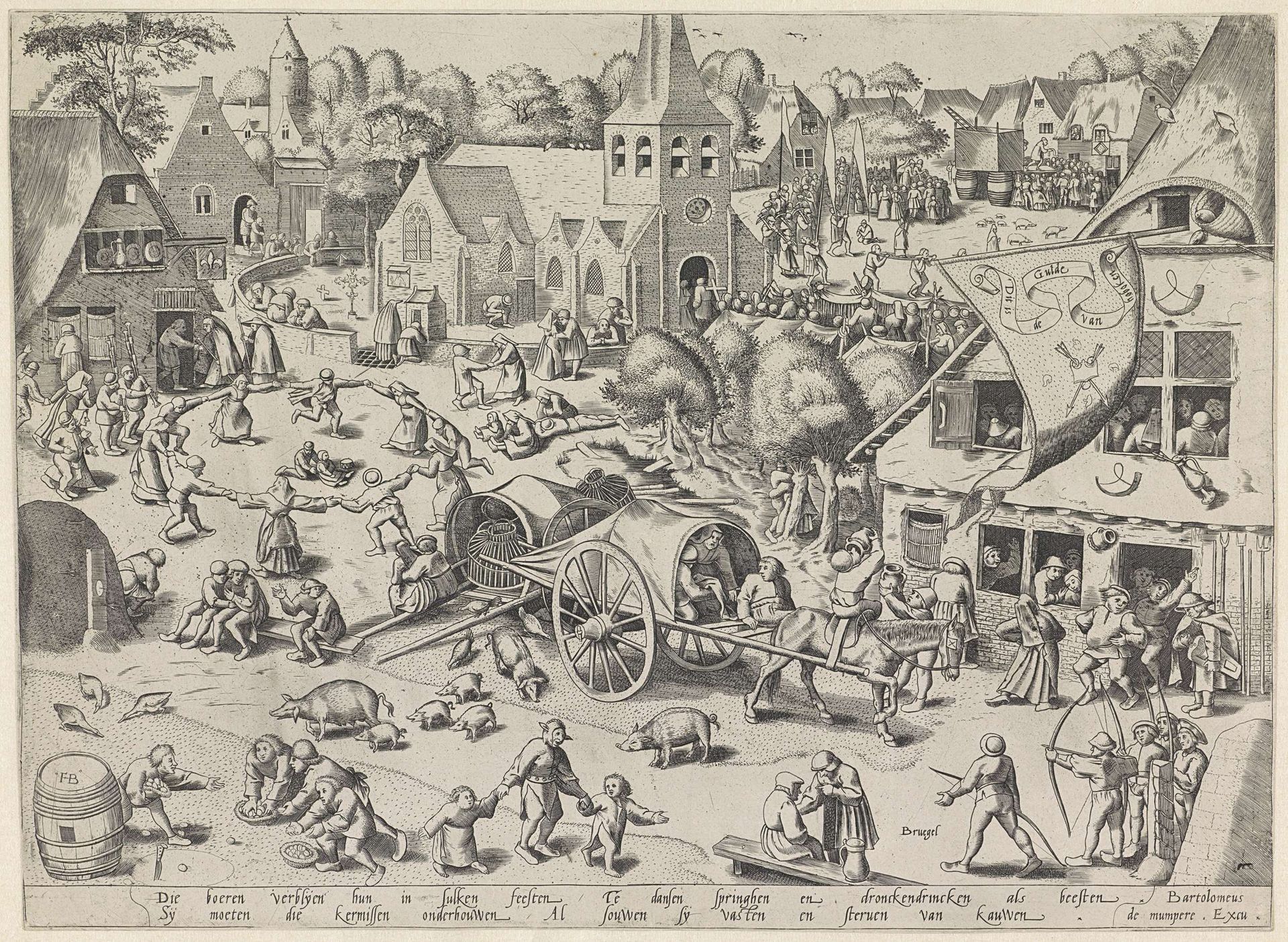
Kermis van Hoboken

Frans Hogenberg
1540 - 1590Location
RijksmuseumListen to curator's interpretation
Curatorial notes
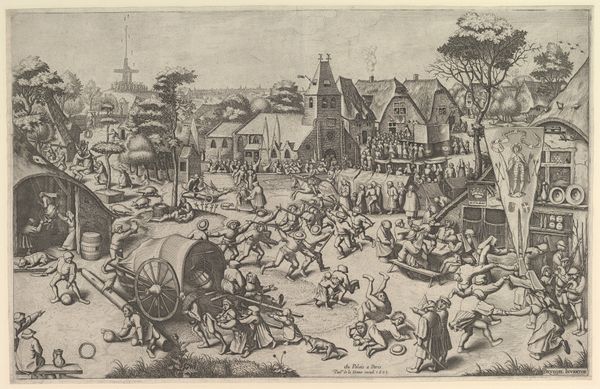
In Frans Hogenberg's etching, "Kermis van Hoboken," created around the late 16th century, the village square becomes a stage for earthly delights and follies. Note the chain dance winding through the crowd, a motif echoing ancient fertility rites. It is reminiscent of similar scenes from Roman bacchanals, where dance served as a conduit for ecstatic release. Consider too the figure drawing back their bow and aiming an arrow, an evocation of Cupid, but here the erotic charge is coarsened. The symbol of the arrow, once imbued with notions of courtly love, is now aimed amid the chaos of the fair. Such juxtapositions reveal a culture grappling with its impulses. The Kermis is a mirror reflecting humanity’s enduring dance between restraint and indulgence, a choreography of cultural memory played out in the present.