About this artwork
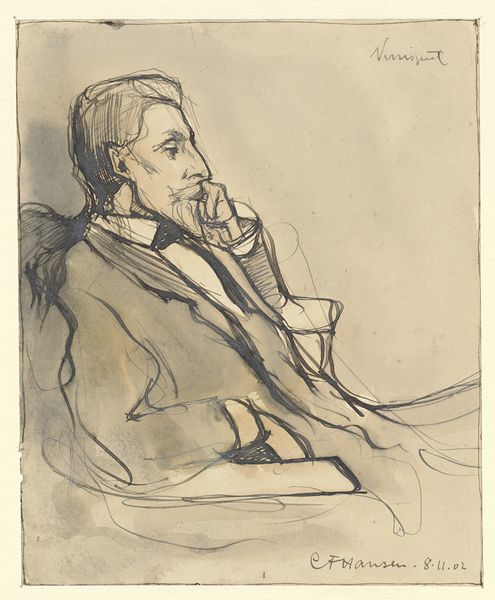
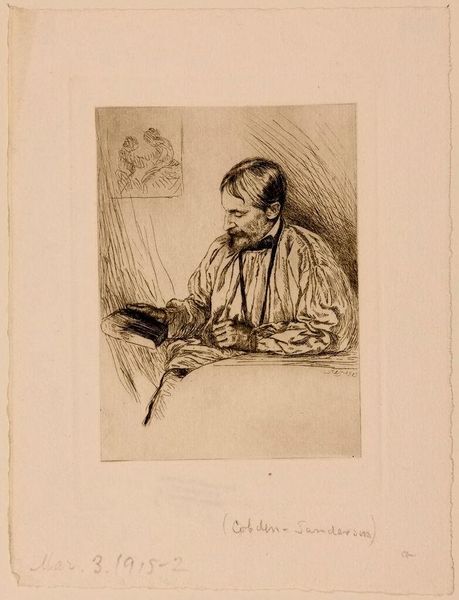
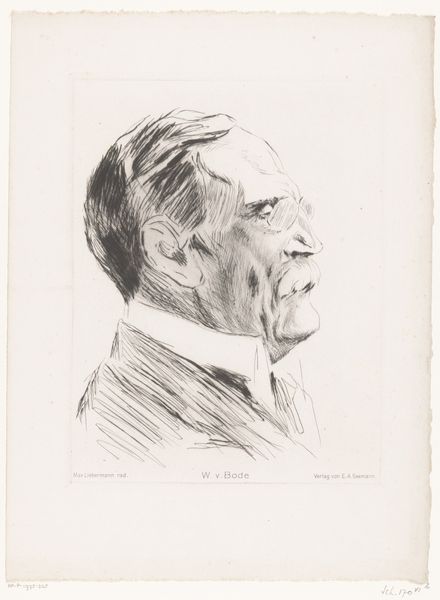
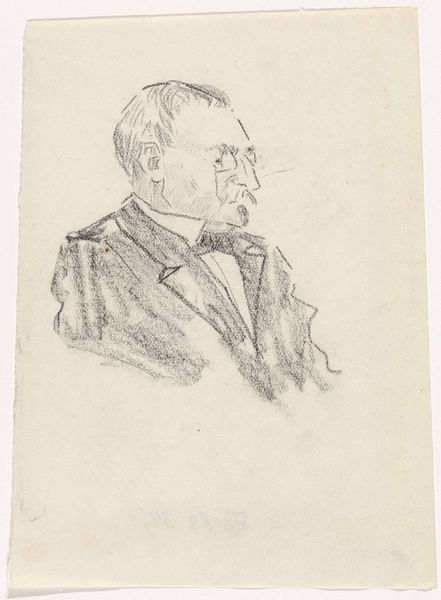
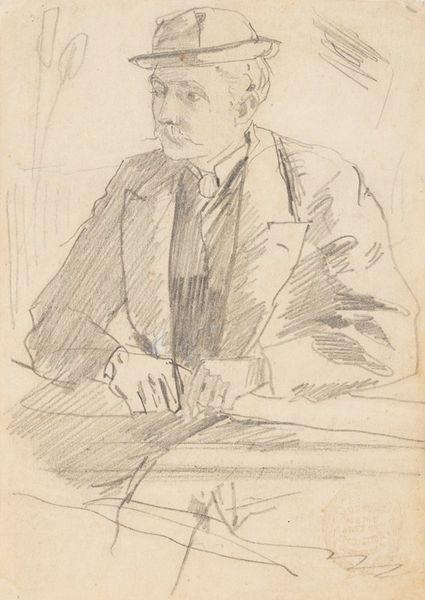
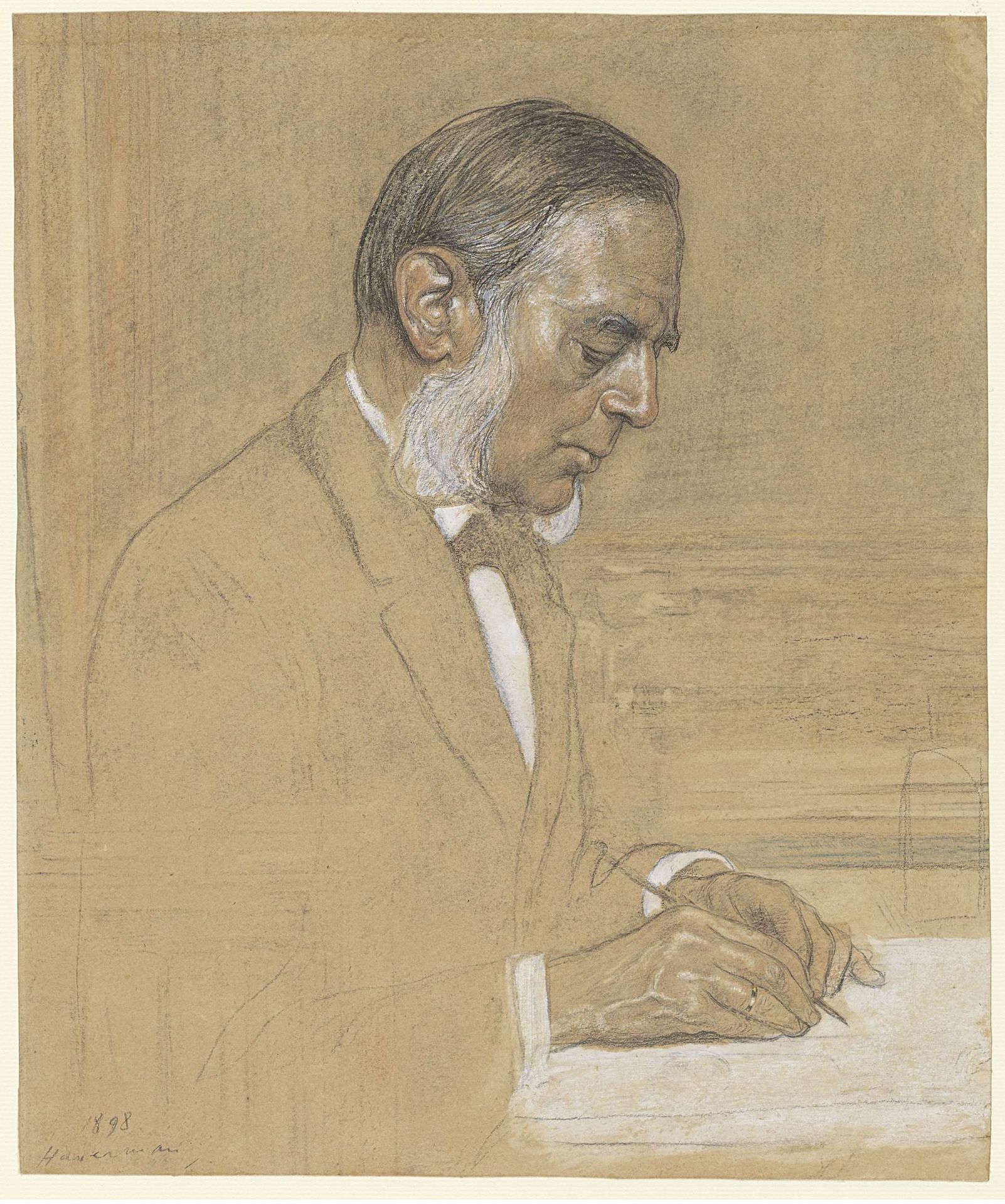
Editor: So, this is Hendrik Johannes Haverman’s “Portret van Sjoerd Anne Vening Meinesz” from 1898, done in pencil. It’s quite a somber drawing, very focused on the subject’s intense concentration. What do you see in this piece beyond just a likeness? Curator: I see the weight of intellect, literally etched onto the subject. Consider the hands, clasped and wielding a pen - an instrument of creation, yes, but also of decision, of law, of societal construction. The stark contrast of the white sideburns against the shadowed face, it speaks to a life steeped in thought. He seems burdened, perhaps by knowledge itself. Does it remind you of any traditional allegories? Editor: Maybe Atlas, bearing the weight of the world? Curator: Precisely! Or perhaps a modern-day scribe, tasked with documenting and interpreting the complexities of a rapidly changing world. Look closely at his brow. Notice how Haverman captures a weariness, suggesting the mental fortitude required to carry such burdens. What symbolic role might the background lines play? Editor: They’re blurry and indistinct, so maybe they represent the unfocused world outside his work? Or maybe they evoke institutional structures, given he’s posed as if at a desk? Curator: Excellent point! They certainly serve as a quiet counterpoint to the sharper definition of Vening Meinesz himself. And doesn’t that reinforce the notion of an individual grappling with amorphous, perhaps overwhelming systems? Ultimately, this is not simply a portrait of a man but also an insightful commentary on the intellectual responsibilities of the era. Editor: It’s interesting to see how much can be read from a simple drawing. It makes you wonder about the context of the image's creation, and its purpose beyond just being a depiction of a person. Curator: Indeed. Haverman prompts us to think beyond the surface, seeking deeper cultural and psychological truths encoded within the lines and shadows.
Portret van Sjoerd Anne Vening Meinesz 1898

Hendrik Johannes Haverman
1857 - 1928Location
RijksmuseumArtwork details
- Medium
- drawing, pencil
- Dimensions
- height 323 mm, width 270 mm
- Location
- Rijksmuseum
- Copyright
- Rijks Museum: Open Domain
Tags
portrait
drawing
pencil
academic-art
realism
Comments
No comments
About this artwork
Editor: So, this is Hendrik Johannes Haverman’s “Portret van Sjoerd Anne Vening Meinesz” from 1898, done in pencil. It’s quite a somber drawing, very focused on the subject’s intense concentration. What do you see in this piece beyond just a likeness? Curator: I see the weight of intellect, literally etched onto the subject. Consider the hands, clasped and wielding a pen - an instrument of creation, yes, but also of decision, of law, of societal construction. The stark contrast of the white sideburns against the shadowed face, it speaks to a life steeped in thought. He seems burdened, perhaps by knowledge itself. Does it remind you of any traditional allegories? Editor: Maybe Atlas, bearing the weight of the world? Curator: Precisely! Or perhaps a modern-day scribe, tasked with documenting and interpreting the complexities of a rapidly changing world. Look closely at his brow. Notice how Haverman captures a weariness, suggesting the mental fortitude required to carry such burdens. What symbolic role might the background lines play? Editor: They’re blurry and indistinct, so maybe they represent the unfocused world outside his work? Or maybe they evoke institutional structures, given he’s posed as if at a desk? Curator: Excellent point! They certainly serve as a quiet counterpoint to the sharper definition of Vening Meinesz himself. And doesn’t that reinforce the notion of an individual grappling with amorphous, perhaps overwhelming systems? Ultimately, this is not simply a portrait of a man but also an insightful commentary on the intellectual responsibilities of the era. Editor: It’s interesting to see how much can be read from a simple drawing. It makes you wonder about the context of the image's creation, and its purpose beyond just being a depiction of a person. Curator: Indeed. Haverman prompts us to think beyond the surface, seeking deeper cultural and psychological truths encoded within the lines and shadows.
Comments
No comments