Possibly 1644 - 1911
Landscapes for Liu Songfu


Listen to curator's interpretation
Curatorial notes
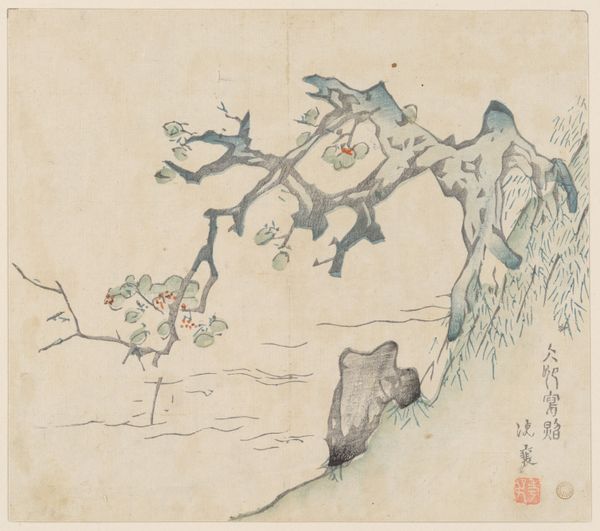
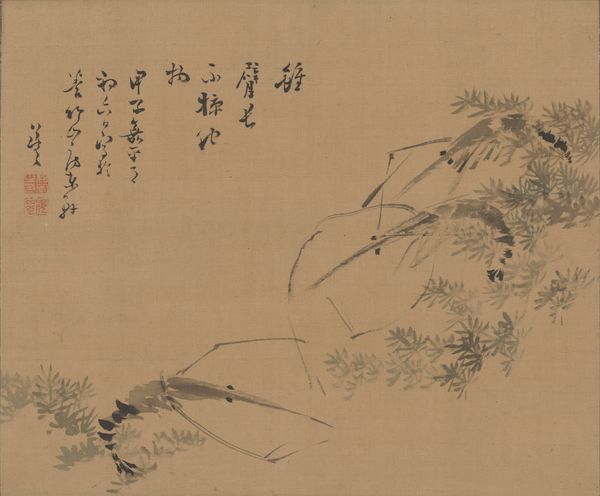
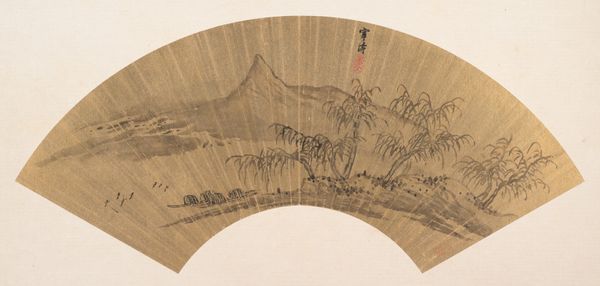
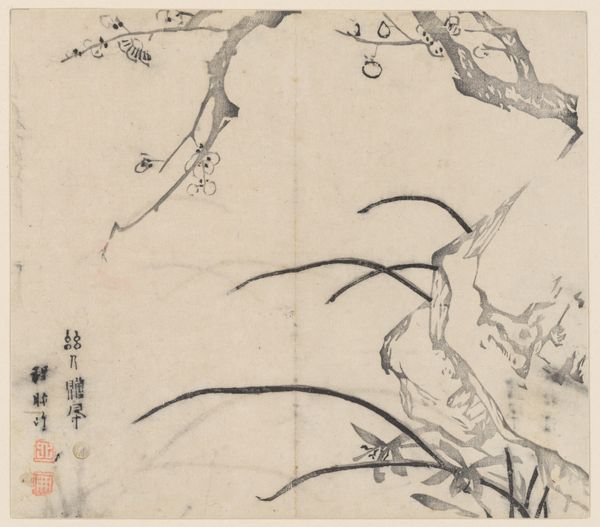
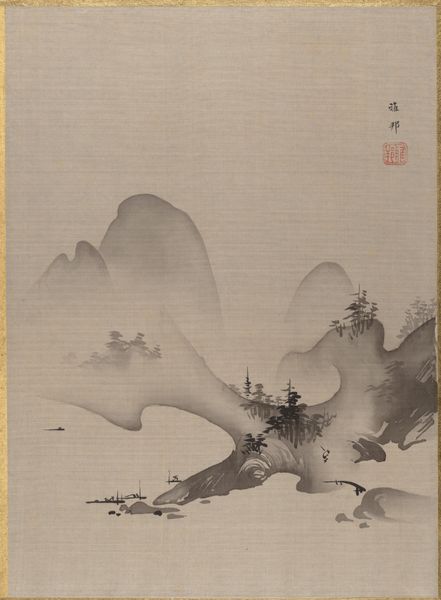
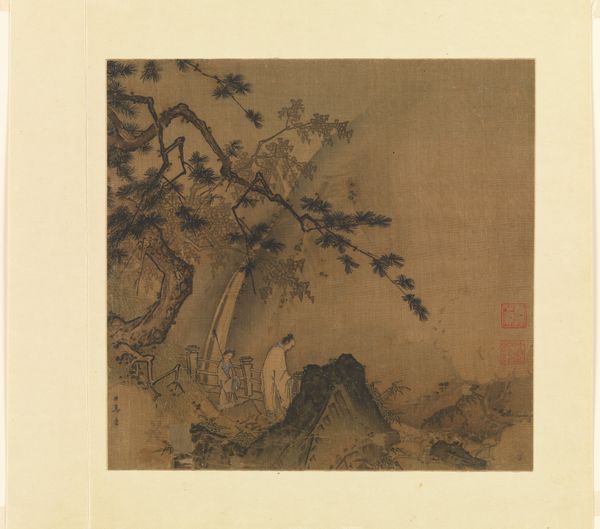
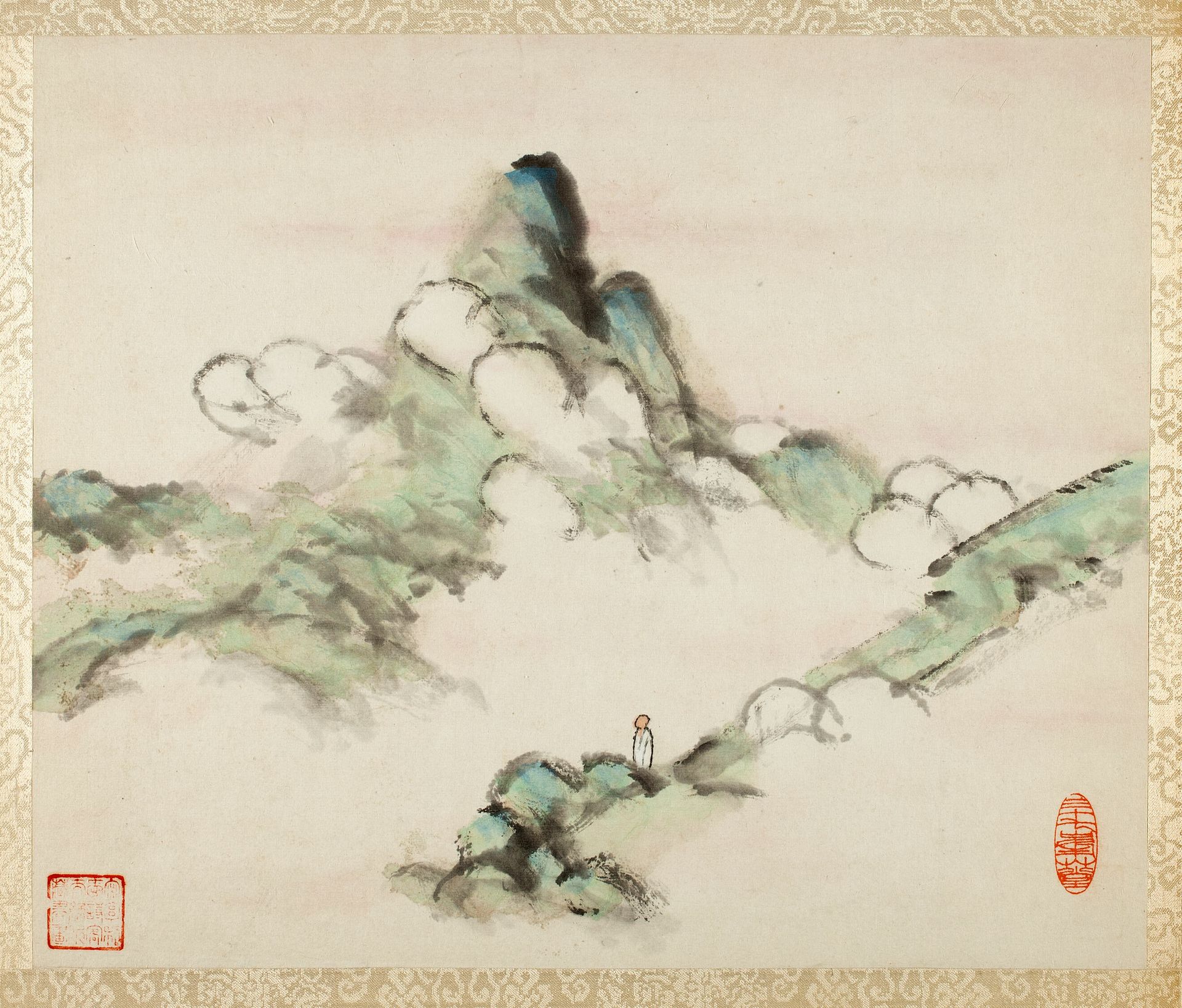
Curator: Xugu, active during the Qing dynasty, crafted these "Landscapes for Liu Songfu." It's a watercolour and ink painting on paper. Editor: A first glance evokes serenity, but there is loneliness. The solitary figure set against the vast landscape generates a very particular feeling. Curator: I agree, it is moving, but consider how these watercolor washes are laid down – note the paper's texture allowing for these diffused edges, creating a real ethereal effect with minimal materials. Look closely at how Xugu created these subtle gradations using specific brushstrokes. The paper itself is active. Editor: The lone figure dressed in a white robe... the smallness of his figure amplifies the majesty of the landscape and perhaps alludes to themes of enlightenment through nature, a prevalent one across much of the region's religious iconography and traditional artwork. What does that figure represent for the consumer of the painting, though? Curator: Perhaps a reference to the scholar-official tradition. Landscapes in this style were luxury goods and circulated within specific elite social groups that promoted specific philosophies and even systems of labor. A powerful emblem for the literate class. Editor: Those cloud formations look more like spirit-animal totems, like guardians or perhaps even illusions on the pilgrim’s path to self-knowledge. Do we know anything about the symbolic use of landscape art for similar cultural stories and narratives? Curator: While there were no titles in many similar works of this kind, such images evoked idealized landscapes and ways of life rooted in Neo-Confucian and Buddhist thought that offered viewers—primarily upper class individuals—a source of spiritual nourishment in unstable times. Editor: The composition guides your eyes upwards along the mountain ridge, mimicking the physical journey to enlightenment. The figure serves as a key symbolic touchstone, as an emblem, and creates an allegory to personal refinement in nature, of course. It works on multiple levels. Curator: True, though, it's easy to romanticize this image! It's crucial to keep in mind the economic implications inherent in such a piece, from production all the way through consumption. I am thinking here specifically of how labor is organized, who benefits from that arrangement, how power is negotiated in society through this. Editor: Fascinating how one piece can be a window into both a personal spiritual journey and the structures of an entire society. Curator: Indeed, quite interesting when you view those various ways that painting speaks through time, each with its unique method!