About this artwork
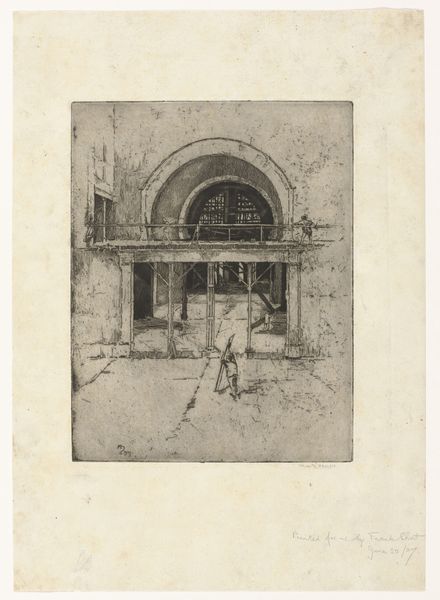
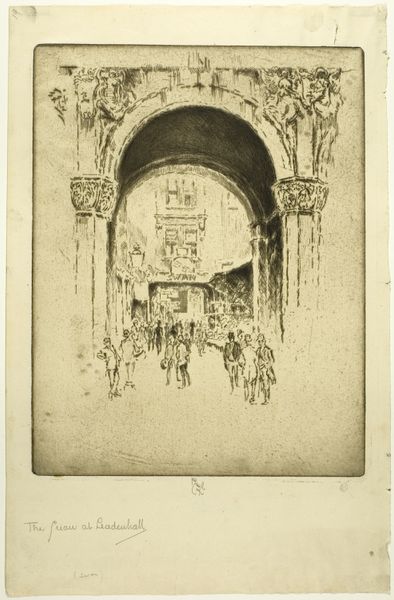
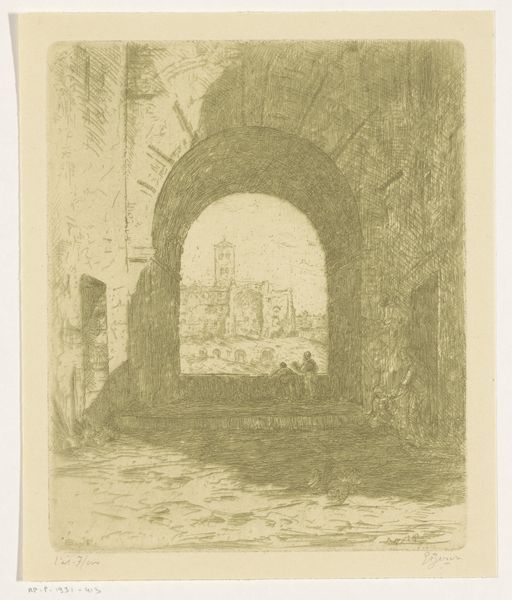
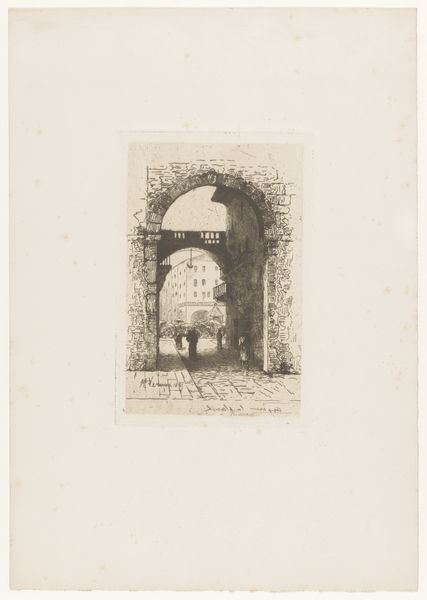
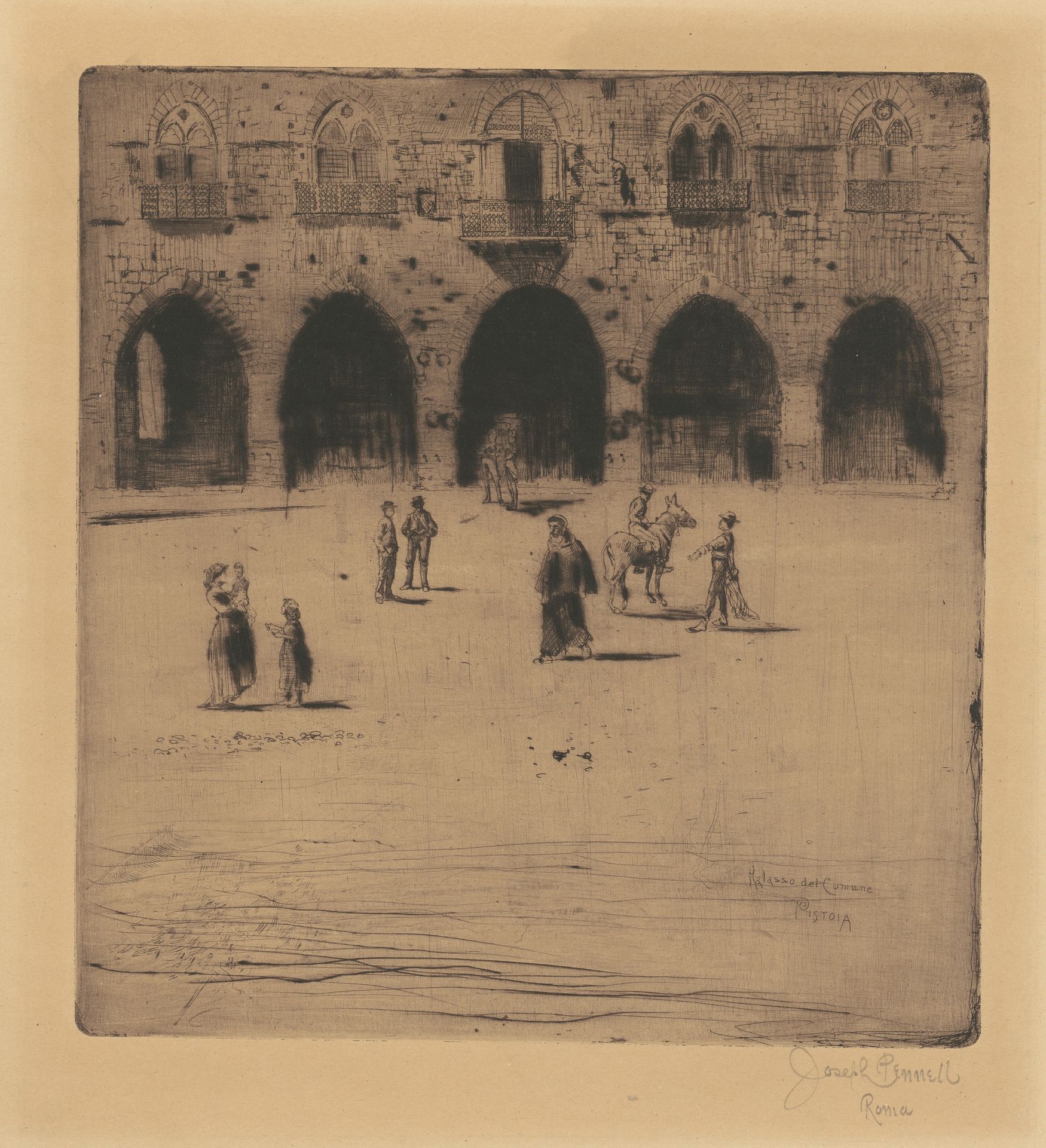
Editor: This is Joseph Pennell's "Piazza del Comune, Pistoia," a print from 1883. The aged paper gives it such a vintage feel. What draws your eye to this piece? Curator: My focus immediately goes to the printmaking process itself. Look at the variations in ink density and the paper quality. These things reveal a lot about the artistic labor and material conditions surrounding the print’s creation. It's not just about the depicted scene. Editor: Right! I notice the rough texture and how the lines aren’t perfectly clean. It feels very immediate, like a sketch. Curator: Exactly. This wasn't some mass-produced image. Someone meticulously worked with the plate, with acid, with the press. Think about the social status implied in making this type of craft, requiring specific tools and technical skill. What's the interplay between "fine art" and "labor" here? How accessible would this image have been? Editor: Hmm, good point. Given the time period, prints like this might have been relatively accessible compared to paintings. Was Pennell perhaps interested in reaching a wider audience? Curator: Possibly, or perhaps it was driven by a fascination with the craft itself. Did he experiment with different materials or techniques? His artistic intent might have been about pushing the boundaries of the print medium. Also, consider how depictions of "common" people in public squares, through prints, democratized art consumption. Editor: So, it’s not *just* a picture of a place; it's about who had access to the image, how it was made, and how it challenged existing artistic hierarchies. I never thought about it that way before! Curator: Precisely! It shifts our focus from the artist’s individual genius to the broader context of material production and social engagement. Looking at art this way encourages a deeper appreciation of the materials and labor involved in their creation. Editor: Definitely something to think about. Thank you for expanding my perspective.
Plazza del Comune, Pistoia
1883


Artwork details
- Medium
- Dimensions
- plate: 24.29 × 22.7 cm (9 9/16 × 8 15/16 in.) sheet: 43.18 × 30.8 cm (17 × 12 1/8 in.)
- Copyright
- National Gallery of Art: CC0 1.0
Tags
Comments
Share your thoughts
About this artwork
Editor: This is Joseph Pennell's "Piazza del Comune, Pistoia," a print from 1883. The aged paper gives it such a vintage feel. What draws your eye to this piece? Curator: My focus immediately goes to the printmaking process itself. Look at the variations in ink density and the paper quality. These things reveal a lot about the artistic labor and material conditions surrounding the print’s creation. It's not just about the depicted scene. Editor: Right! I notice the rough texture and how the lines aren’t perfectly clean. It feels very immediate, like a sketch. Curator: Exactly. This wasn't some mass-produced image. Someone meticulously worked with the plate, with acid, with the press. Think about the social status implied in making this type of craft, requiring specific tools and technical skill. What's the interplay between "fine art" and "labor" here? How accessible would this image have been? Editor: Hmm, good point. Given the time period, prints like this might have been relatively accessible compared to paintings. Was Pennell perhaps interested in reaching a wider audience? Curator: Possibly, or perhaps it was driven by a fascination with the craft itself. Did he experiment with different materials or techniques? His artistic intent might have been about pushing the boundaries of the print medium. Also, consider how depictions of "common" people in public squares, through prints, democratized art consumption. Editor: So, it’s not *just* a picture of a place; it's about who had access to the image, how it was made, and how it challenged existing artistic hierarchies. I never thought about it that way before! Curator: Precisely! It shifts our focus from the artist’s individual genius to the broader context of material production and social engagement. Looking at art this way encourages a deeper appreciation of the materials and labor involved in their creation. Editor: Definitely something to think about. Thank you for expanding my perspective.
Comments
Share your thoughts