About this artwork
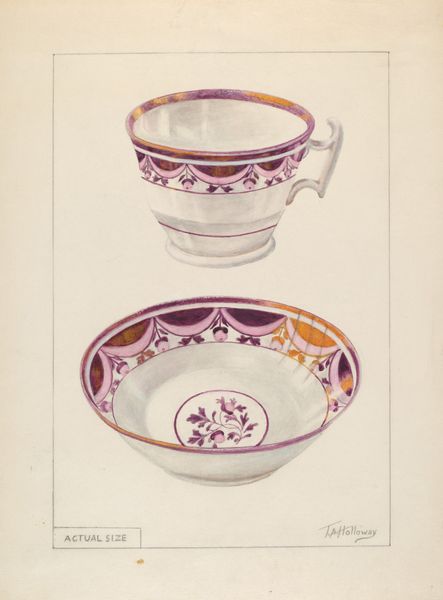
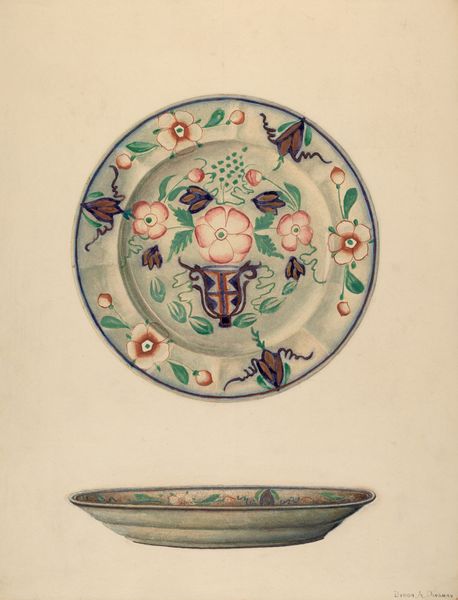
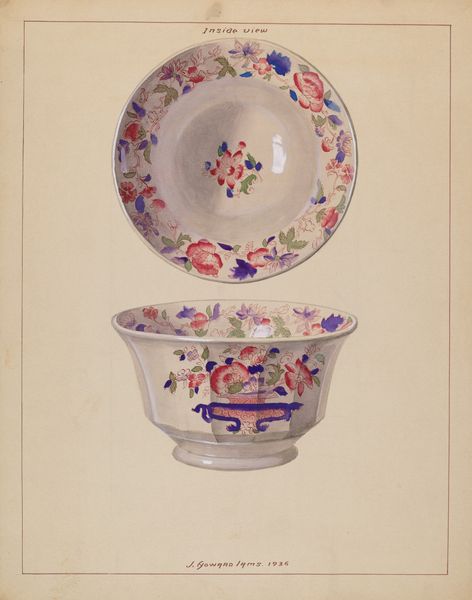
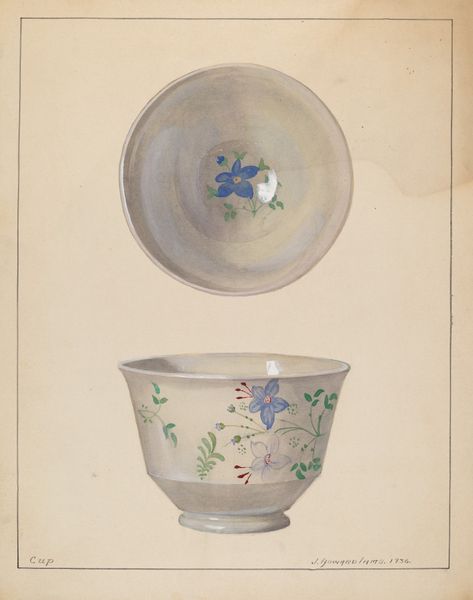
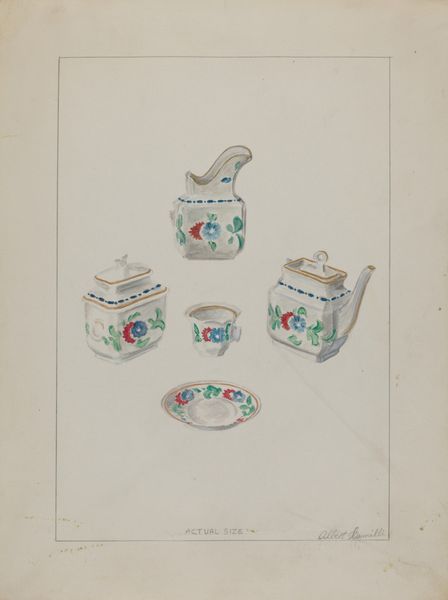
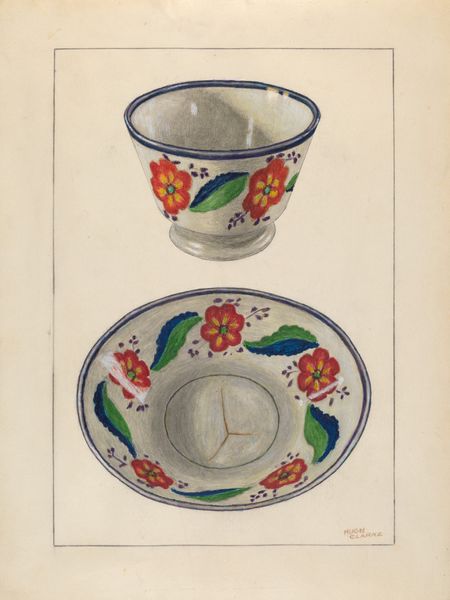
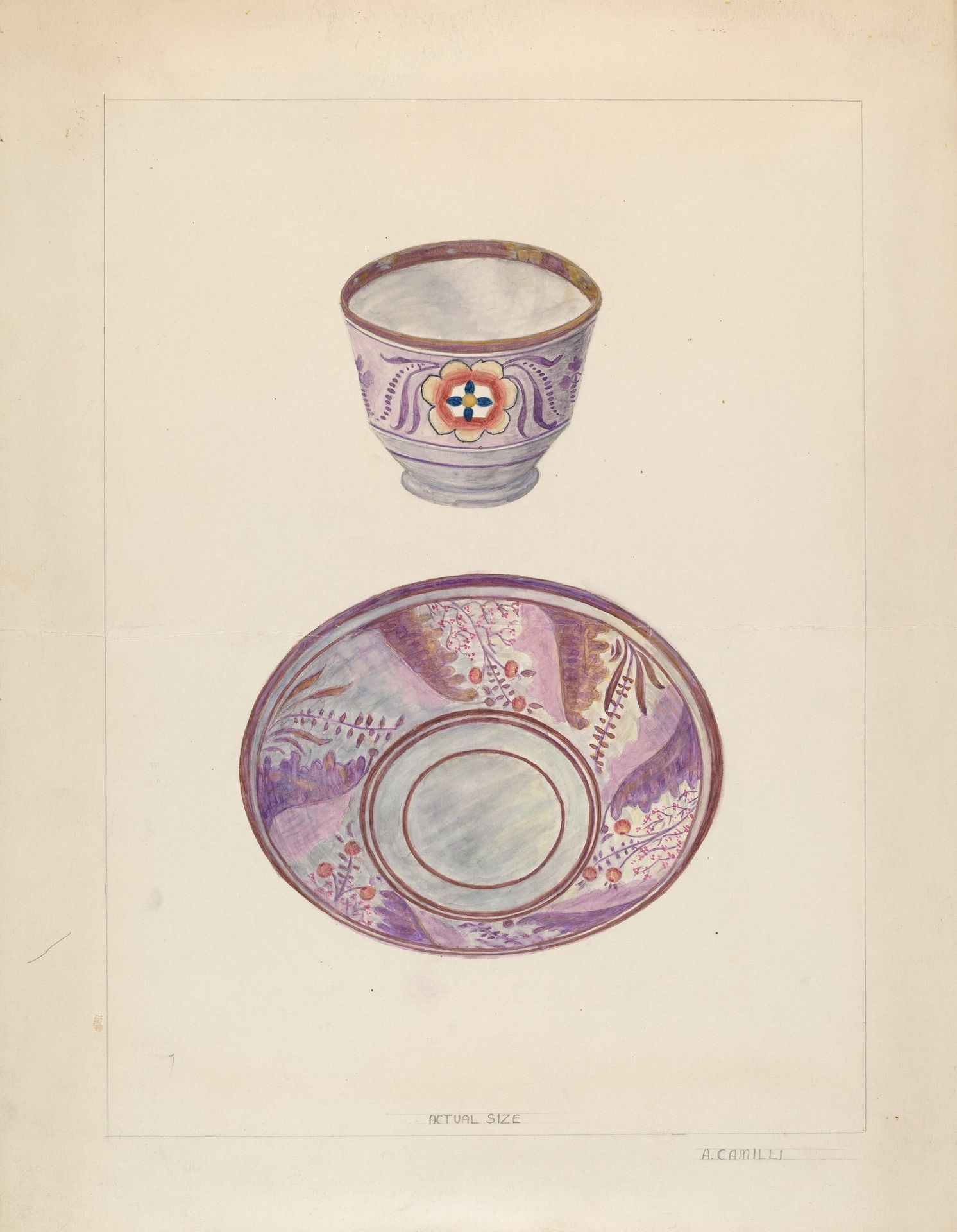
This is Albert Camilli’s 'Cup and Saucer', made at an unknown date with watercolor and graphite. It's a pretty straightforward rendering, or is it? I love the palette, muted and simple. The lavender and the red-orange flower pattern create a strange harmony, both sweet and jarring. The watercolor is thin, transparent, revealing the paper's surface. It gives the piece an ephemeral, delicate quality. It's not about realism, but the idea of a cup and saucer, maybe like a memory. Look closely at the little dashes around the edge of the saucer. They’re like a secret language. You could almost see them as tiny figures, or musical notes. Camilli’s approach reminds me a bit of the work of Giorgio Morandi, who also found endless inspiration in simple, everyday objects. This piece reminds us that beauty can be found in the mundane, and that even the simplest of objects can hold a world of meaning.


Artwork details
- Medium
- drawing, watercolor
- Dimensions
- overall: 35.8 x 27.9 cm (14 1/8 x 11 in.) Original IAD Object: Object rendered actual size.
- Copyright
- National Gallery of Art: CC0 1.0
Tags
drawing
watercolor
coloured pencil
decorative-art
watercolor
Comments
No comments
About this artwork
This is Albert Camilli’s 'Cup and Saucer', made at an unknown date with watercolor and graphite. It's a pretty straightforward rendering, or is it? I love the palette, muted and simple. The lavender and the red-orange flower pattern create a strange harmony, both sweet and jarring. The watercolor is thin, transparent, revealing the paper's surface. It gives the piece an ephemeral, delicate quality. It's not about realism, but the idea of a cup and saucer, maybe like a memory. Look closely at the little dashes around the edge of the saucer. They’re like a secret language. You could almost see them as tiny figures, or musical notes. Camilli’s approach reminds me a bit of the work of Giorgio Morandi, who also found endless inspiration in simple, everyday objects. This piece reminds us that beauty can be found in the mundane, and that even the simplest of objects can hold a world of meaning.
Comments
No comments