About this artwork
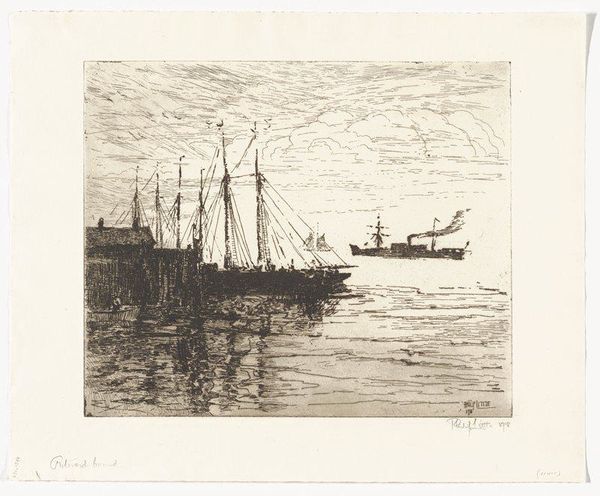
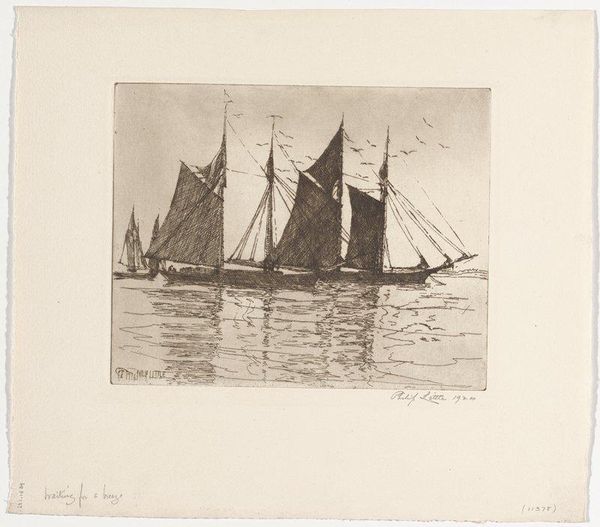
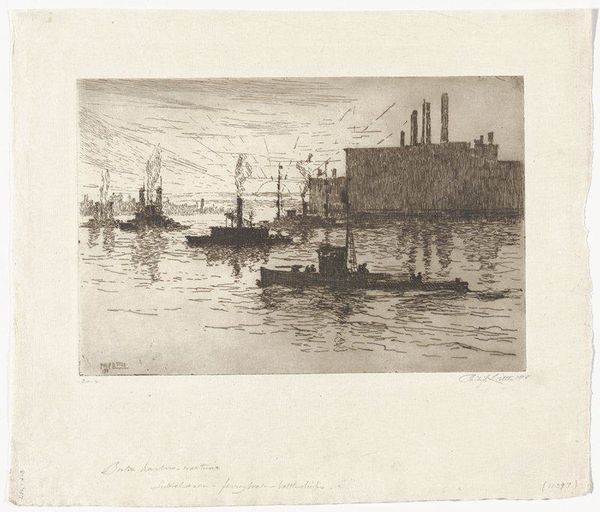
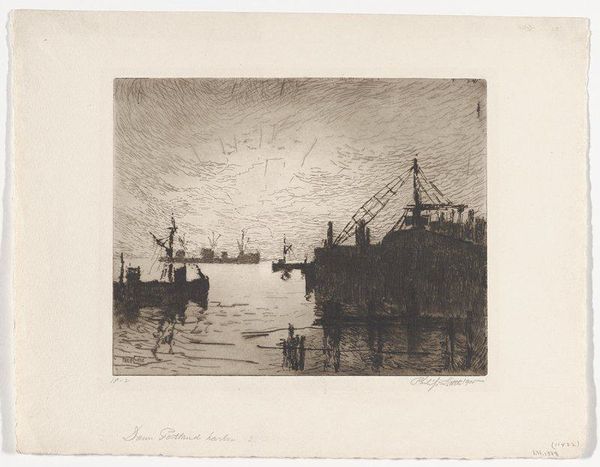
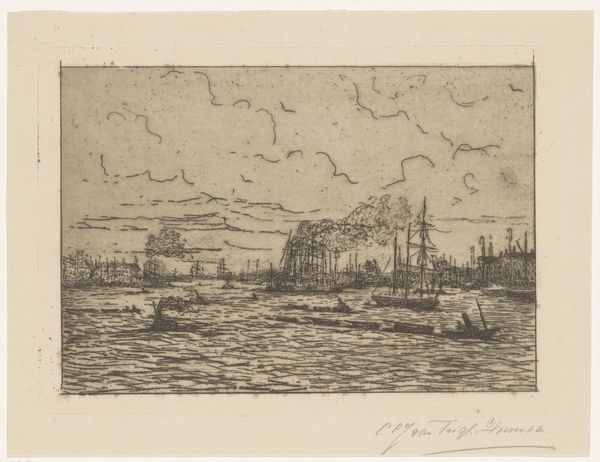
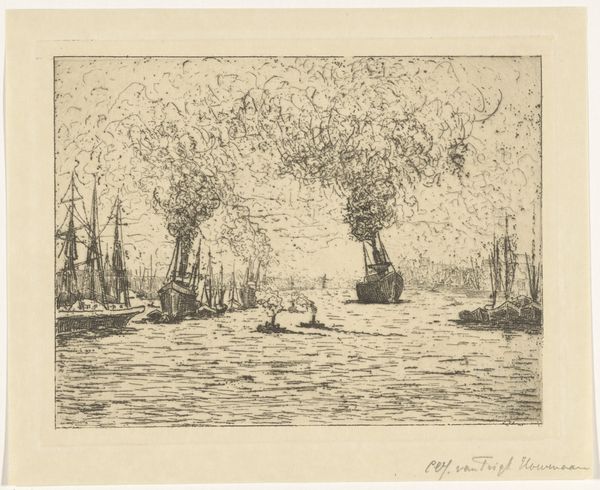
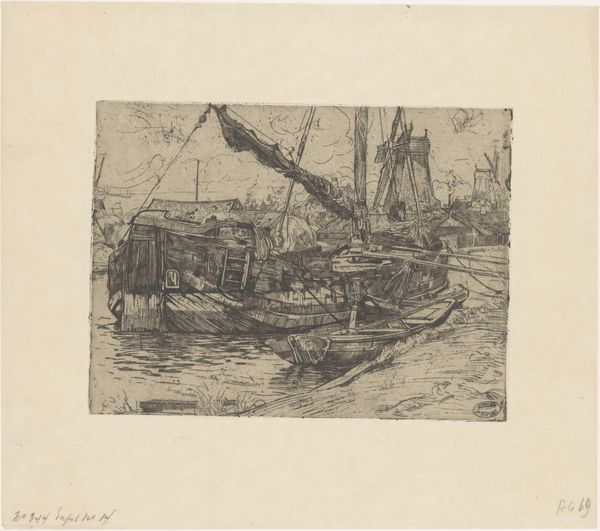
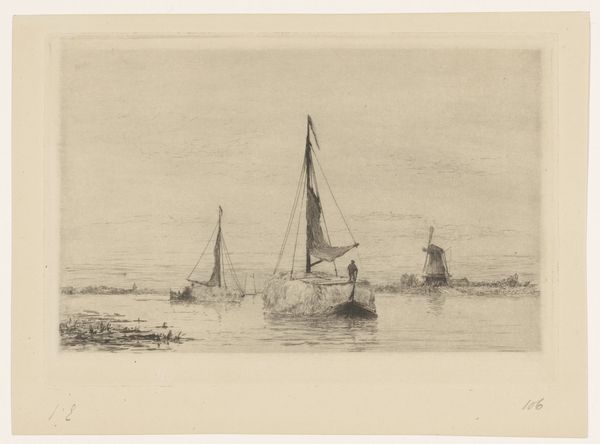
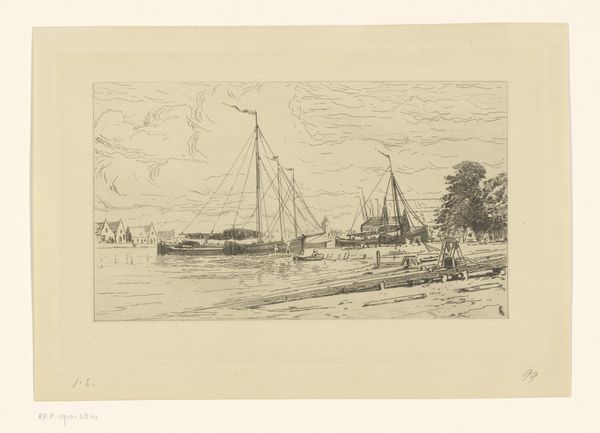
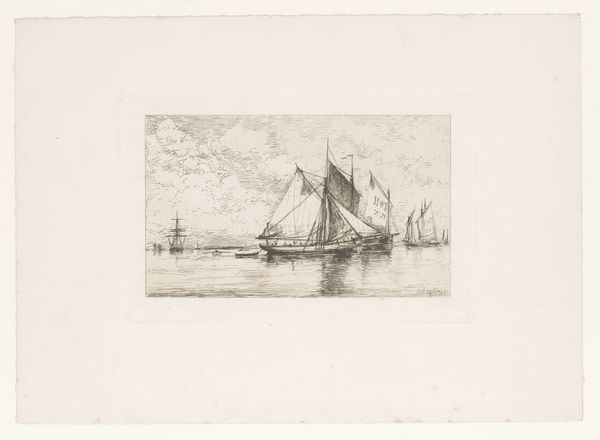
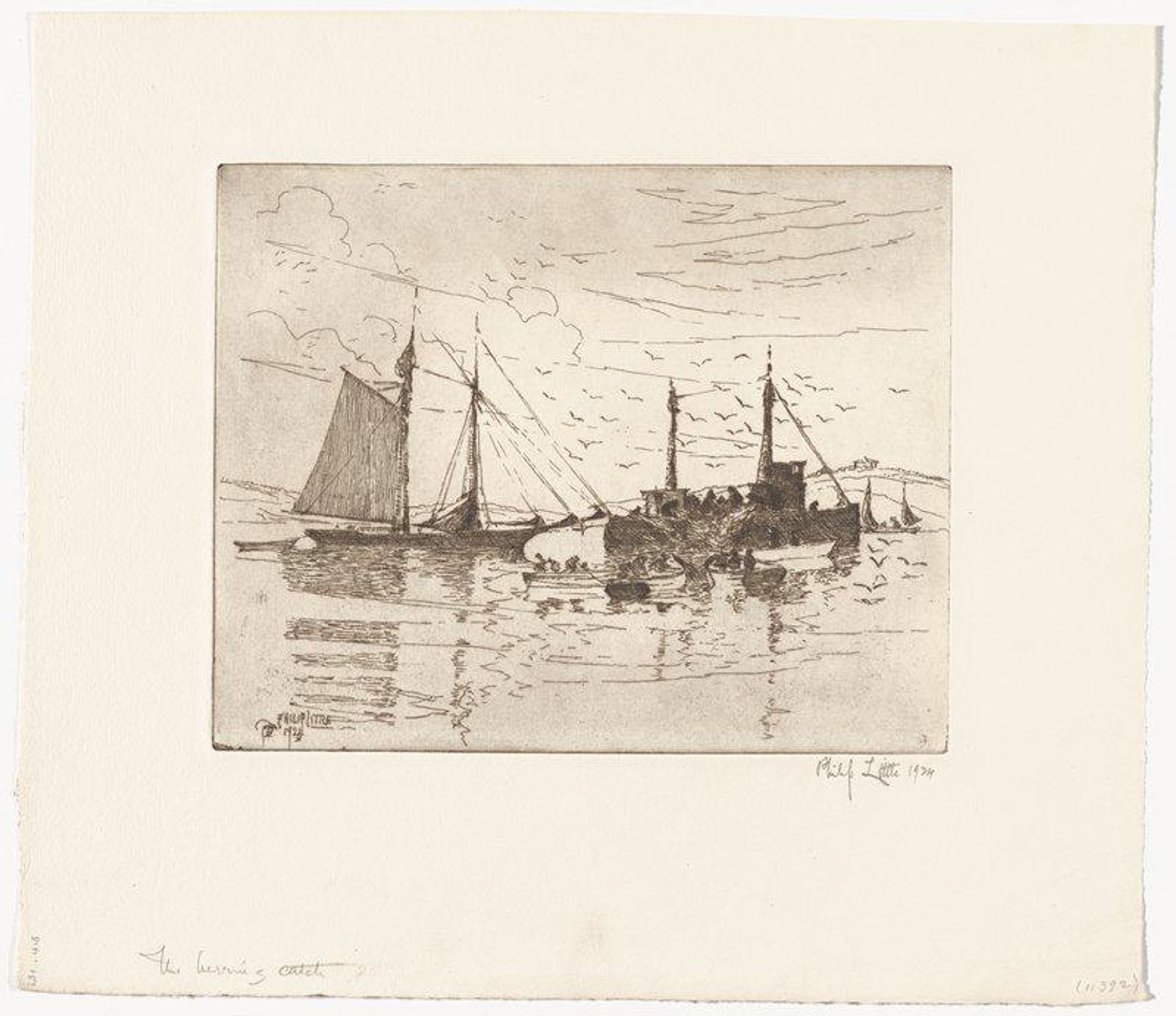
Philip Little made this etching, ‘The Herring Catch’ in 1930, and it’s all about the subtle dance of lines. Look how he uses these tiny marks to build up form. It’s not about a perfect picture, but more about a feeling, a moment, the process of seeing. I love how the etching captures the light on the water. You can almost feel the boat rocking gently. It’s all in those little flicks and scratches, a whole world made of tiny actions. The overall impression is tonal, as if you’re seeing something atmospheric in monochrome. Think of Whistler and his seascapes, maybe even a touch of some Japanese prints. This piece is a reminder that art is an ongoing conversation, and there’s always room for another voice in the chorus. The image suggests that we can find beauty in the everyday, and poetry in the simplest of gestures.
The Herring Catch
1924


Artwork details
- Medium
- print, etching
- Dimensions
- 7 7/8 x 9 7/8 in. (20 x 25.08 cm) (plate)13 3/16 x 15 1/8 in. (33.5 x 38.42 cm) (sheet)
- Location
- Minneapolis Institute of Art
- Copyright
- No Copyright - United States
Tags
Comments
Share your thoughts
About this artwork
Philip Little made this etching, ‘The Herring Catch’ in 1930, and it’s all about the subtle dance of lines. Look how he uses these tiny marks to build up form. It’s not about a perfect picture, but more about a feeling, a moment, the process of seeing. I love how the etching captures the light on the water. You can almost feel the boat rocking gently. It’s all in those little flicks and scratches, a whole world made of tiny actions. The overall impression is tonal, as if you’re seeing something atmospheric in monochrome. Think of Whistler and his seascapes, maybe even a touch of some Japanese prints. This piece is a reminder that art is an ongoing conversation, and there’s always room for another voice in the chorus. The image suggests that we can find beauty in the everyday, and poetry in the simplest of gestures.
Comments
Share your thoughts