About this artwork
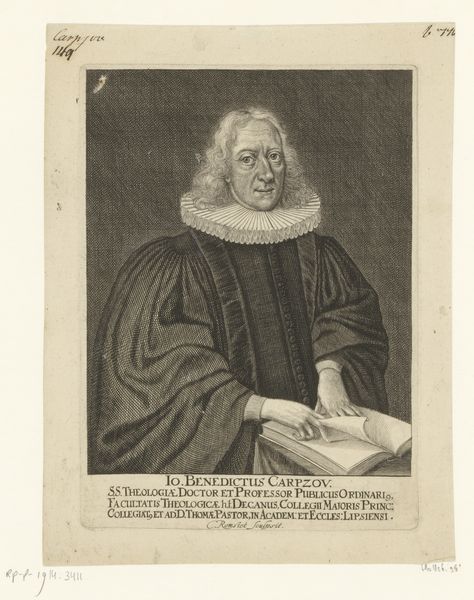
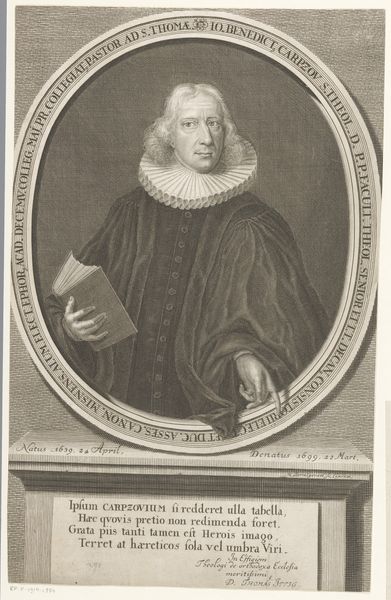
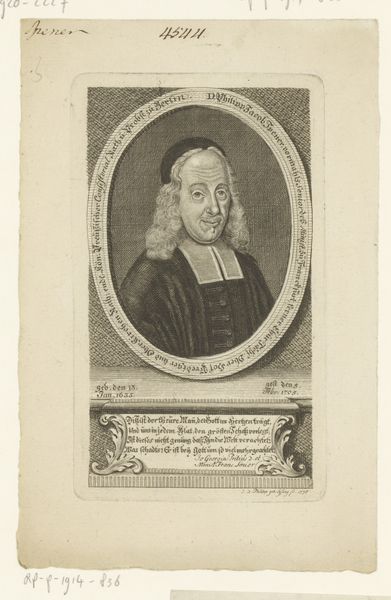
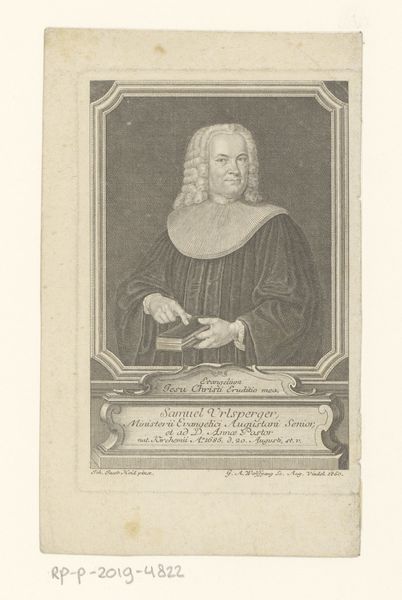
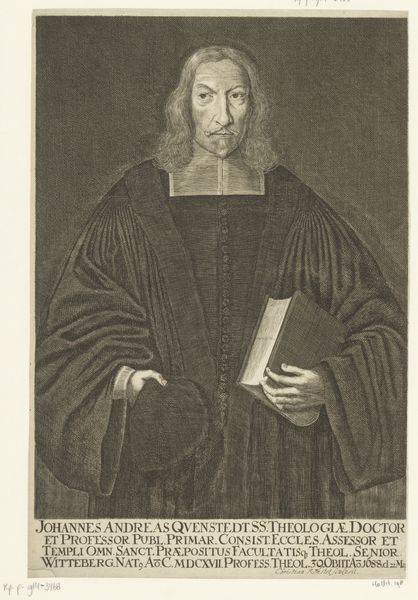
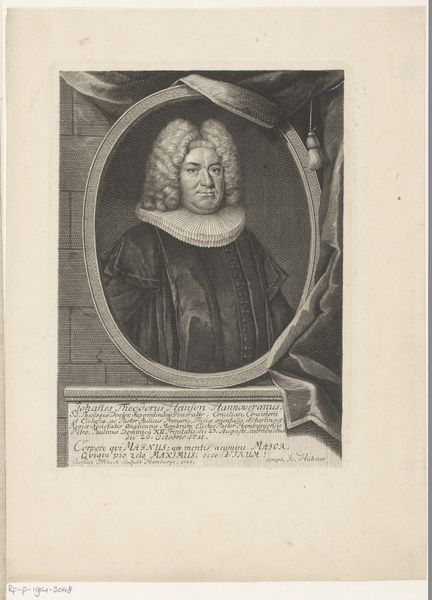
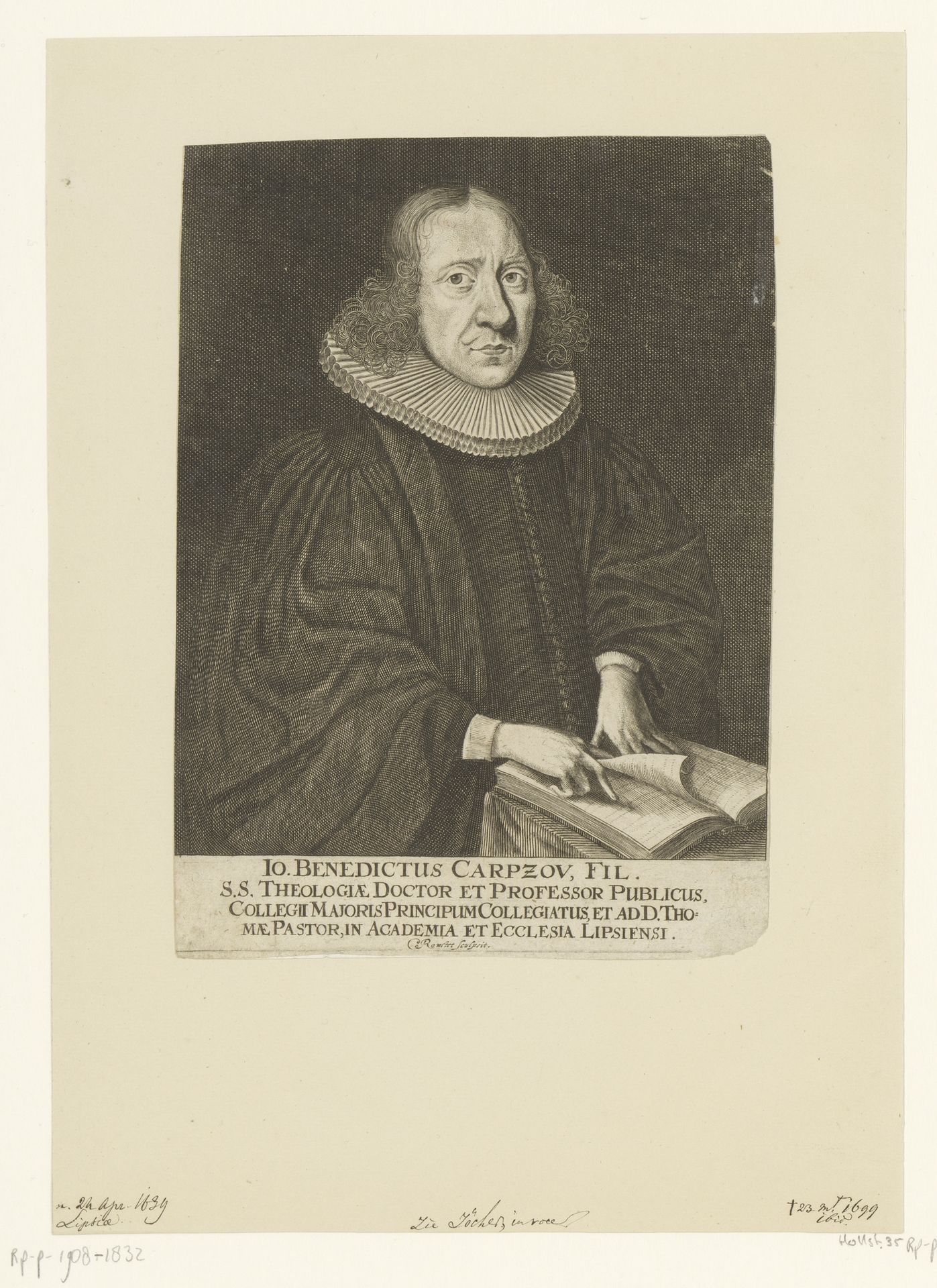
This is Christian Romstet's portrait of Johann Benedikt Carpzov, made with etching. The composition divides into three horizontal bands: the inscription, the sitter’s body and hand gesturing to a book, and the sitter's head encircled by an elaborate ruff. This structure draws the eye upwards. Romstet uses a play of light and shadow to suggest the volume of Carpzov's form, lending a sense of presence. The texture is created through fine, parallel lines characteristic of etching, lending depth to the fabric of the robe and pages of the book. Romstet uses the formal qualities of the print medium to define a visual and intellectual space, reflecting the subject's identity as a figure of scholarly and religious authority. The book, the gesture, the ruff—all function as signs within a semiotic system, speaking to Carpzov’s status. The portrait, therefore, is not just an aesthetic object but an exercise in constructing meaning.

Artwork details
- Medium
- print, engraving
- Dimensions
- height 193 mm, width 140 mm
- Copyright
- Rijks Museum: Open Domain
Tags
portrait
baroque
book
old engraving style
history-painting
academic-art
engraving
Comments
No comments
About this artwork
This is Christian Romstet's portrait of Johann Benedikt Carpzov, made with etching. The composition divides into three horizontal bands: the inscription, the sitter’s body and hand gesturing to a book, and the sitter's head encircled by an elaborate ruff. This structure draws the eye upwards. Romstet uses a play of light and shadow to suggest the volume of Carpzov's form, lending a sense of presence. The texture is created through fine, parallel lines characteristic of etching, lending depth to the fabric of the robe and pages of the book. Romstet uses the formal qualities of the print medium to define a visual and intellectual space, reflecting the subject's identity as a figure of scholarly and religious authority. The book, the gesture, the ruff—all function as signs within a semiotic system, speaking to Carpzov’s status. The portrait, therefore, is not just an aesthetic object but an exercise in constructing meaning.
Comments
No comments