About this artwork
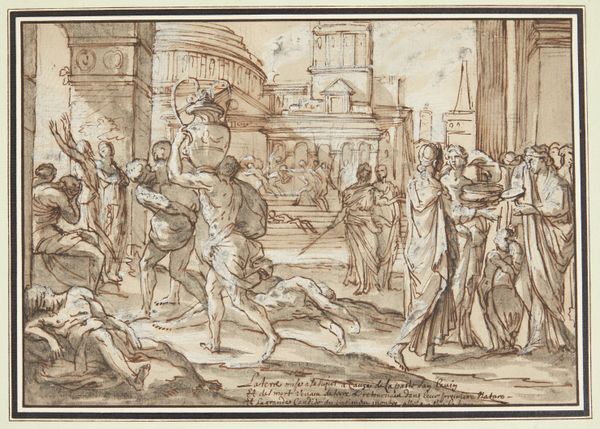
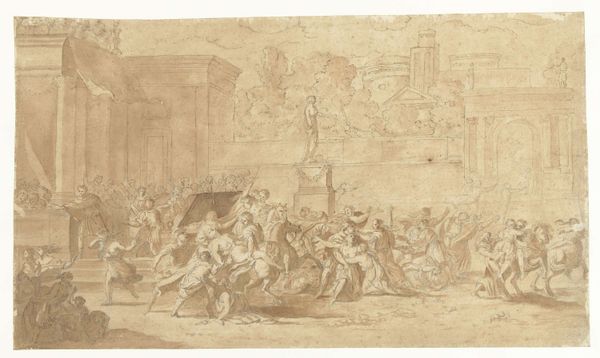
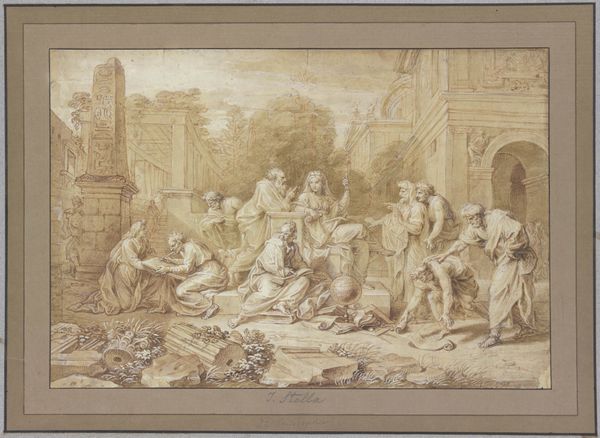
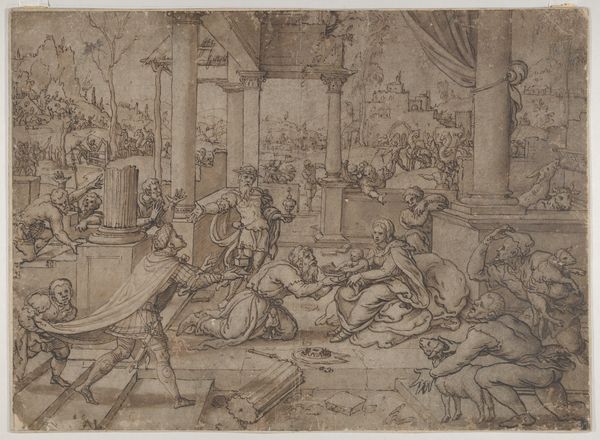
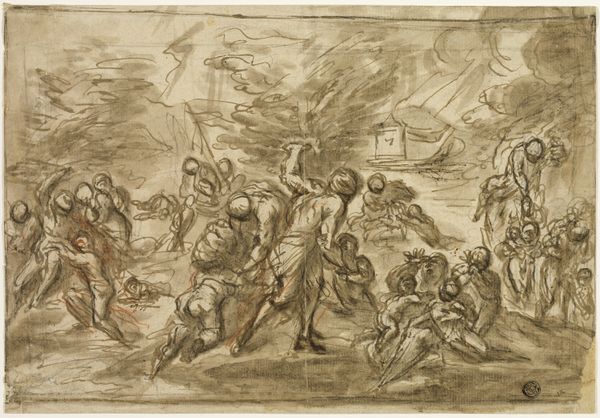
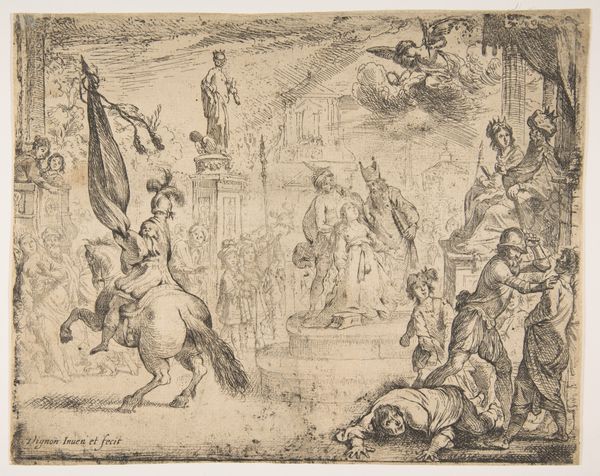
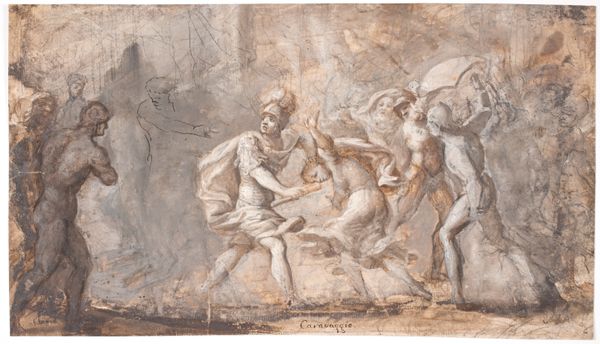
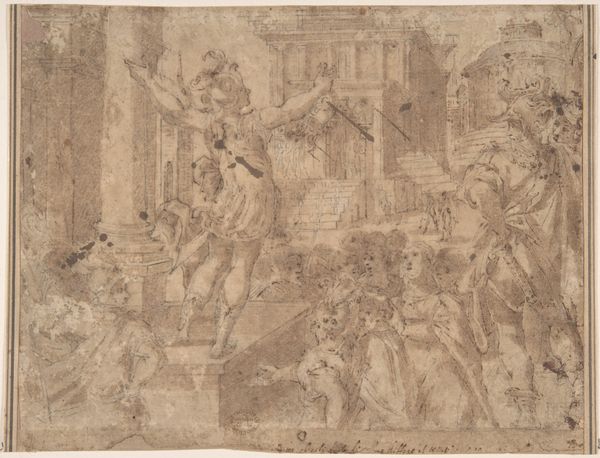
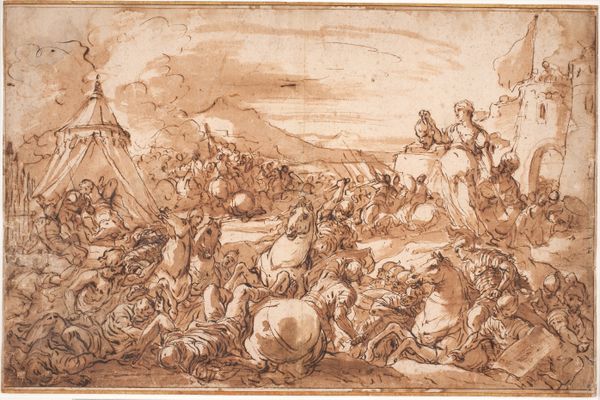
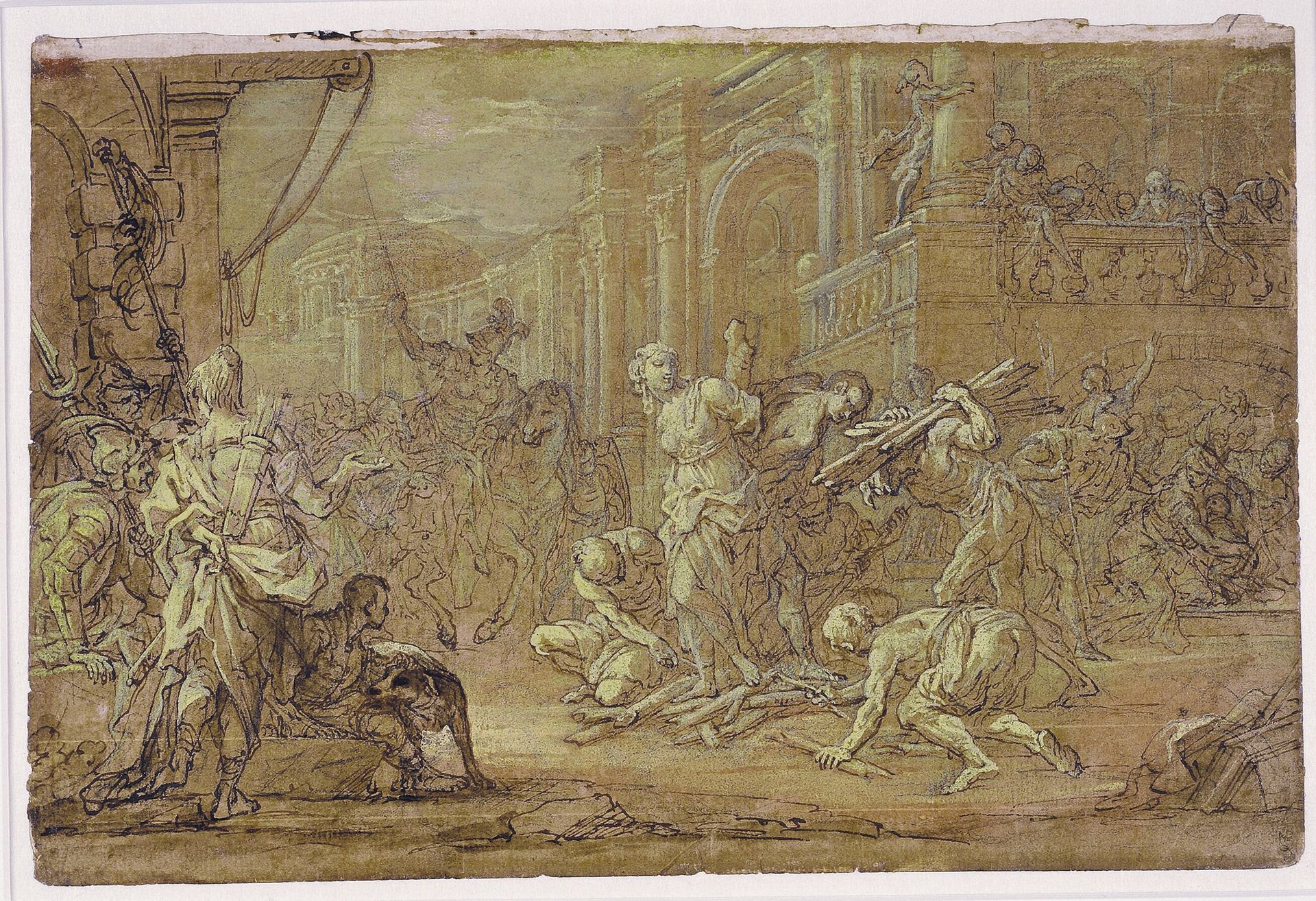
Sebastiano Conca made this drawing, "Clorinda redder Sofronia og Olindo fra bålet i Jerusalem," sometime before 1764, using pen and brown ink, brush and brown wash, and black chalk on paper. The warm monochrome wash imbues the scene with a sense of drama, highlighting the architectural backdrop and the bodies of the figures. The artist has exploited the fluid qualities of ink and wash to render the scene with dynamic energy, and the detailed pen work adds precision to faces, drapery, and architectural details. This combination of techniques results in an expressive quality throughout the artwork. The rapid, spontaneous marks suggest it may have been a study for a larger painting. Conca may have been investigating the possibilities of composition and light before embarking on a finished piece. Drawings like this reveal the labor and artistic exploration involved in the creation of grander artworks. They remind us that behind every masterpiece lies a process of material experimentation and intellectual inquiry.
Clorinda redder Sofronia og Olindo fra bålet i Jerusalem
1700 - 1749


Artwork details
- Medium
- drawing, ink
- Dimensions
- 220 mm (height) x 330 mm (width) (bladmaal)
- Location
- SMK - Statens Museum for Kunst
Tags
drawing
narrative-art
baroque
classical-realism
figuration
ink
history-painting
academic-art
italian-renaissance
watercolor
Comments
Be the first to share your thoughts about this work.
About this artwork
Sebastiano Conca made this drawing, "Clorinda redder Sofronia og Olindo fra bålet i Jerusalem," sometime before 1764, using pen and brown ink, brush and brown wash, and black chalk on paper. The warm monochrome wash imbues the scene with a sense of drama, highlighting the architectural backdrop and the bodies of the figures. The artist has exploited the fluid qualities of ink and wash to render the scene with dynamic energy, and the detailed pen work adds precision to faces, drapery, and architectural details. This combination of techniques results in an expressive quality throughout the artwork. The rapid, spontaneous marks suggest it may have been a study for a larger painting. Conca may have been investigating the possibilities of composition and light before embarking on a finished piece. Drawings like this reveal the labor and artistic exploration involved in the creation of grander artworks. They remind us that behind every masterpiece lies a process of material experimentation and intellectual inquiry.
Comments
Be the first to share your thoughts about this work.