print, engraving
#
portrait
# print
#
northern-renaissance
#
engraving
Dimensions: height 363 mm, width 230 mm
Copyright: Rijks Museum: Open Domain
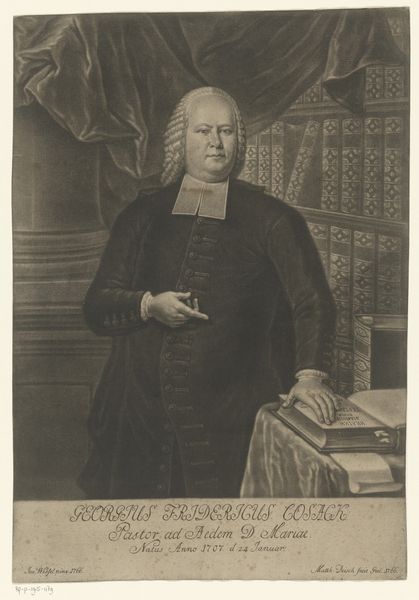
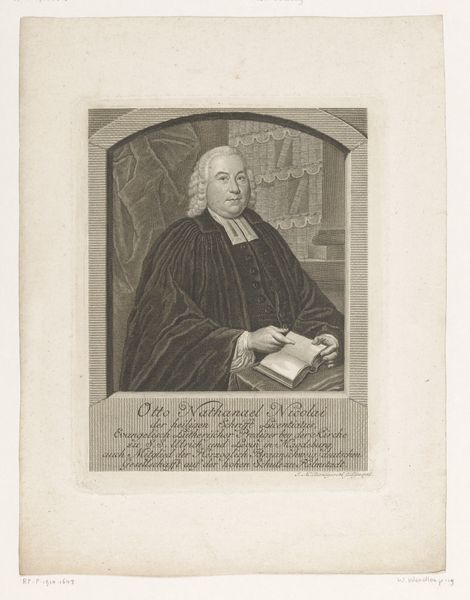
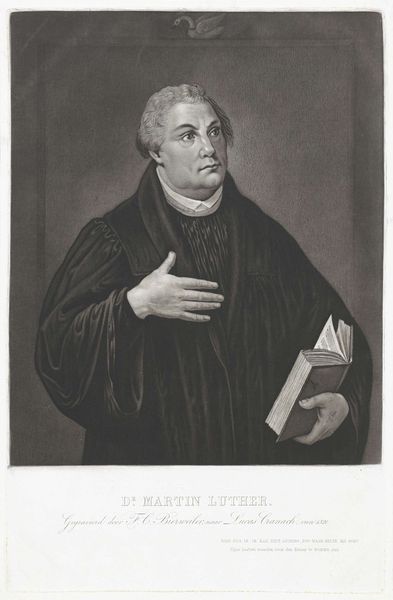
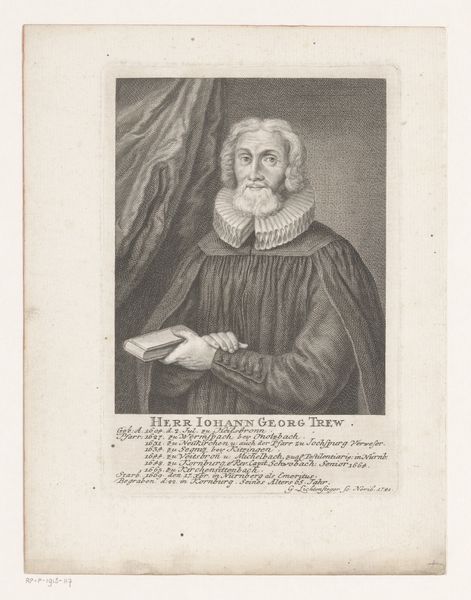
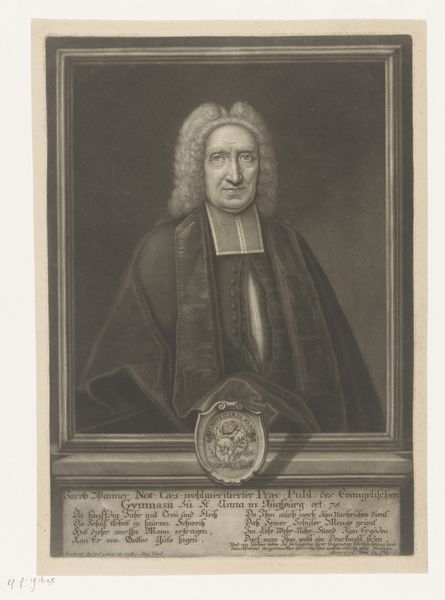
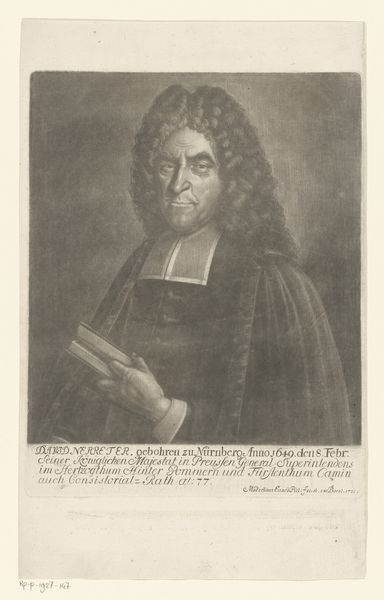
Curator: Here we have a portrait of Martin Luther, made using engraving, dating sometime between 1736 and 1792, and attributed to Johann Simon Negges. It’s a powerful, yet somewhat subdued, representation. Editor: My immediate impression is one of quiet authority. There’s a gravitas in the figure, amplified by the dark robes and the muted tones of the print. He's holding what appears to be a book, perhaps the Bible? Curator: Precisely. The printing press and images like this one, distributed widely, were critical for the reformation. Think about the public role of these early reproductions. This wasn't just an artwork, it was political imagery, influencing opinions and galvanizing support. Editor: Yes, situating it in that context shifts the focus. What might seem like a straightforward portrait now appears as a carefully constructed piece of propaganda. His gaze seems direct but not confrontational—almost inviting you to hear his argument. Is it speaking to ideas of gender in terms of assuming a patriarchal tone of authority? Curator: It certainly speaks to the patriarchal structure of the church and society at the time, no doubt. The inscription beneath the portrait is in Latin; this was aimed at an educated elite but, more broadly, visual elements resonated across literacy levels. Editor: How interesting, there's also the symbolism in the way he holds the book. It's not flaunted, it's a simple and subtle statement. It emphasizes intellect, spirituality and also speaks to accessible text for common understanding of what used to be held and delivered under lock and key. Curator: The circulation of printed materials had profound effects on religious and political authority in the period. A singular interpretation became open to multiple understandings, to many voices. The politics of imagery enabled this shift, and Luther was a central figure. Editor: So, beyond just a historical likeness, this image embodies a pivotal moment where art, religion, and politics converged. Curator: Exactly. Analyzing this piece in relation to the rise of print culture helps reveal broader socio-political transformations of the Reformation. Editor: Thank you, viewing this piece through the lens of politics and the history of accessibility to text makes it more evocative for me.
Comments
No comments
Be the first to comment and join the conversation on the ultimate creative platform.
 Collect
 React
React Comment
More like this