About this artwork
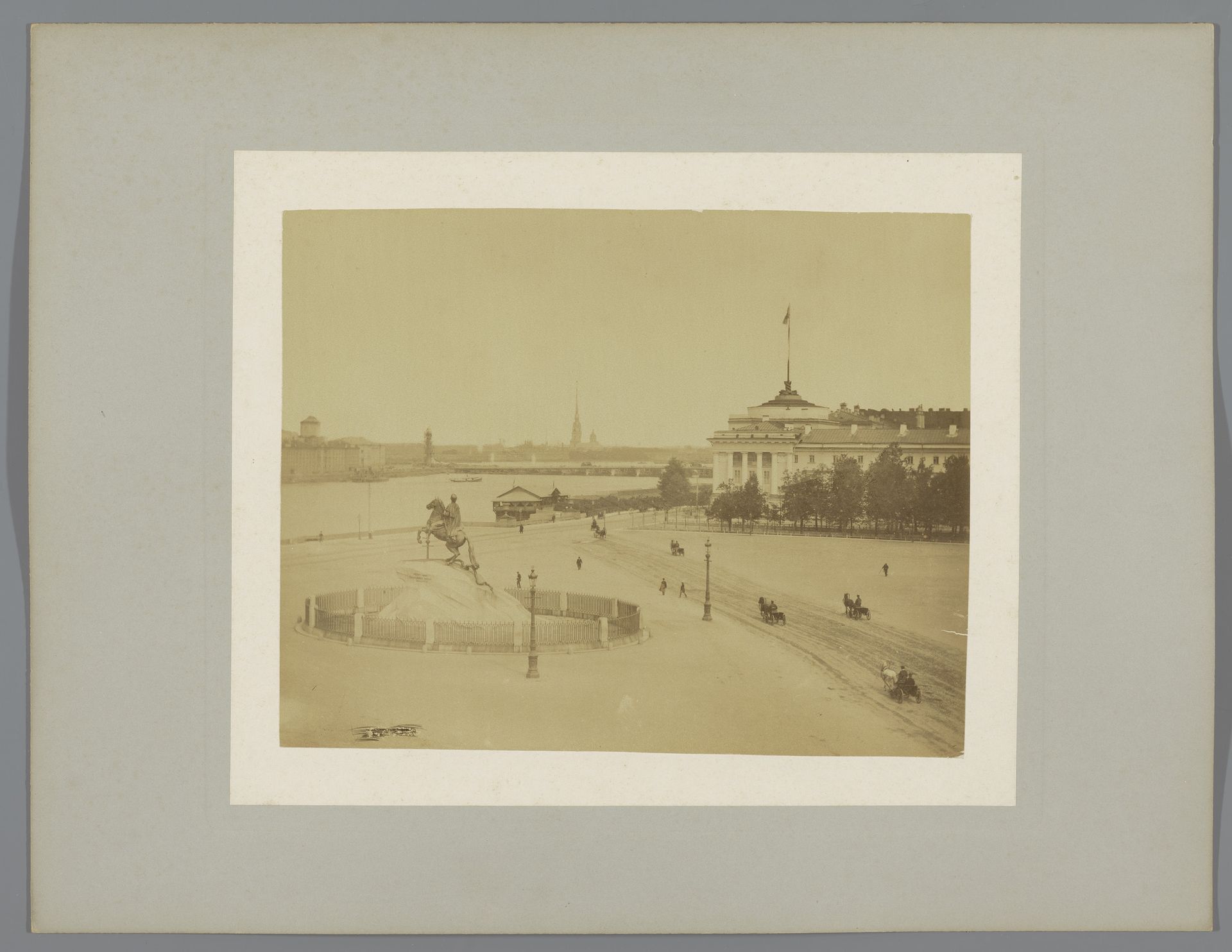
This photograph captures a statue of Peter the Great along the Neva River in St. Petersburg, with the Peter and Paul Cathedral in the distance. It was made at an unknown date by an anonymous photographer. The image serves as a powerful visual statement about Russian imperial power, progress and modernization under Peter I. Consider how the statue and cathedral act as symbols of political and religious authority, set against the Neva River. The statue commemorates a ruler central to Russia’s westernization, whilst the image promotes the political ideology of the Russian Empire. Understanding the socio-political context of the time is crucial. By researching the history of St. Petersburg, the reign of Peter the Great, and the role of photography in documenting and shaping national identity, we can interpret this photograph as a reflection of Russia’s self-image and aspirations.
Standbeeld van Peter I de Grote langs de Neva in Sint-Petersburg, in de verte de Petrus-en-Pauluskathedraal
1860 - 1890

Anonymous
@anonymousLocation
RijksmuseumArtwork details
- Medium
- photography, albumen-print
- Dimensions
- height 350 mm, width 455 mm
- Location
- Rijksmuseum
- Copyright
- Rijks Museum: Open Domain
Tags
Comments
Share your thoughts
About this artwork
This photograph captures a statue of Peter the Great along the Neva River in St. Petersburg, with the Peter and Paul Cathedral in the distance. It was made at an unknown date by an anonymous photographer. The image serves as a powerful visual statement about Russian imperial power, progress and modernization under Peter I. Consider how the statue and cathedral act as symbols of political and religious authority, set against the Neva River. The statue commemorates a ruler central to Russia’s westernization, whilst the image promotes the political ideology of the Russian Empire. Understanding the socio-political context of the time is crucial. By researching the history of St. Petersburg, the reign of Peter the Great, and the role of photography in documenting and shaping national identity, we can interpret this photograph as a reflection of Russia’s self-image and aspirations.
Comments
Share your thoughts