1866
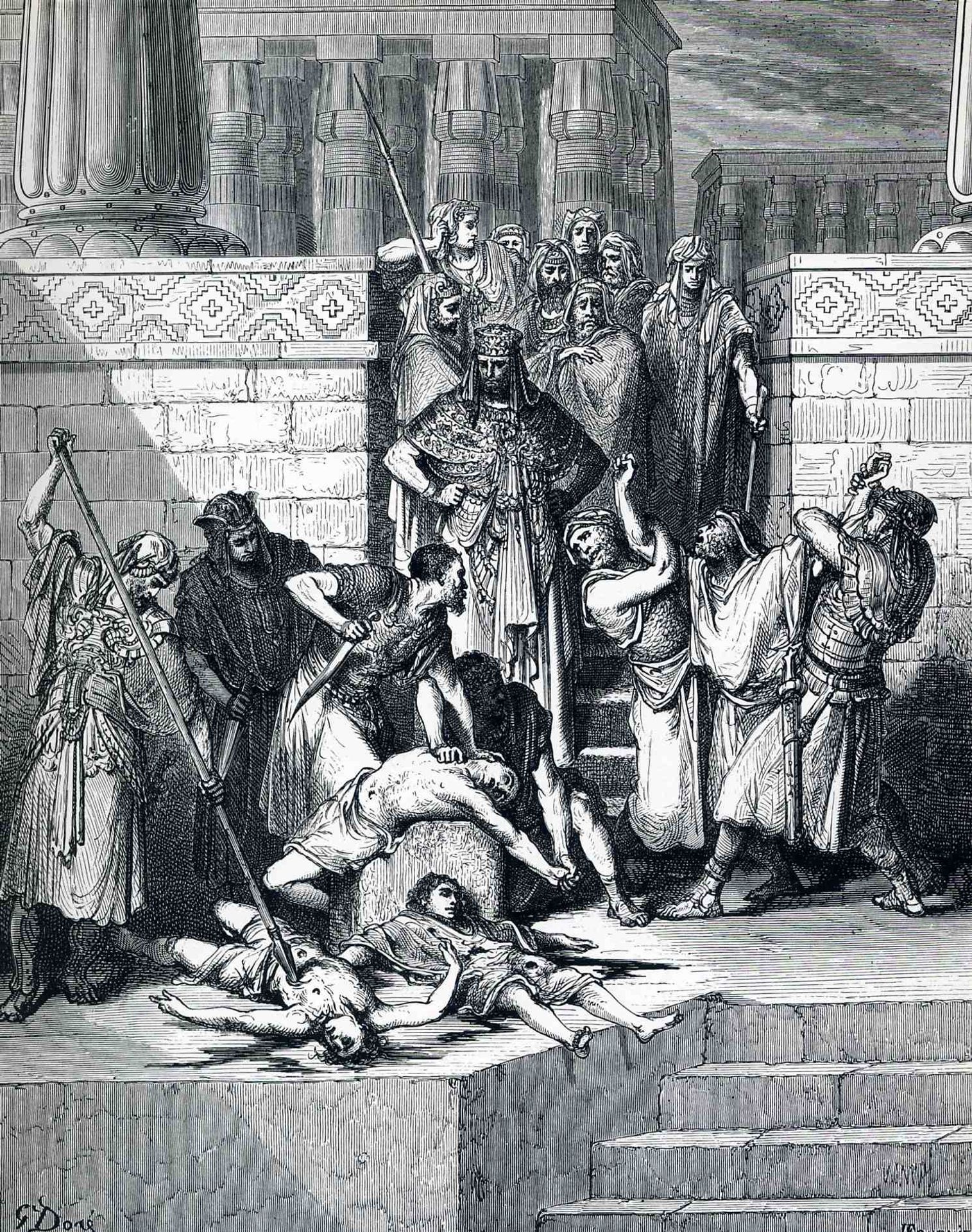
Slaughter of the Sons of Zedekiah before their Father

Gustave Dore
1832 - 1883Location
Private CollectionListen to curator's interpretation
Curatorial notes
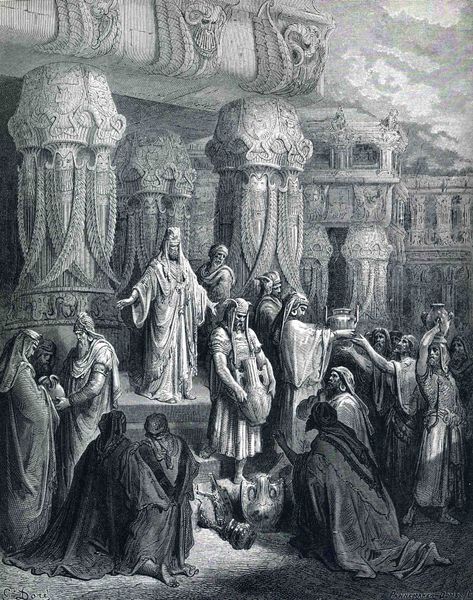
Curator: Here we have "Slaughter of the Sons of Zedekiah before their Father," an 1866 engraving by Gustave Doré. Editor: Oof. Stark. The brutal contrasts—it feels like a visual scream. So much agony compacted into monochromatic shades. It just throws you into this moment of terrible despair, doesn't it? Curator: It does. Doré was renowned for his dramatic interpretations of biblical scenes. His work frequently commented on power, justice, and societal morality of his time. The engraving here, realized on paper, showcases a key moment from the Old Testament. Editor: Absolutely. The architecture towering in the background feels like indifferent societal structures allowing horrors. The figures, some mid-slaughter, some already lifeless...and then you notice the eyes of those witnessing it. Powerful! Curator: Exactly. Dore presents a clear visual statement against the dehumanizing effects of violence, a popular theme during the Realism era. Note how compositionally he uses the steps. They seem to thrust the viewer right onto the scene, confronting the chaos. Editor: It almost feels like he wanted to trap us there. To make us feel implicated. I find myself questioning my own position as a spectator here. And Zedekiah, witnessing the murder of his children. Wow, a really tough picture. Curator: This is a private collection now, which creates an interesting historical echo. Originally created for widespread distribution through books and periodicals, this imagery now exists in an insulated setting for private viewing. Editor: Funny, isn't it? How accessibility alters the conversation around art? Well, speaking for myself, that intense shadow work and that incredibly dynamic composition is something I certainly won’t forget anytime soon. It has an unforgettable energy. Curator: Agreed. And I think its transition to a private context adds an important layer about the evolving public role and the changing audience with such visual displays of atrocity.