About this artwork
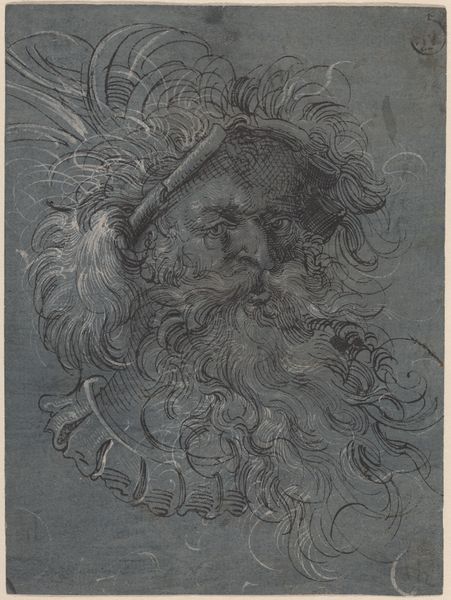
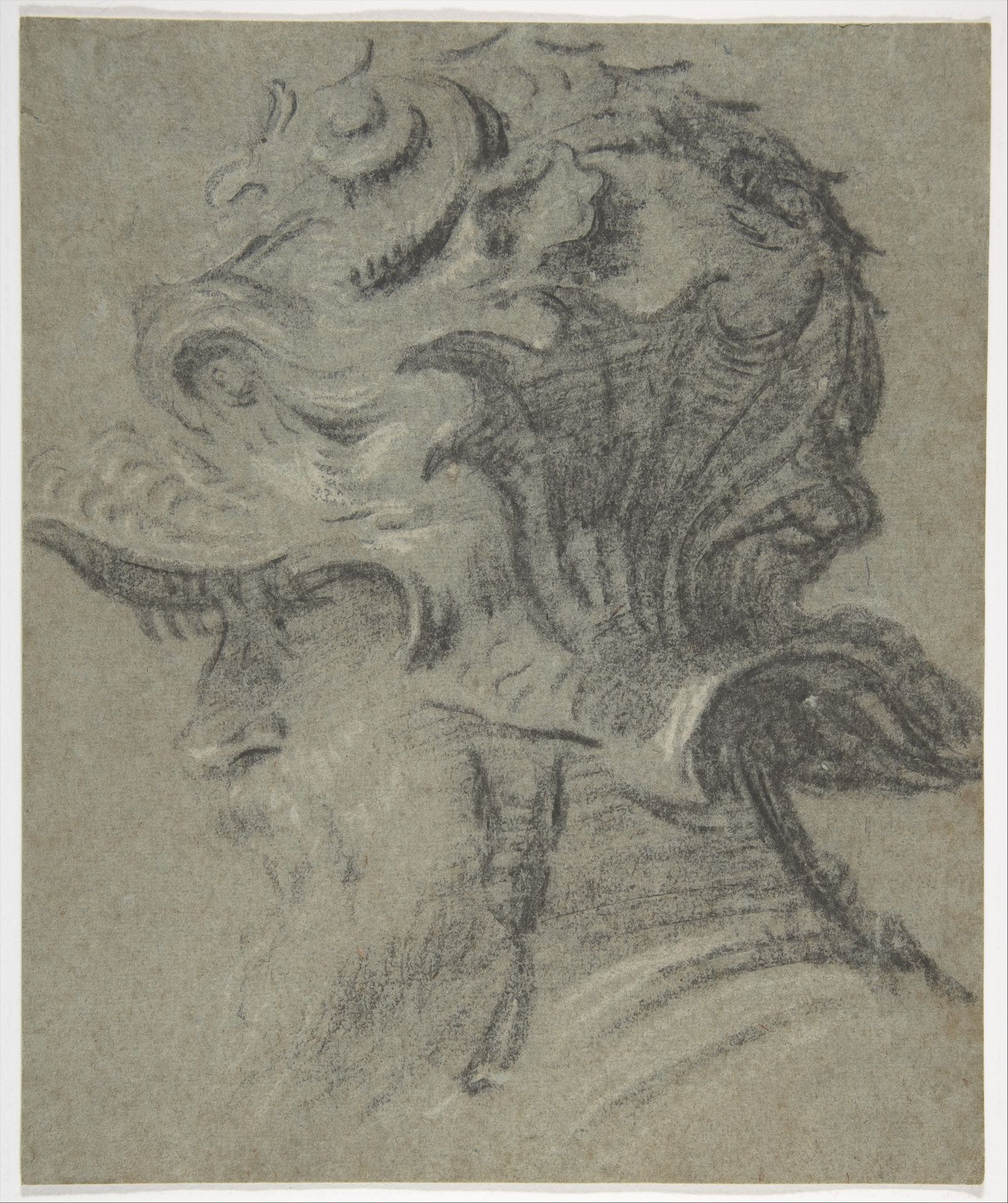
This drawing, whose maker is unknown, captures a man in the elaborate helmet of Guidobaldo II della Rovere. It's made with black chalk heightened with white chalk, on gray paper – a fairly standard combination of materials for artists of the Renaissance. What is most compelling about this work is the labor embedded in the object it represents. The helmet wasn't just a protective device; it was a potent symbol of power. Notice the intricate details of the helmet, and consider the metalworking skills required to produce such an object. It testifies to the division of labor in Renaissance society: the Duke, with his inherited status; the artist who designed this helmet; the specialist craftspeople who brought it into being; and the anonymous figure who carefully rendered it in chalk. Thinking about the way objects are made, and the social relations embedded in their making, allows us to appreciate the full complexity of works like this, challenging traditional hierarchies between artistic practices and the decorative arts.
Study of a Bearded Man Wearing the Helmet of Guidobaldo II della Rovere, Duke of Urbino
1536 - 1540


Artwork details
- Medium
- drawing, charcoal
- Dimensions
- 10 3/16 x 8 7/16in. (25.8 x 21.5cm)
- Location
- Metropolitan Museum of Art, New York, NY
- Copyright
- Public Domain
Tags
portrait
drawing
11_renaissance
pencil drawing
men
charcoal
academic-art
Comments
Be the first to share your thoughts about this work.
About this artwork
This drawing, whose maker is unknown, captures a man in the elaborate helmet of Guidobaldo II della Rovere. It's made with black chalk heightened with white chalk, on gray paper – a fairly standard combination of materials for artists of the Renaissance. What is most compelling about this work is the labor embedded in the object it represents. The helmet wasn't just a protective device; it was a potent symbol of power. Notice the intricate details of the helmet, and consider the metalworking skills required to produce such an object. It testifies to the division of labor in Renaissance society: the Duke, with his inherited status; the artist who designed this helmet; the specialist craftspeople who brought it into being; and the anonymous figure who carefully rendered it in chalk. Thinking about the way objects are made, and the social relations embedded in their making, allows us to appreciate the full complexity of works like this, challenging traditional hierarchies between artistic practices and the decorative arts.
Comments
Be the first to share your thoughts about this work.