About this artwork
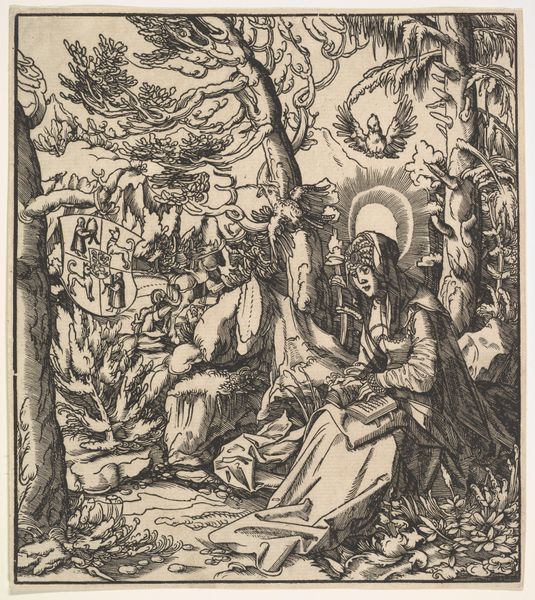
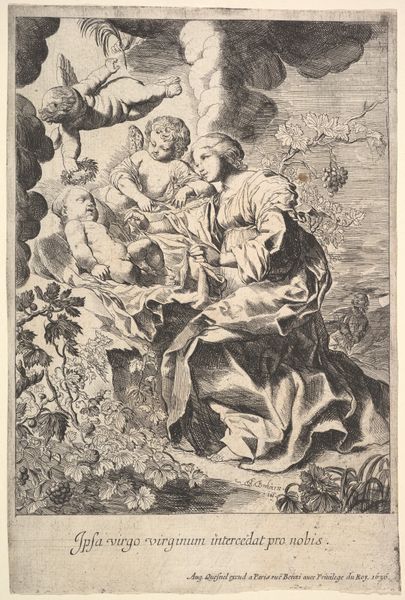
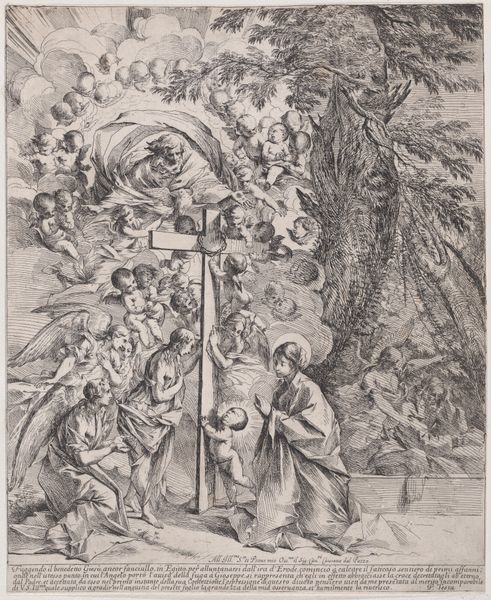
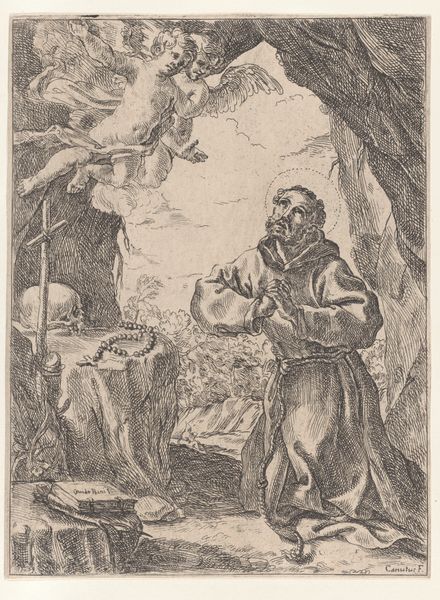
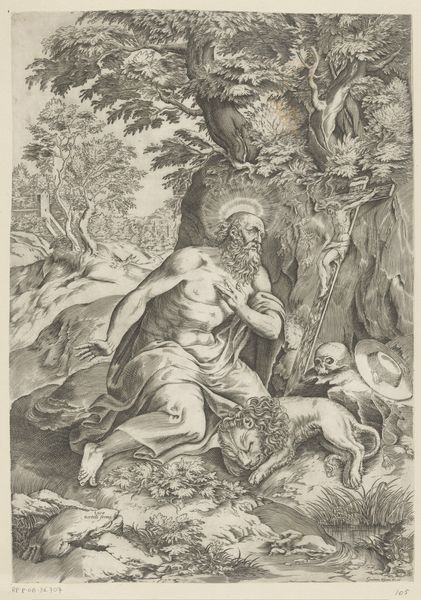
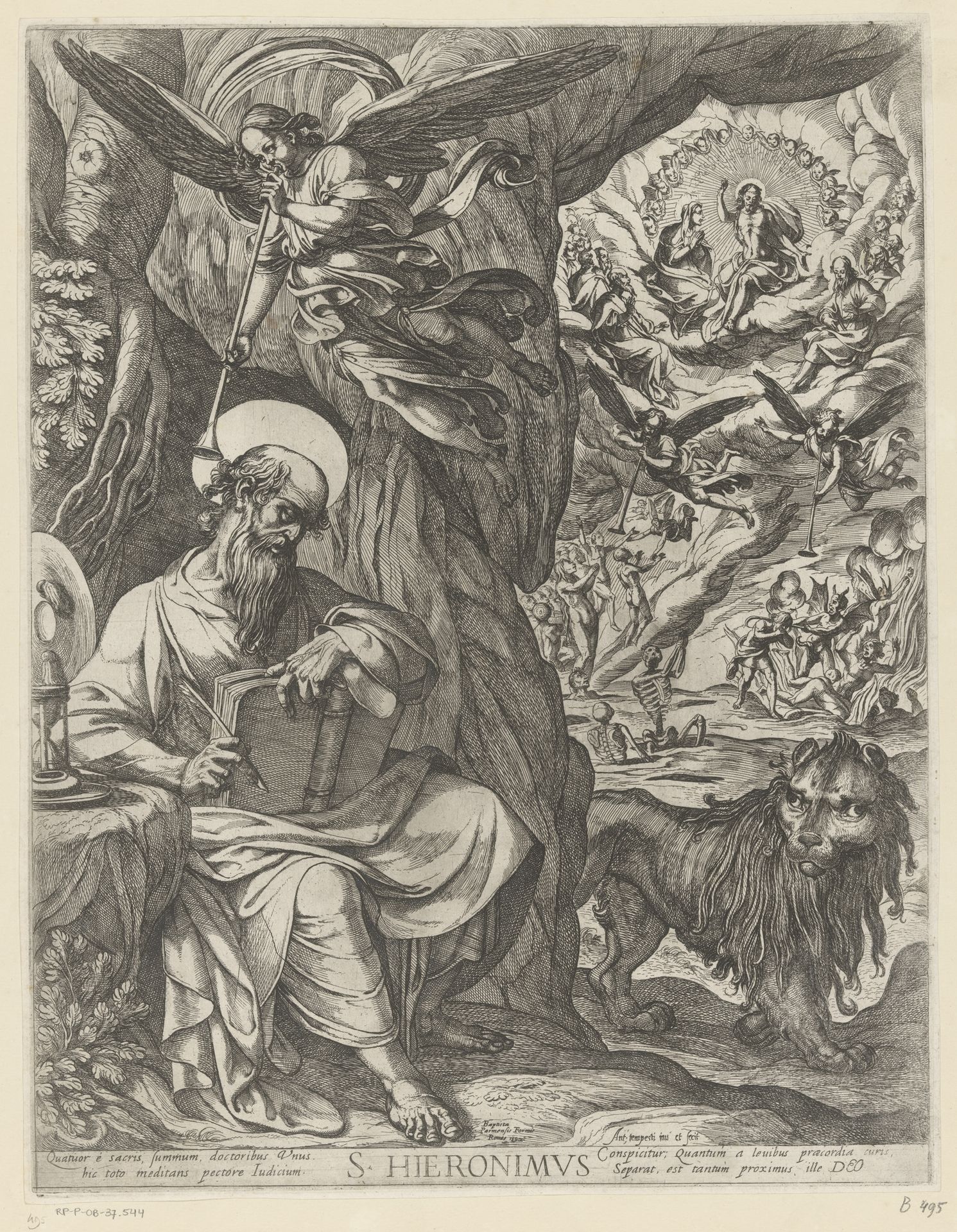
This print, "H. Hieronymus in de wildernis contemplerend over het laatste oordeel," was created by Antonio Tempesta. The detailed hatching and cross-hatching techniques give the work a sense of depth. We see the stark contrast between light and shadow. The composition is divided into earthly and heavenly realms. Saint Jerome sits in contemplation while an angel above heralds the Last Judgement. Tempesta masterfully uses linear perspective to create an illusion of depth. This guides the eye from the foreground, where Saint Jerome is, to the background, where the scene of the Last Judgement unfolds. The whole image is filled with symbolism, like an hourglass that reminds us that time is fleeting and that judgment is coming. Ultimately, the image is a complex interplay of form and content. It shows how Tempesta was interested in using his art to engage with his philosophical and cultural concerns about morality, mortality, and the divine. This reflects the artistic and intellectual environment of the time.
H. Hieronymus in de wildernis contemplerend over het laatste oordeel
1592

Antonio Tempesta
1555 - 1630Location
RijksmuseumArtwork details
- Medium
- drawing, ink, engraving
- Dimensions
- height 475 mm, width 368 mm
- Location
- Rijksmuseum
- Copyright
- Rijks Museum: Open Domain
Tags
Comments
Share your thoughts
About this artwork
This print, "H. Hieronymus in de wildernis contemplerend over het laatste oordeel," was created by Antonio Tempesta. The detailed hatching and cross-hatching techniques give the work a sense of depth. We see the stark contrast between light and shadow. The composition is divided into earthly and heavenly realms. Saint Jerome sits in contemplation while an angel above heralds the Last Judgement. Tempesta masterfully uses linear perspective to create an illusion of depth. This guides the eye from the foreground, where Saint Jerome is, to the background, where the scene of the Last Judgement unfolds. The whole image is filled with symbolism, like an hourglass that reminds us that time is fleeting and that judgment is coming. Ultimately, the image is a complex interplay of form and content. It shows how Tempesta was interested in using his art to engage with his philosophical and cultural concerns about morality, mortality, and the divine. This reflects the artistic and intellectual environment of the time.
Comments
Share your thoughts