About this artwork
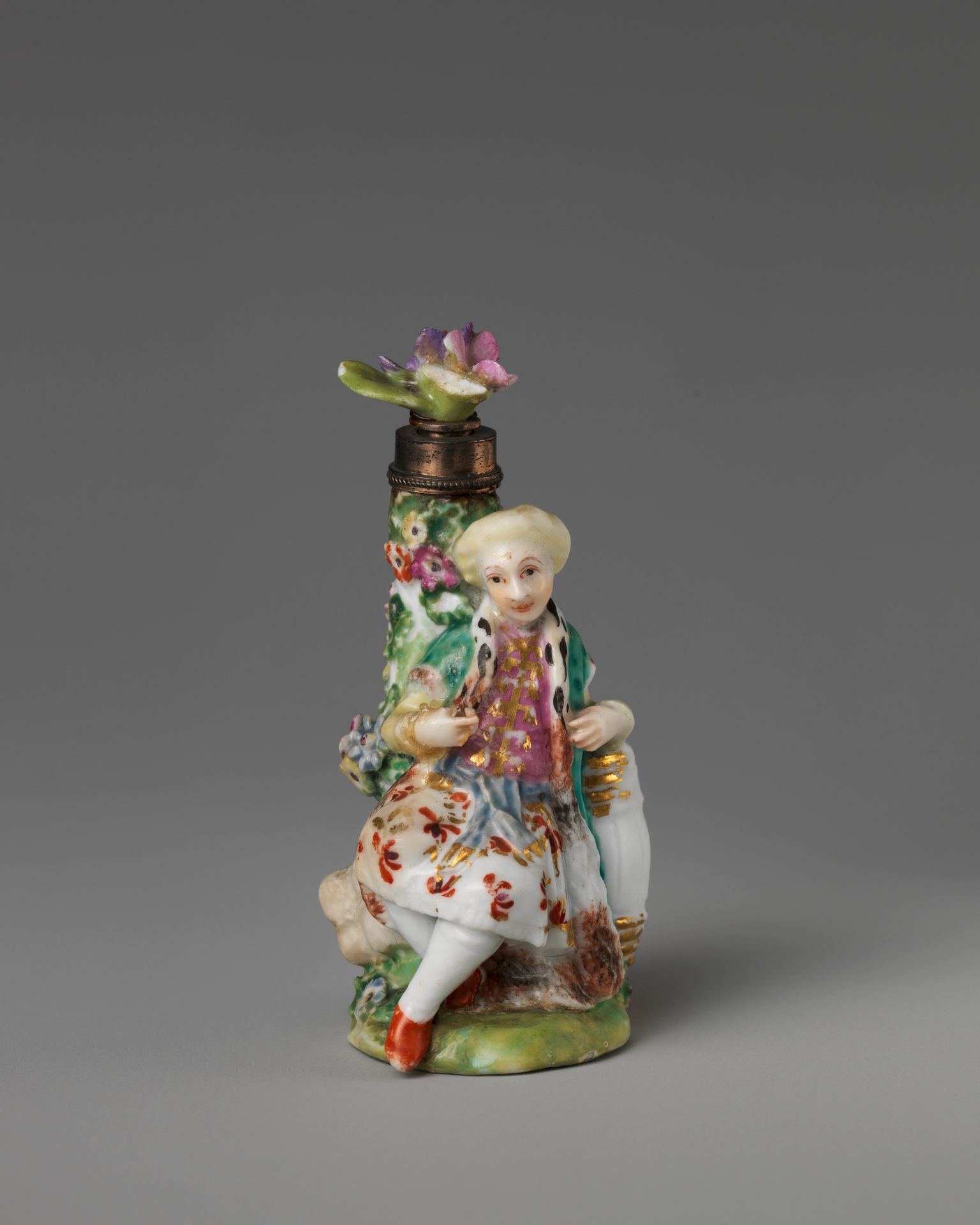
This delicate porcelain figurine of a 'Turk with a Pipe' was made in England by the Chelsea Porcelain Manufactory in the mid-18th century. During this period, there was a vogue for depictions of exotic figures from distant lands. The term "Turk" was often loosely applied to anyone from the Ottoman Empire or the Middle East, reflecting a European fascination with the "Orient." European manufacturers tried to imitate Chinese porcelain, which was prized for its delicate beauty and became a symbol of wealth and status among the European aristocracy. Factories like the Chelsea Porcelain Manufactory sought to capture this market by creating their own versions of these coveted items. The Chelsea factory, like other porcelain manufacturers, was supported by wealthy patrons, thus art served as an important marker of class identity. Historians of decorative arts use trade records, factory documents, and social histories to better understand such figurines.
Turk with a pipe 1760 - 1770

Chelsea Porcelain Manufactory
1744 - 1784
The Metropolitan Museum of Art
Metropolitan Museum of Art, New York, NYArtwork details
- Medium
- ceramic, porcelain, sculpture
- Dimensions
- 3 × 1 1/2 in. (7.6 × 3.8 cm)
- Location
- Metropolitan Museum of Art, New York, NY
- Copyright
- Public Domain
Tags
portrait
ceramic
porcelain
figuration
sculpture
decorative-art
rococo
Comments
No comments
About this artwork
This delicate porcelain figurine of a 'Turk with a Pipe' was made in England by the Chelsea Porcelain Manufactory in the mid-18th century. During this period, there was a vogue for depictions of exotic figures from distant lands. The term "Turk" was often loosely applied to anyone from the Ottoman Empire or the Middle East, reflecting a European fascination with the "Orient." European manufacturers tried to imitate Chinese porcelain, which was prized for its delicate beauty and became a symbol of wealth and status among the European aristocracy. Factories like the Chelsea Porcelain Manufactory sought to capture this market by creating their own versions of these coveted items. The Chelsea factory, like other porcelain manufacturers, was supported by wealthy patrons, thus art served as an important marker of class identity. Historians of decorative arts use trade records, factory documents, and social histories to better understand such figurines.
Comments
No comments