1659
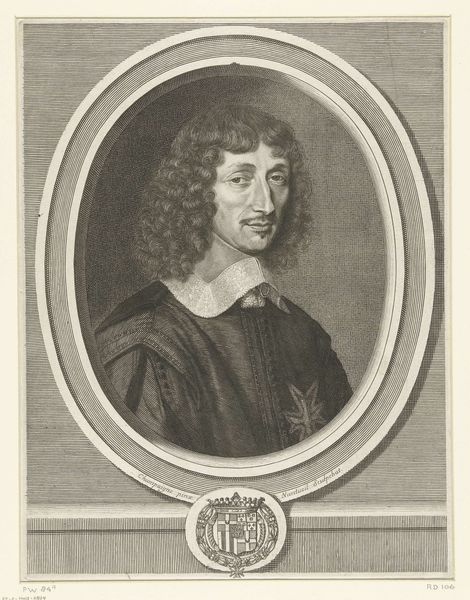
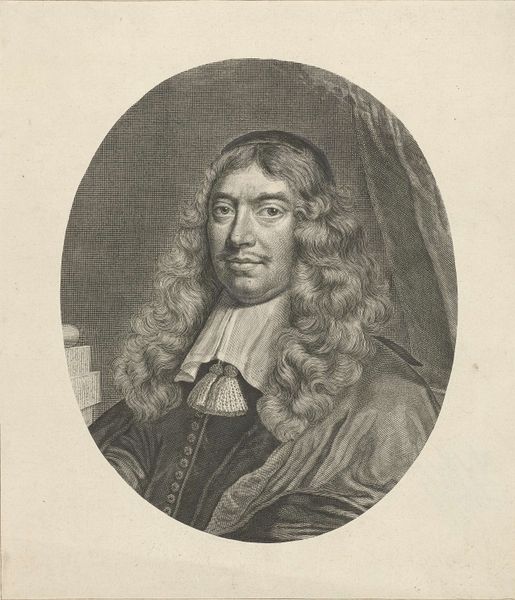
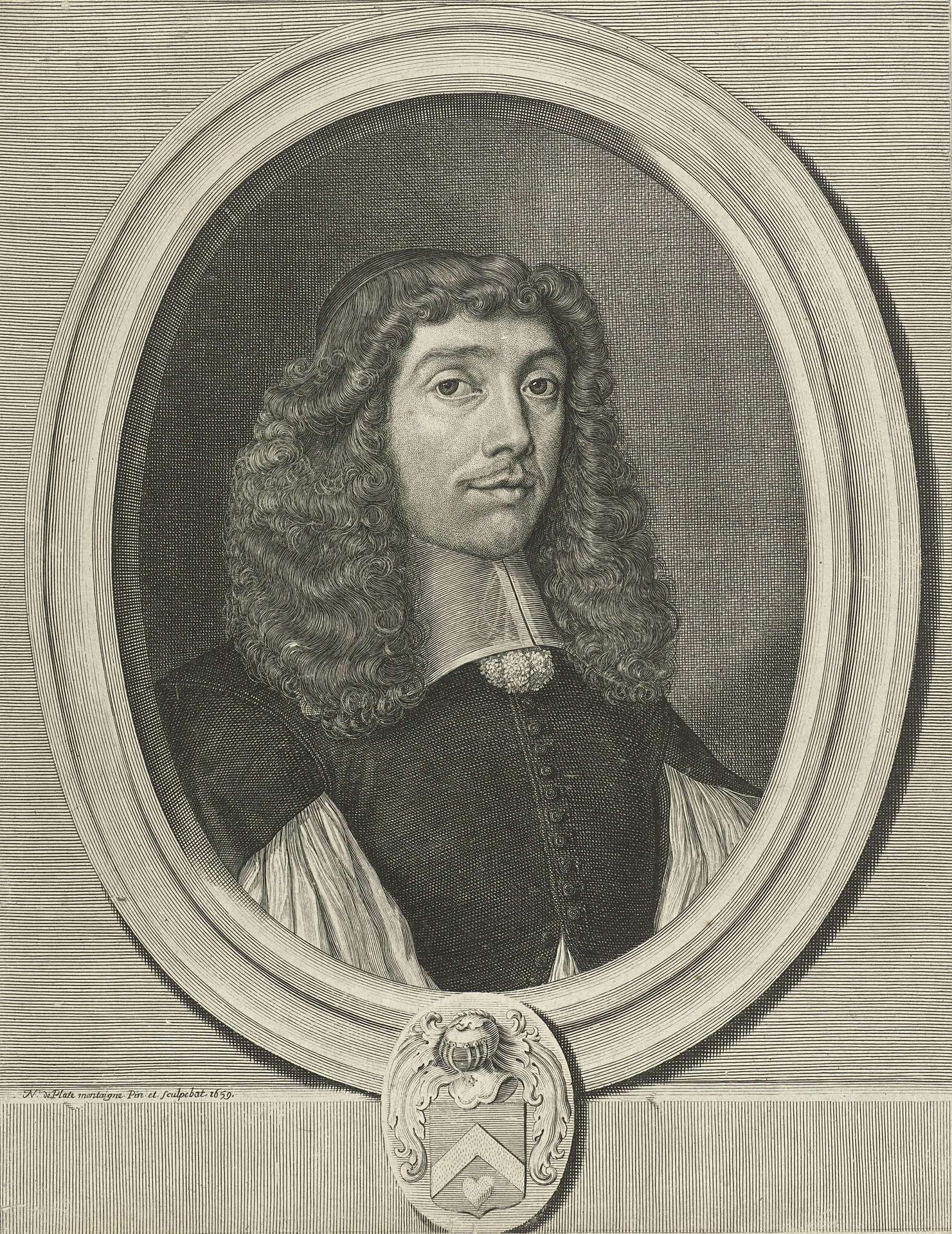
Portret van Pierre Monnerot

Listen to curator's interpretation
Curatorial notes
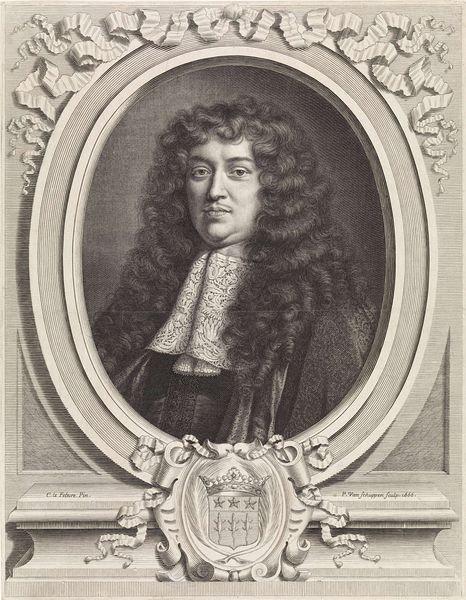
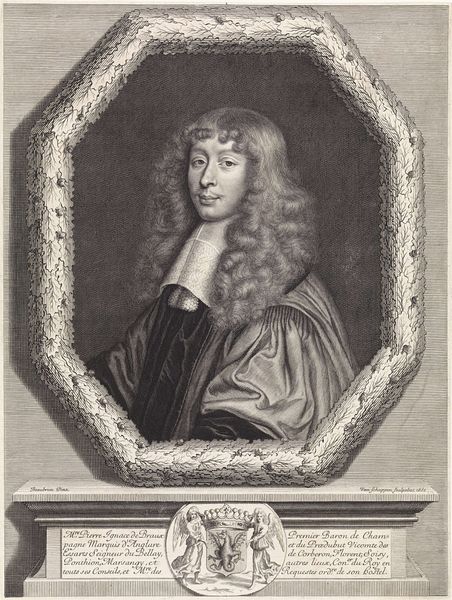
Editor: This is Nicolas de Plattemontagne's "Portrait of Pierre Monnerot" from 1659. It appears to be an engraving. The detail is remarkable! It’s such a formal, almost stiff portrait, yet there's something very human in the eyes. What do you see when you look at this piece? Curator: Beyond the remarkable skill of the line work, I see a powerful statement about social structures and identity in 17th-century France. Portraits were often vehicles for asserting status and lineage. Consider the elaborate wig – a deliberate choice reflecting the subject's social standing. How does this portrait function in the context of class and power dynamics? Editor: That makes sense. The wig certainly dominates the image! What about the coat of arms? Is that another sign of power and lineage? Curator: Precisely. The coat of arms acts as a visual signifier, embedding Monnerot within a specific historical and social narrative. Ask yourself, who had access to portraiture and the ability to broadcast their identity in this way? Editor: It certainly wasn't an equal playing field. Are there aspects of portraiture that can give agency to the sitter, or is it all about reinforcing existing power structures? Curator: That's a critical question. Think about the gaze – does it challenge or reinforce the viewer's expectations? The nuances in expression can provide openings for interpretation, suggesting a push and pull between artist, sitter, and the societal forces at play. This invites us to look closer, consider the subject's potential complicity or resistance within their given context. Editor: That's a fascinating perspective. I hadn't considered the idea of resistance within such a formal structure. It makes me rethink the possibilities embedded even within seemingly rigid conventions. Curator: Exactly. By interrogating those conventions, we can uncover richer understandings of the artwork's complexities and its relationship to the social fabric of its time.