Copyright: Public domain
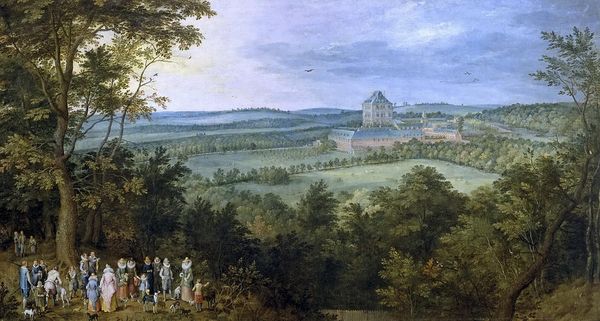
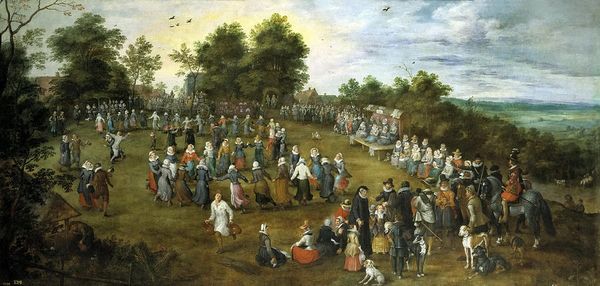
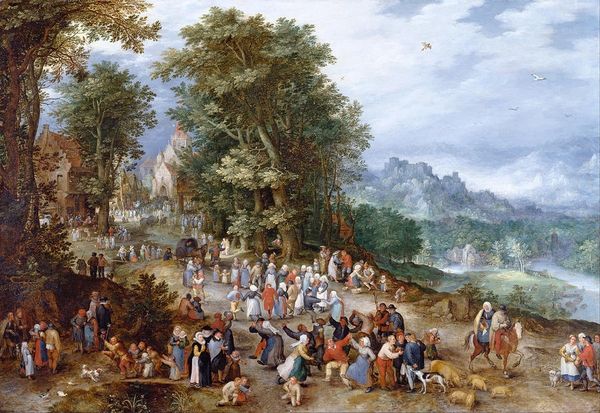
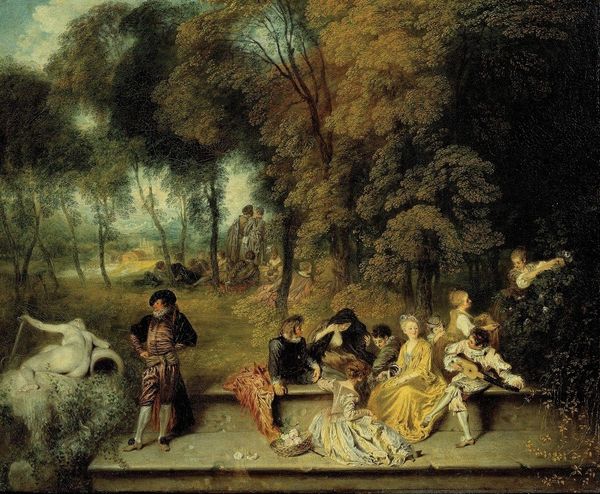
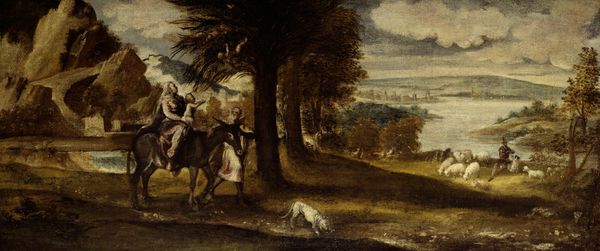
Curator: Jan Brueghel the Elder may or may not be the artist of this delightful painting entitled "The Country Excursion of Isabel Clara Eugenia." Regardless of authorship, the setting and those within it are captivating, don't you think? Editor: It has an air of studied leisure. The muted greens and blues create a calm, almost ethereal atmosphere. The figures appear as small islands of color dotted across the landscape, which speaks volumes about man's relationship with the environment at that moment. Curator: Precisely. It's tempting to view this as a simple depiction of leisure, but let’s remember the social and political dynamics at play here. This kind of "excursion" was available only to a very select segment of society, effectively showing it at their expense. Consider how art portrays who and what activities should matter most within society at any point in time. Editor: The formal garden design mirrors a particular societal organization: that striving for perfect harmony and order. It is an idealized landscape where nature is tamed and presented as a testament to the power of the landowner. The architecture in the distance reinforces this dominance. What can you say about the costumes they have one? Curator: A keen observation. Fashion, always performative, displays wealth and social status. It suggests the influence of the Spanish court. Isabel Clara Eugenia would have had to be an extremely influential person to have a garment like that. This is definitely the "one percent". How else is their authority demonstrated here? Editor: Absolutely, these details resonate powerfully with visual symbols of power and status in paintings through the ages, for the "have-nots", landscape is the land and sustenance. And that estate off in the distance - it would likely stand for power and heritage as symbols and the embodiment of an institution. So in many ways, the "grounds" in the background mirror the costumes in the front as signifiers for power and dominion. What can we discern? The whole artwork, however elegant, tells a fascinating story! Curator: Indeed. By considering its socio-political underpinnings, it becomes less of a scenic landscape, and more of a narrative about societal and human hierarchy. A reflection about historical privilege, which can offer invaluable perspectives for understanding today's imbalances. Editor: Yes, delving into the symbolism and cultural meaning transforms the seemingly tranquil countryside view into a thought-provoking social statement and, by extension, a social responsibility statement. A moment's contemplation of this landscape connects the artwork to all eras, places, and persons in which beauty conceals control.
Comments
No comments
Be the first to comment and join the conversation on the ultimate creative platform.
 Collect
 React
React Comment
More like this