About this artwork
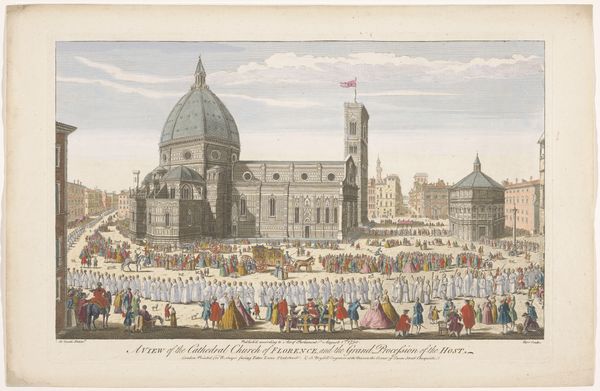
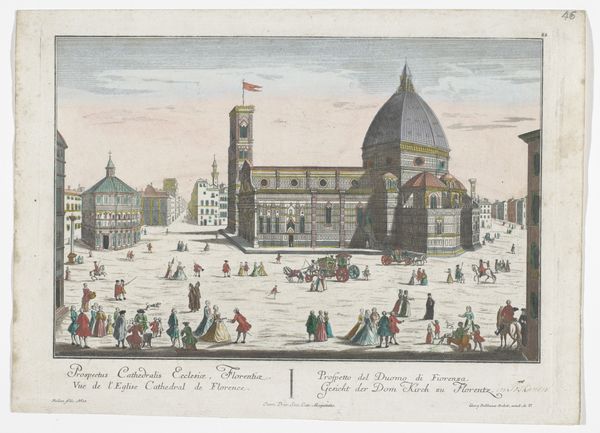
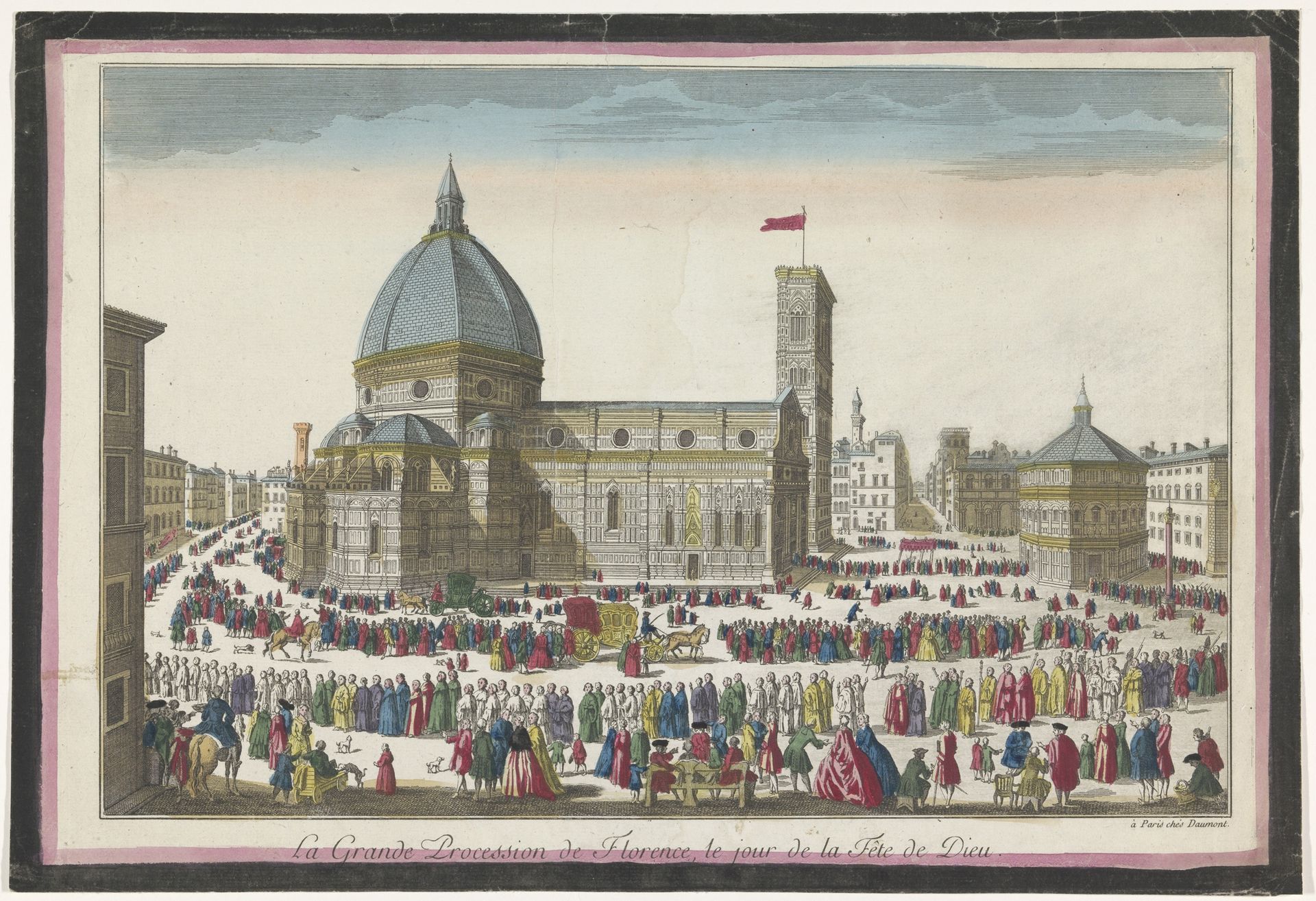
Jean-François Daumont created this print of the Florence Cathedral, likely in the mid-18th century, using etching and engraving techniques. The printmaking process begins with incising an image into a metal plate, either through the acid-resistant coating, or directly with a burin. The plate is then inked, and wiped clean, leaving ink only in the etched or engraved lines. High pressure forces the paper into these lines, transferring the image. Here, the process seems highly industrialized, with division of labor, and probably involved some specialized knowledge. The final result shows meticulous detail, especially in the architectural rendering and depiction of the crowds. Each figure, though small, is carefully delineated, suggesting a mass-produced item made with high detail. While prints like this one are often overlooked in favor of unique works, they were a crucial form of visual communication. The making of this print underscores how production processes shape our understanding of art and its role in society.
Gezicht op de Dom te Florence met een processie op Sacramentsdag
1745 - 1775

Jean-François Daumont
1775Location
RijksmuseumArtwork details
- Medium
- drawing, print, engraving
- Dimensions
- height 334 mm, width 489 mm
- Location
- Rijksmuseum
- Copyright
- Rijks Museum: Open Domain
Tags
drawing
baroque
coloured pencil
cityscape
genre-painting
history-painting
engraving
Comments
Be the first to share your thoughts about this work.
About this artwork
Jean-François Daumont created this print of the Florence Cathedral, likely in the mid-18th century, using etching and engraving techniques. The printmaking process begins with incising an image into a metal plate, either through the acid-resistant coating, or directly with a burin. The plate is then inked, and wiped clean, leaving ink only in the etched or engraved lines. High pressure forces the paper into these lines, transferring the image. Here, the process seems highly industrialized, with division of labor, and probably involved some specialized knowledge. The final result shows meticulous detail, especially in the architectural rendering and depiction of the crowds. Each figure, though small, is carefully delineated, suggesting a mass-produced item made with high detail. While prints like this one are often overlooked in favor of unique works, they were a crucial form of visual communication. The making of this print underscores how production processes shape our understanding of art and its role in society.
Comments
Be the first to share your thoughts about this work.