About this artwork
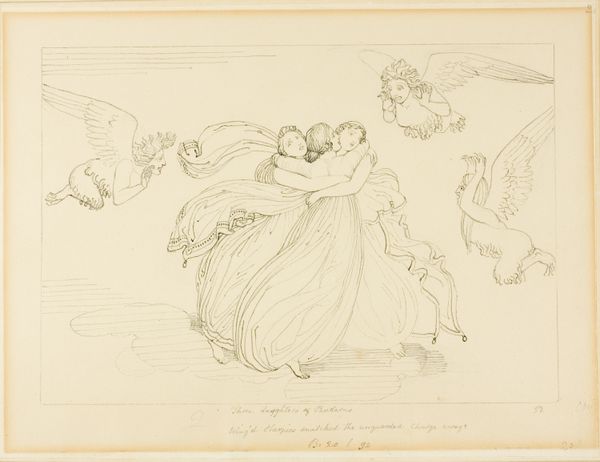
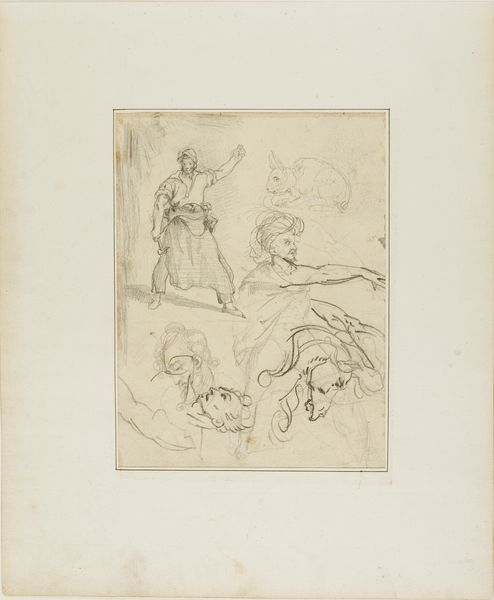
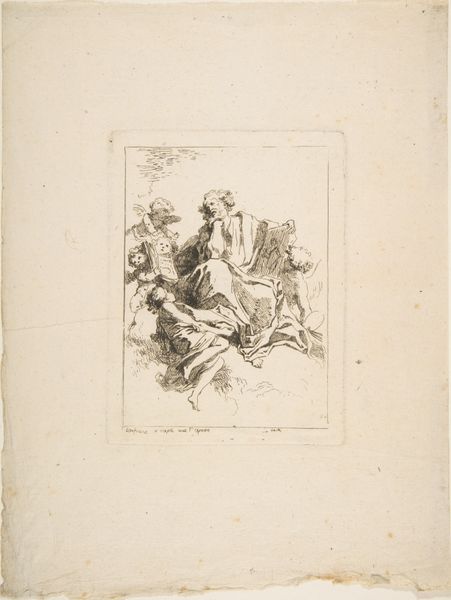
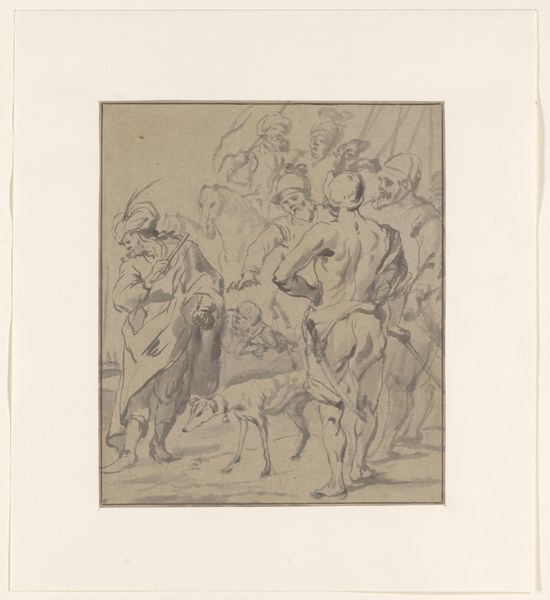
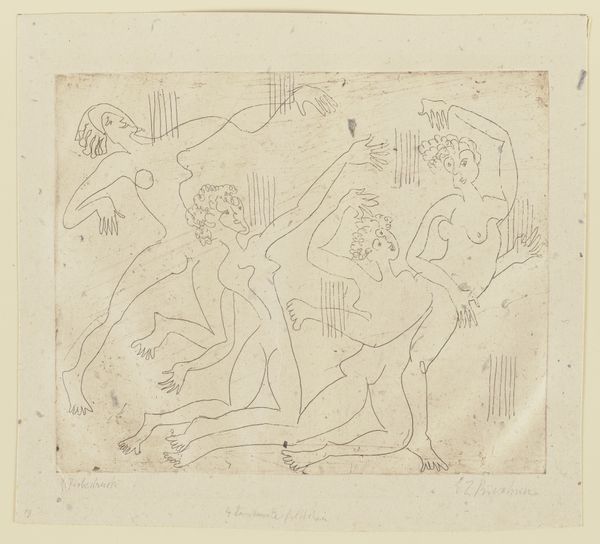
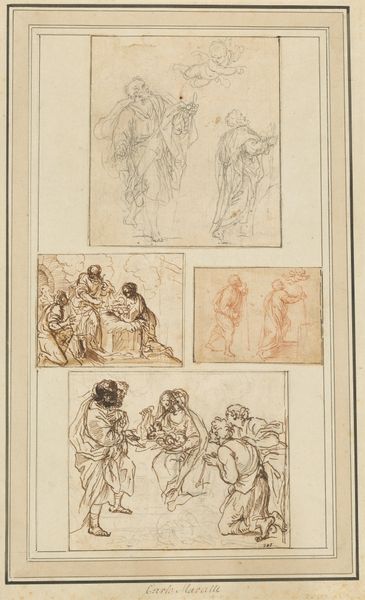
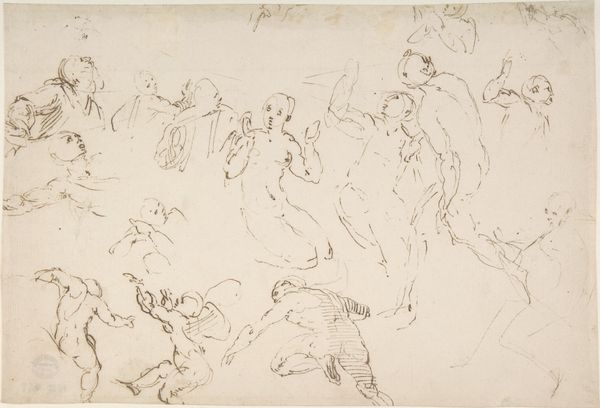
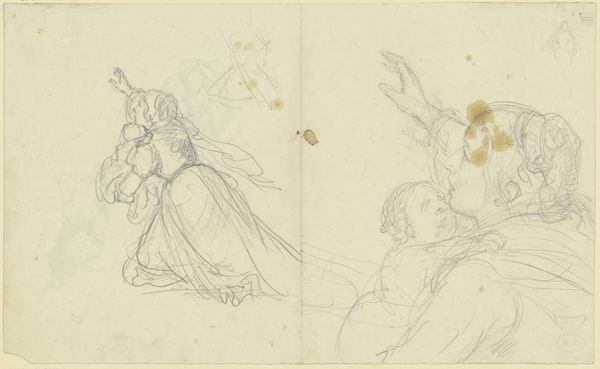
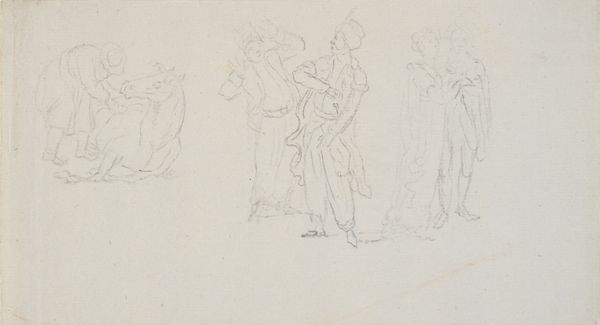
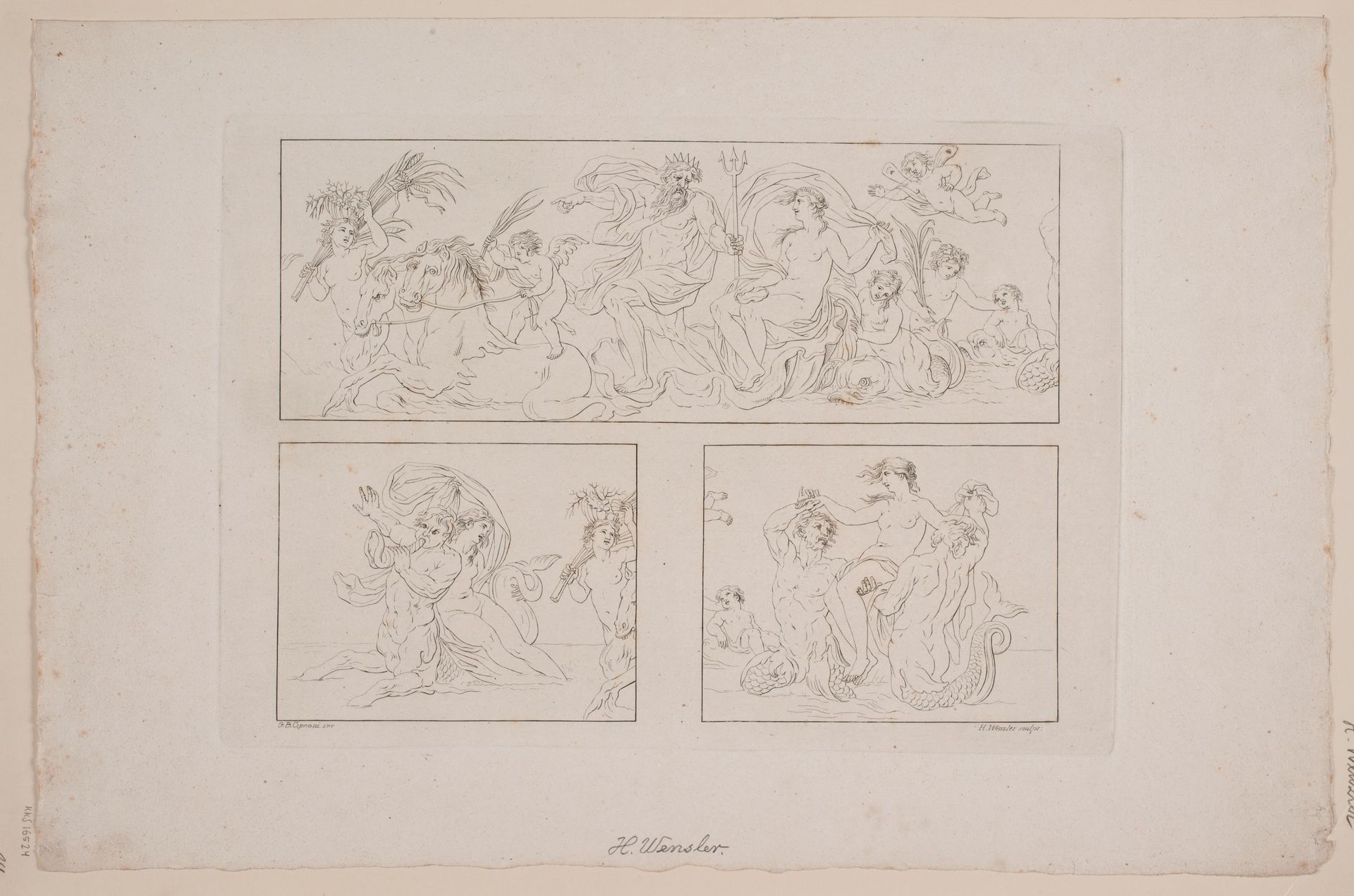
Editor: This is "Tre fremstillinger med Poseidon og hans følge," or "Three Depictions with Poseidon and his Entourage," by Heinrich Wenzler, made sometime between 1800 and 1824. It appears to be a pencil drawing, or perhaps an engraving? The lines are so delicate. What do you see in this piece? Curator: Initially, I'm struck by the dynamism achieved with such limited tonal range. Wenzler masterfully employs line weight to suggest depth and volume, particularly in the upper register depicting Poseidon's procession. Notice how the varying thicknesses create a hierarchy, drawing the eye toward the central figure of Poseidon. Editor: I do see that now. The other two depictions seem much more sparse. Are they studies for a larger composition, perhaps? Curator: Possibly. Their function as independent works versus preparatory sketches remains ambiguous, but the contrast offers an interesting perspective on Wenzler’s evolving process. Consider the implications of line—where it’s present and, crucially, where it's absent. How does the absence of line contribute to the overall reading of the lower images, especially in relation to the upper panel's density? Editor: I think that negative space makes them feel less finished, like glimpses. I'm seeing how the strategic use of line can direct focus, creating different sensations even within the same work. Curator: Precisely. This examination of the artwork's formal elements reveals the artist’s considered choices regarding composition, line, and form, enabling a deeper understanding of its visual structure. Editor: So, by looking at those internal elements of the work we can better appreciate Wenzler's intentions as an artist, and maybe even infer a larger creative process? Curator: Exactly. I'm finding a much greater interest in Wenzler's use of visual tools. Editor: I now have a more structured appreciation of how artistic choices lead to unique artistic meaning and structure.
Tre fremstillinger med Poseidon og hans følge 1800 - 1824


Artwork details
- Medium
- drawing, print, pencil, engraving
- Dimensions
- 223 mm (height) x 323 mm (width) (plademaal)
- Location
- SMK - Statens Museum for Kunst
Tags
drawing
narrative-art
pencil sketch
greek-and-roman-art
etching
figuration
pencil
line
history-painting
engraving
Comments
No comments
About this artwork
Editor: This is "Tre fremstillinger med Poseidon og hans følge," or "Three Depictions with Poseidon and his Entourage," by Heinrich Wenzler, made sometime between 1800 and 1824. It appears to be a pencil drawing, or perhaps an engraving? The lines are so delicate. What do you see in this piece? Curator: Initially, I'm struck by the dynamism achieved with such limited tonal range. Wenzler masterfully employs line weight to suggest depth and volume, particularly in the upper register depicting Poseidon's procession. Notice how the varying thicknesses create a hierarchy, drawing the eye toward the central figure of Poseidon. Editor: I do see that now. The other two depictions seem much more sparse. Are they studies for a larger composition, perhaps? Curator: Possibly. Their function as independent works versus preparatory sketches remains ambiguous, but the contrast offers an interesting perspective on Wenzler’s evolving process. Consider the implications of line—where it’s present and, crucially, where it's absent. How does the absence of line contribute to the overall reading of the lower images, especially in relation to the upper panel's density? Editor: I think that negative space makes them feel less finished, like glimpses. I'm seeing how the strategic use of line can direct focus, creating different sensations even within the same work. Curator: Precisely. This examination of the artwork's formal elements reveals the artist’s considered choices regarding composition, line, and form, enabling a deeper understanding of its visual structure. Editor: So, by looking at those internal elements of the work we can better appreciate Wenzler's intentions as an artist, and maybe even infer a larger creative process? Curator: Exactly. I'm finding a much greater interest in Wenzler's use of visual tools. Editor: I now have a more structured appreciation of how artistic choices lead to unique artistic meaning and structure.
Comments
No comments