About this artwork
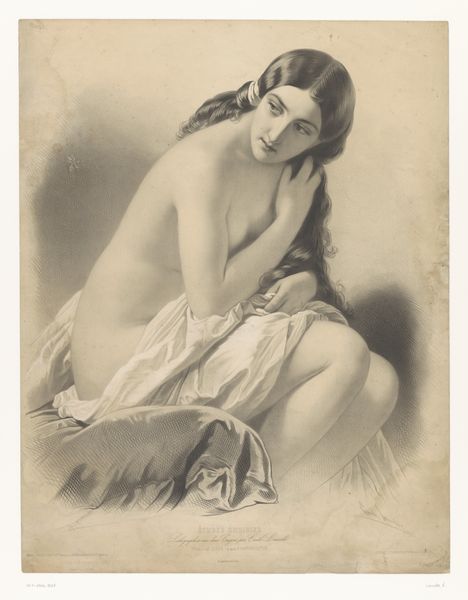
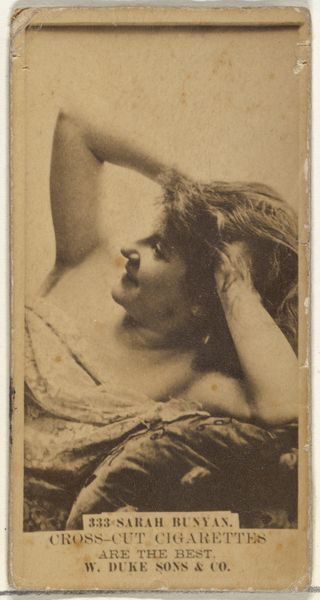
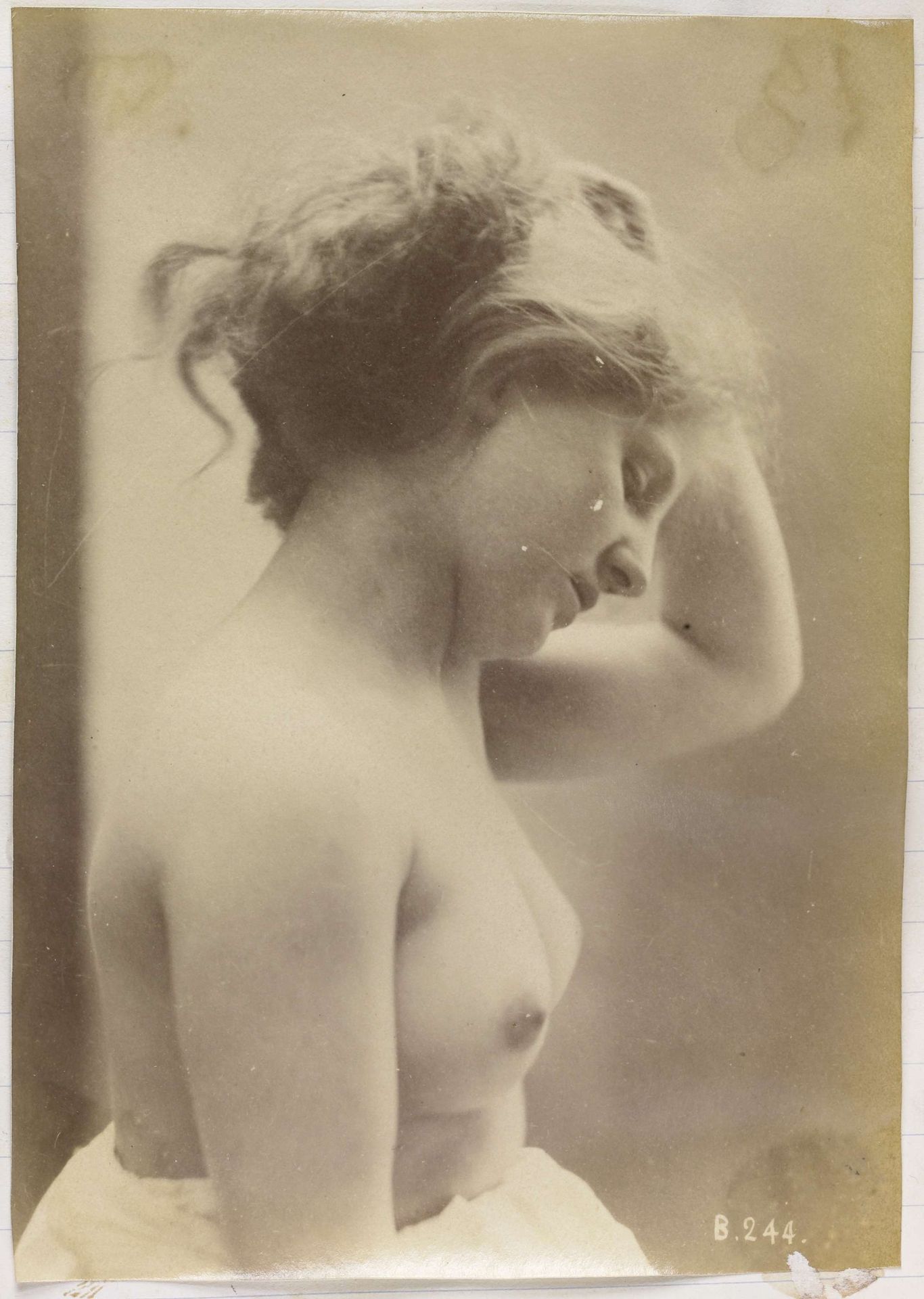
Louis Bonnard captured this photograph, Studie van een vrouwelijk naakt, showing a bust-length nude of a woman. The sepia tones and soft focus create an intimate yet detached atmosphere, focusing attention on the interplay of light and shadow across her skin. The woman's pose, with her arm raised to hold her hair, introduces a dynamic element. The upward sweep of her arm and the cascade of her hair create a sense of movement, while the downward tilt of her head invites contemplation. Bonnard masterfully uses the formal elements to destabilize traditional representations of the nude. He directs our gaze to the structure and arrangement of forms. He challenges the objectification often inherent in nude studies. The photograph becomes less about the body and more about the aesthetic experience of form, line, and light. This subtle shift invites ongoing interpretation of both its aesthetic and cultural implications.
Studie van een vrouwelijk naakt, buste van opzij gezien, het haar omhoog houdend 1881

Artwork details
- Medium
- photography
- Dimensions
- height 138 mm, width 98 mm
- Copyright
- Rijks Museum: Open Domain
Tags
portrait
photography
portrait head and shoulder
portrait drawing
academic-art
nude
portrait art
fine art portrait
profile
realism
Comments
No comments
About this artwork
Louis Bonnard captured this photograph, Studie van een vrouwelijk naakt, showing a bust-length nude of a woman. The sepia tones and soft focus create an intimate yet detached atmosphere, focusing attention on the interplay of light and shadow across her skin. The woman's pose, with her arm raised to hold her hair, introduces a dynamic element. The upward sweep of her arm and the cascade of her hair create a sense of movement, while the downward tilt of her head invites contemplation. Bonnard masterfully uses the formal elements to destabilize traditional representations of the nude. He directs our gaze to the structure and arrangement of forms. He challenges the objectification often inherent in nude studies. The photograph becomes less about the body and more about the aesthetic experience of form, line, and light. This subtle shift invites ongoing interpretation of both its aesthetic and cultural implications.
Comments
No comments