About this artwork
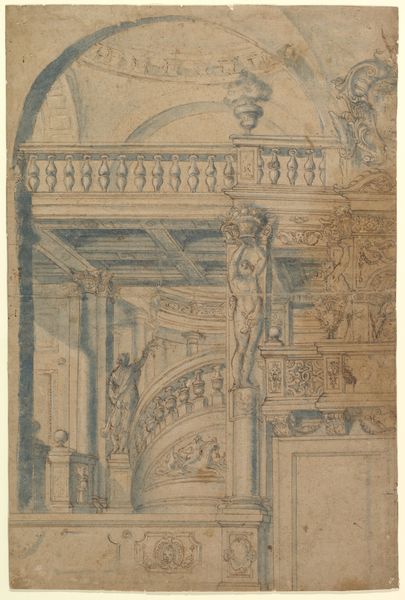
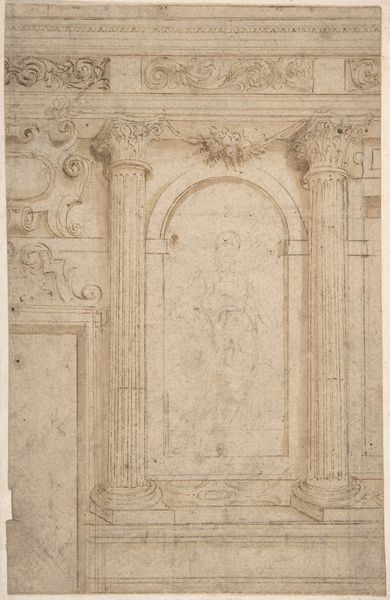
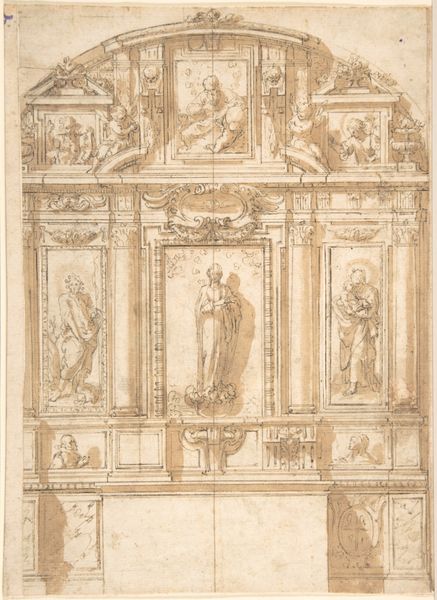
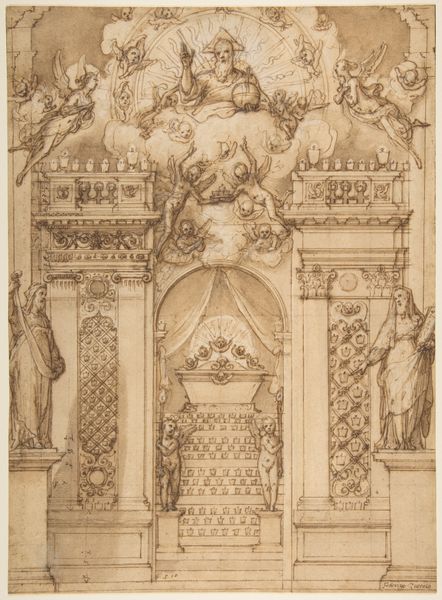
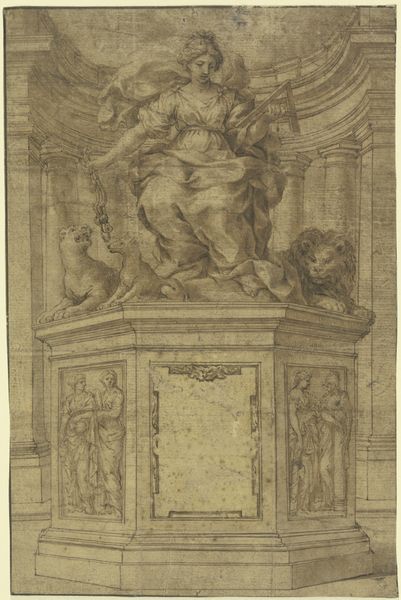
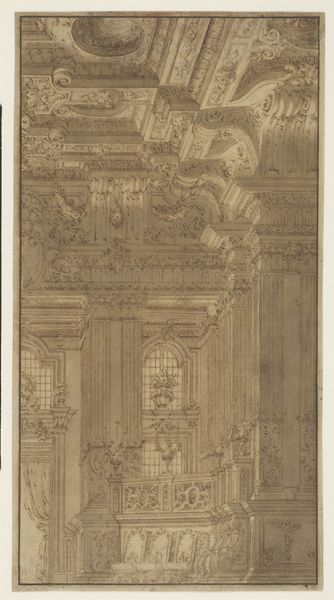
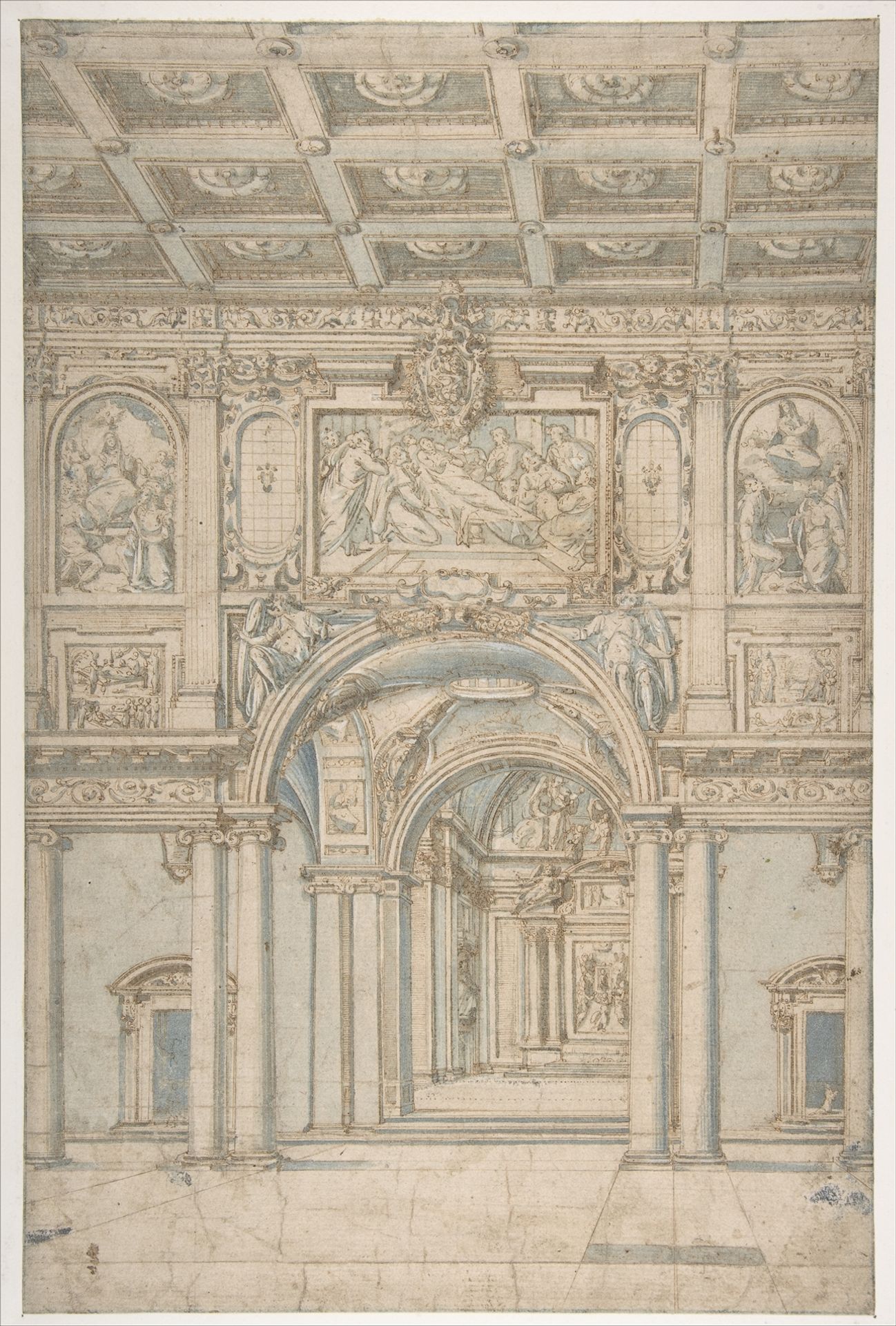
Paolo de Angelis Abbate rendered this study of the interior of Santa Maria Maggiore in Rome with pen, brown ink, and blue wash on paper. Abbate was working during a period of significant transformation in Rome, shaped by the Catholic Counter-Reformation. This drawing offers insight into the spatial dynamics and decorative programs of the Basilica, but it also invites us to consider the social and religious functions of such spaces. The grandeur of the architecture, with its soaring columns and elaborately decorated walls, was intentionally designed to inspire awe and reverence in worshippers. The Catholic Church leveraged art and architecture to reassert its authority and attract followers amidst religious and political upheaval. This piece isn't just a depiction of space; it's a reflection of power, faith, and the complex negotiations between artistic expression and religious doctrine in the 17th century.
Study of the Interior of Santa Maria Maggiore in Rome.
1621 - 1646

Abbate Paolo de Angelis
1580 - 1647
The Metropolitan Museum of Art
Metropolitan Museum of Art, New York, NYArtwork details
- Medium
- drawing, print, etching, paper, ink
- Dimensions
- sheet: 15 1/8 x 9 15/16 in. (38.4 x 25.2 cm)
- Location
- Metropolitan Museum of Art, New York, NY
- Copyright
- Public Domain
Tags
Comments
Share your thoughts
About this artwork
Paolo de Angelis Abbate rendered this study of the interior of Santa Maria Maggiore in Rome with pen, brown ink, and blue wash on paper. Abbate was working during a period of significant transformation in Rome, shaped by the Catholic Counter-Reformation. This drawing offers insight into the spatial dynamics and decorative programs of the Basilica, but it also invites us to consider the social and religious functions of such spaces. The grandeur of the architecture, with its soaring columns and elaborately decorated walls, was intentionally designed to inspire awe and reverence in worshippers. The Catholic Church leveraged art and architecture to reassert its authority and attract followers amidst religious and political upheaval. This piece isn't just a depiction of space; it's a reflection of power, faith, and the complex negotiations between artistic expression and religious doctrine in the 17th century.
Comments
Share your thoughts