1840 - 1870
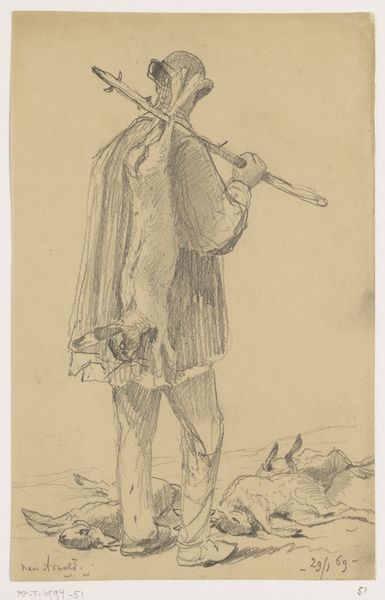
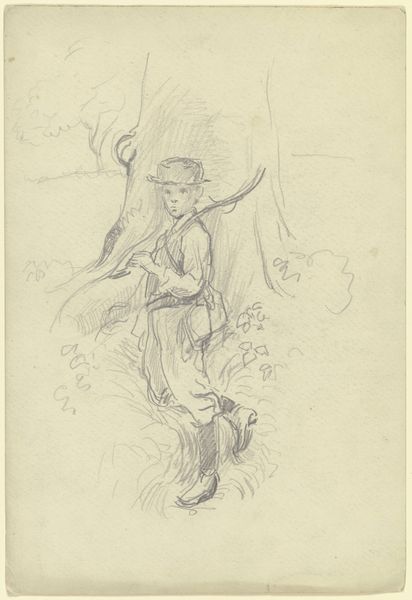
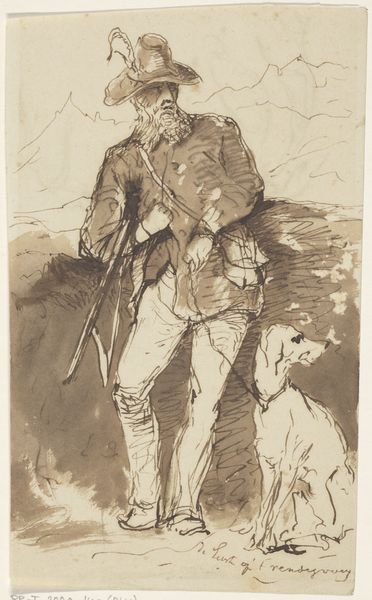
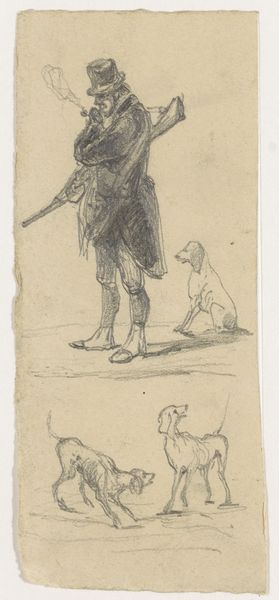
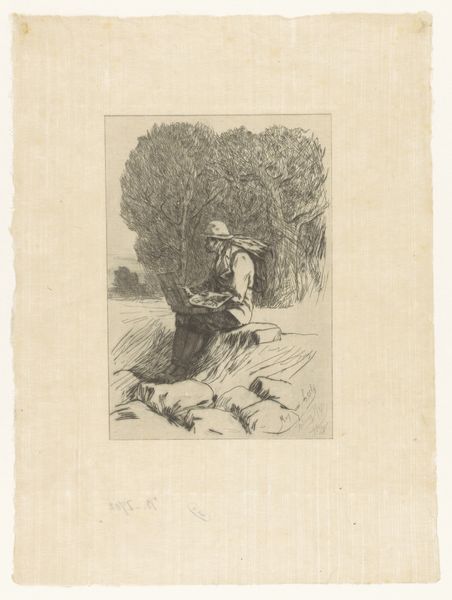
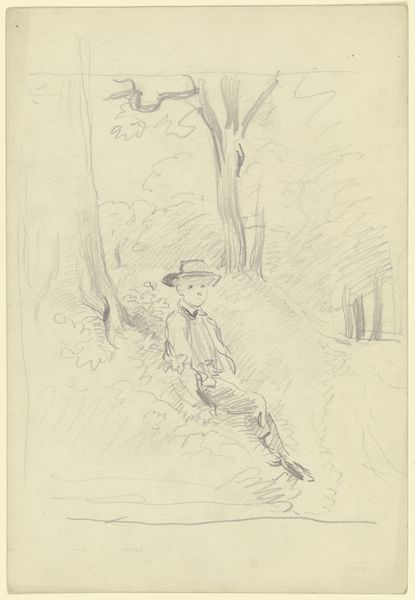
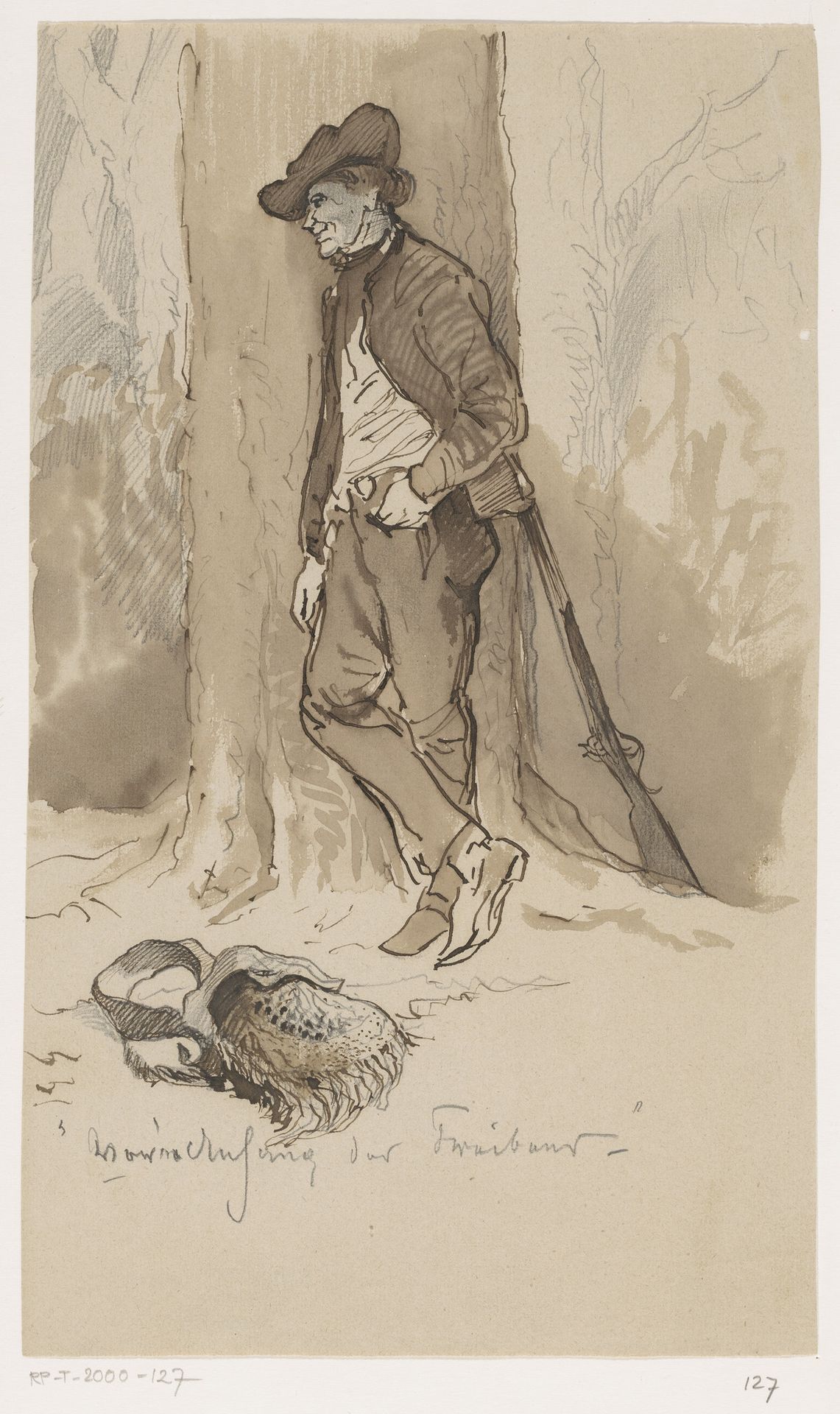
Jager leunend tegen een boom

Johannes Tavenraat
1809 - 1881Location
RijksmuseumListen to curator's interpretation
Curatorial notes
Curator: What a wonderfully relaxed drawing. I love the sense of a quiet moment it evokes. Editor: Indeed, it’s quite still. There’s a pensive mood about it for me. The use of sepia ink gives it an antique feel, making me consider ideas around labor and leisure in the mid-19th century. Curator: This drawing by Johannes Tavenraat, created sometime between 1840 and 1870, is titled "Hunter Leaning Against a Tree.” It is a piece housed right here at the Rijksmuseum. You’ll notice it’s primarily ink on paper. Editor: I am immediately drawn to the man’s pose. He looks almost melancholic as he leans against the tree. The gun next to him almost makes the viewer complicit. Curator: That is precisely the Romantic sentiment Tavenraat was capturing at the time. Think about the cultural image of the hunter: simultaneously solitary, masculine, and free, yet tied to labor, land and ideas of conservation. Editor: Conservation, or exploitation? I keep returning to his attire – that loose-fitting coat and hat, not necessarily designed for rugged activity, I’m questioning his connection to the working class? Curator: Tavenraat made his career by rendering landscapes. His style demonstrates an understanding of how one's surroundings shape the individual. I would suppose this drawing is rooted in the period's fascination with nature and representations of social types. Editor: Representations that serve certain socio-political functions, perhaps? Is the image intended to celebrate the hunt as a noble tradition, even for the "everyman"? The hunter's placement in the composition—somewhat central—suggests a celebration of rural life. Curator: Or, conversely, this romanticized portrait could question changing views around the role of labor as industry shifts it into a less central, picturesque, part of civic life. What I admire about this particular work is Tavenraat’s loose handling of the ink that suggests immediacy in observation. Editor: Despite its conventional genre subject matter, I agree it possesses a captivating sincerity, capturing a unique and nuanced portrayal of 19th-century identity that still sparks meaningful dialog today. Curator: Precisely. And that's what makes a work worthy of reflection, even after all these years. Editor: Indeed, and these images serve as cultural documents worthy of deeper consideration in terms of history, identity and artistic tradition.