About this artwork
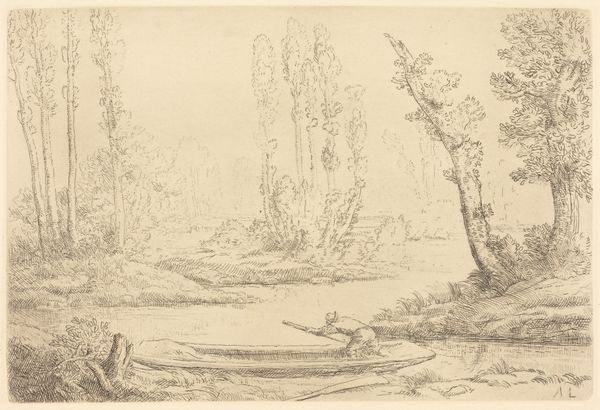
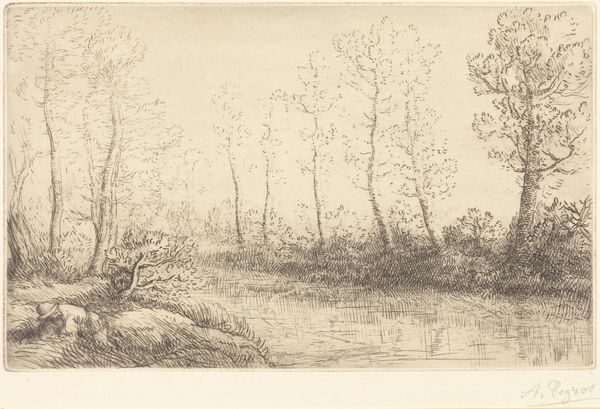
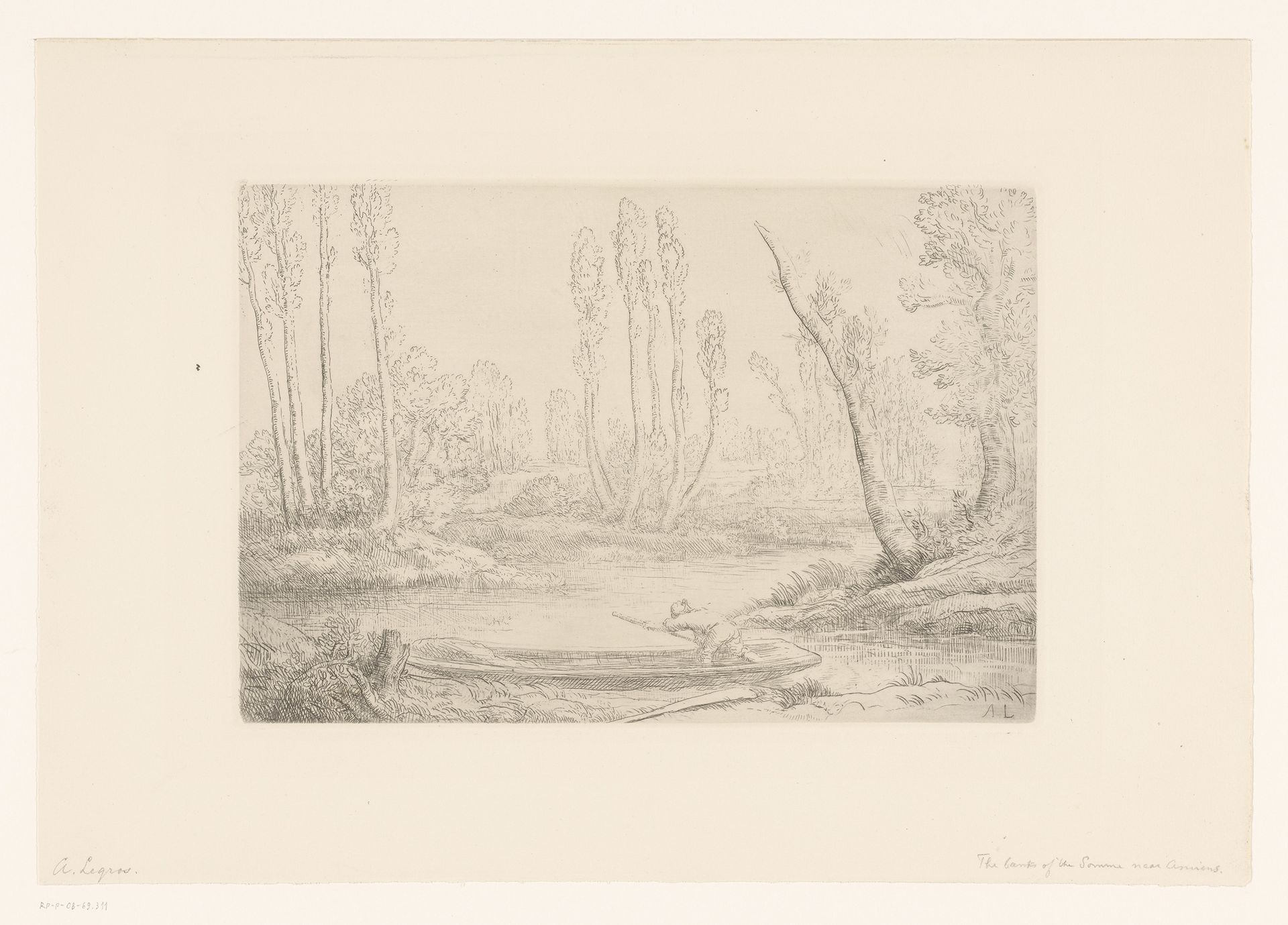
"Oever van de Somme in de buurt van Amiens", or "Banks of the Somme near Amiens", is an etching made by Alphonse Legros, a French-born artist working in 19th century Britain. Legros was known for his commitment to etching at a time when many considered it a dying art. This landscape presents a lone figure poling a small boat along a tranquil river, framed by towering trees. What might seem a simple pastoral scene is also steeped in the realities of labor and rural life. Legros came from a humble background, his father was a farm worker, and he often depicted the lives of the working class. The Somme, while idyllic here, carries a complex weight. It is a region forever marked by one of the bloodiest battles of World War I. Legros died a few years before this devastation, yet his quiet, unassuming image reminds us of the ever-present, often unseen, labor that shapes the land we inhabit.
Oever van de Somme in de buurt van Amiens
1837 - 1911

Alphonse Legros
1837 - 1911Location
RijksmuseumArtwork details
- Dimensions
- height 190 mm, width 279 mm
- Location
- Rijksmuseum
- Copyright
- Rijks Museum: Open Domain
Comments
Be the first to share your thoughts about this work.
About this artwork
"Oever van de Somme in de buurt van Amiens", or "Banks of the Somme near Amiens", is an etching made by Alphonse Legros, a French-born artist working in 19th century Britain. Legros was known for his commitment to etching at a time when many considered it a dying art. This landscape presents a lone figure poling a small boat along a tranquil river, framed by towering trees. What might seem a simple pastoral scene is also steeped in the realities of labor and rural life. Legros came from a humble background, his father was a farm worker, and he often depicted the lives of the working class. The Somme, while idyllic here, carries a complex weight. It is a region forever marked by one of the bloodiest battles of World War I. Legros died a few years before this devastation, yet his quiet, unassuming image reminds us of the ever-present, often unseen, labor that shapes the land we inhabit.
Comments
Be the first to share your thoughts about this work.