1858 - 1859
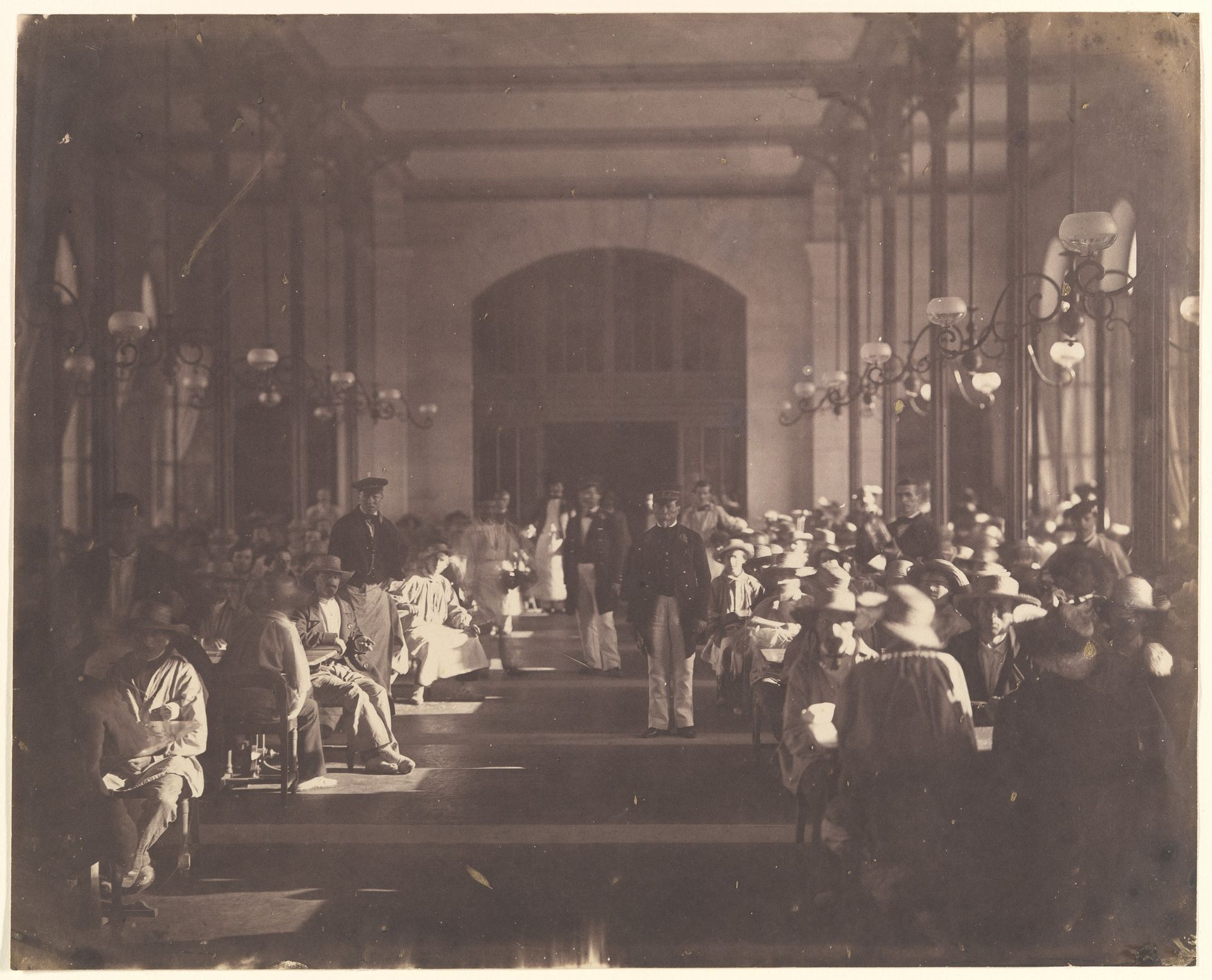
The Refectory of the Imperial Asylum at Vincennes


Listen to curator's interpretation
Curatorial notes
Charles Nègre made this photograph, "The Refectory of the Imperial Asylum at Vincennes," using a process called the calotype, one of photography’s earliest forms. The calotype was special because it produced a paper negative, allowing for multiple prints. Nègre would have coated paper with silver iodide, exposed it in the camera, and then developed it to reveal the image. This technique rendered a softer, more atmospheric effect compared to other photographic methods of the time. Look at how the light diffuses through the high windows, creating a hazy ambience in the refectory. What I find striking is how the technological innovation of photography, a decidedly modern medium, is used here to depict a social reality of labor and confinement. The rows of seated figures, presumably residents and staff, are captured in a moment of communal dining, yet the image subtly hints at the social structures and power dynamics at play within the asylum. It is a reminder that the making of an image, like any form of production, is deeply intertwined with the social and political context in which it's created.